Bone-in pork loin on the Big Green Egg
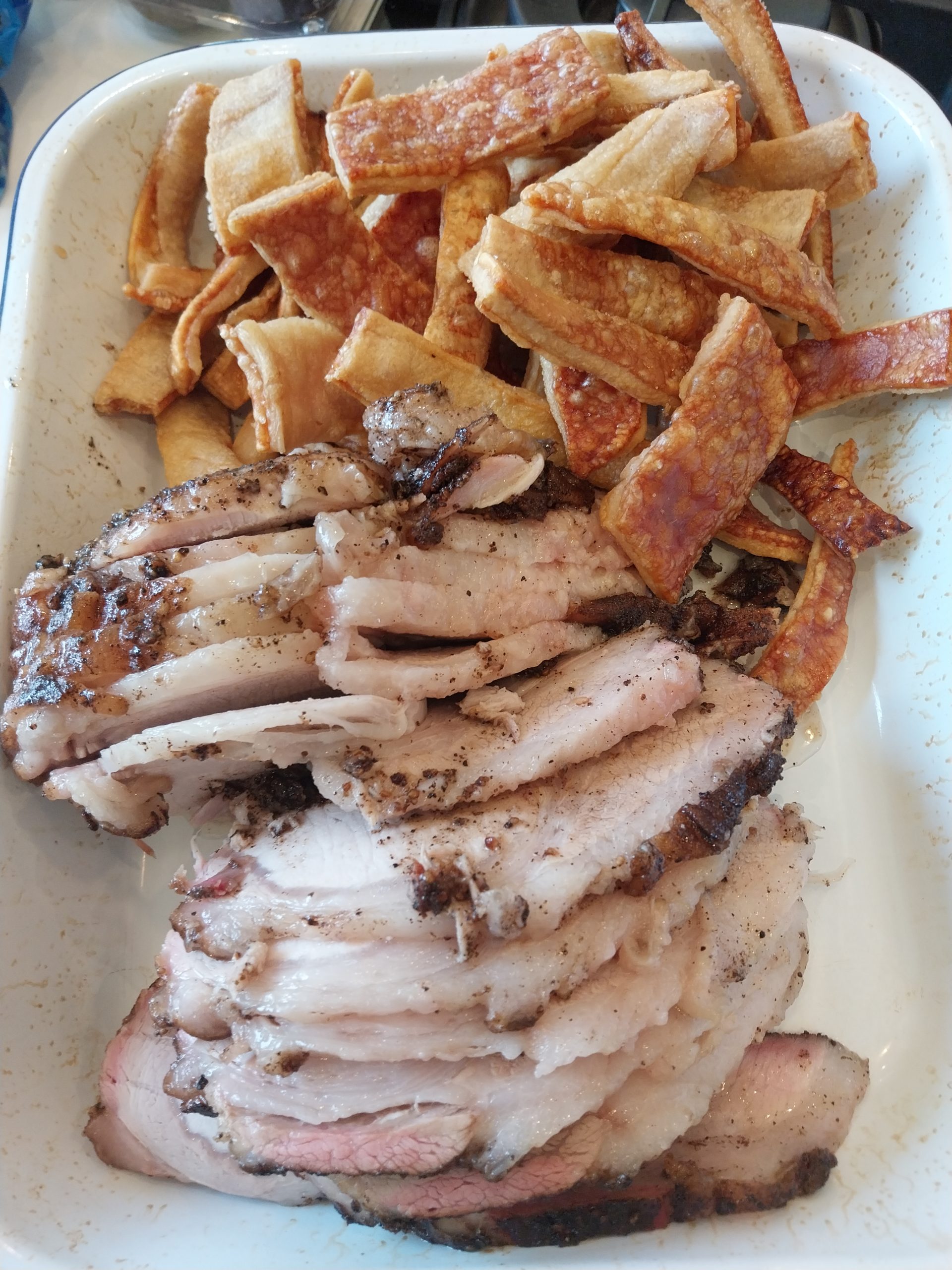
- Prep15 min
- Cook2 hr 40 min
- Serves8
- DifficultyMedium
- Temperature140°C (284°F) indirect, deflector in. Off at 61–62°C (142–144°F).
Brining makes pork loin much juicier and more tender, so this one goes in a salt and sugar brine for 24 hours first. I’ve cooked this bone-in pork loin three times on my Big Green Egg, in May, June and September. After the brine it gets an SPG rub and cooks at 140°C (284°F) indirect over two chunks of oak until it reads 61–62°C (142–144°F) in the middle. Then it rests, the bones come off, and I slice it like a roast.
Ingredients
- About 2.5 kg bone-in pork loin, chined if you can get it
- Table salt and caster sugar, each 3% of the brine water's weight (120 g each for 4 litres)
- 1 tbsp black peppercorns
- 3–4 bay leaves
- SPG rub: about 4 tbsp black pepper, 2 tbsp table salt, 1 tbsp garlic granules

Equipment
- A barbecue that holds 140°C (284°F) indirect with the lid down. I use my Big Green Egg Large with the ConvEGGtor (ceramic deflector) and a drip tray on top of it.
- A leave-in probe thermometer.
- A container big enough to brine the rack in, with a lid.
- Lump charcoal and two chunks of oak.
- Foil.
Method
- Brine it for 24 hours
- Take the rind off and rub it
- Set the Egg up indirect at 140°C (284°F)
- Cook until the middle reads 61–62°C (142–144°F)
- Wrap it in foil and rest it
- Take the bones off and slice

Key takeaways
- Ask your butcher to chine it if you can, but you don’t have to. My September rack wasn’t chined. I ran a knife down the back of the bones and the backbone came off easily.
- It takes about two and a half hours at 140°C (284°F). My 2.46 kg rack in September came off after 2 hours 37 minutes, and that was after putting it on before the Egg was up to temperature.
- A long rest is fine. I rested the May and June racks for 40 minutes. The September one rested for nearly two hours and it was great.
- I take it off at 61–62°C (142–144°F) and serve it pink. That’s below the UK guidance for pork, which is 70°C (158°F) for 2 minutes.
The cook, in full
I’ve done this with three racks. In May and June they were 2.2 kg and chined, from Graham Turner. In September it was a 2.46 kg rack from HG Walter, not chined. The recipe is written for about 2.5 kg.
First the brine. I put the rack in the container I’m brining it in, fill it with cold water until the meat is just covered, then lift the rack out and weigh the water. The salt and sugar are each 3% of that weight. I use table salt, not Maldon, because the flakes are bigger and you get less salt in a spoonful. In September that was 4 litres of water, so 120 g of salt and 120 g of caster sugar. A tablespoon of black peppercorns and three or four bay leaves go in too. The rack goes back in, lid on, in the fridge for 24 hours.
In May and June I then left the rack uncovered in the fridge overnight to dry off before the rub went on. In September I didn’t have time, so it went straight from the brine to the rub.
The rind comes off for crackling. That goes in the oven while the loin cooks, at 200°C fan for 35–40 minutes. The method is in my crackling recipe.
The rub is my SPG at 2 : 1 : 0.5 by volume: about four tablespoons of black pepper, two of table salt and one of garlic granules for a rack this size. I press it into every side, bones included. No binder.
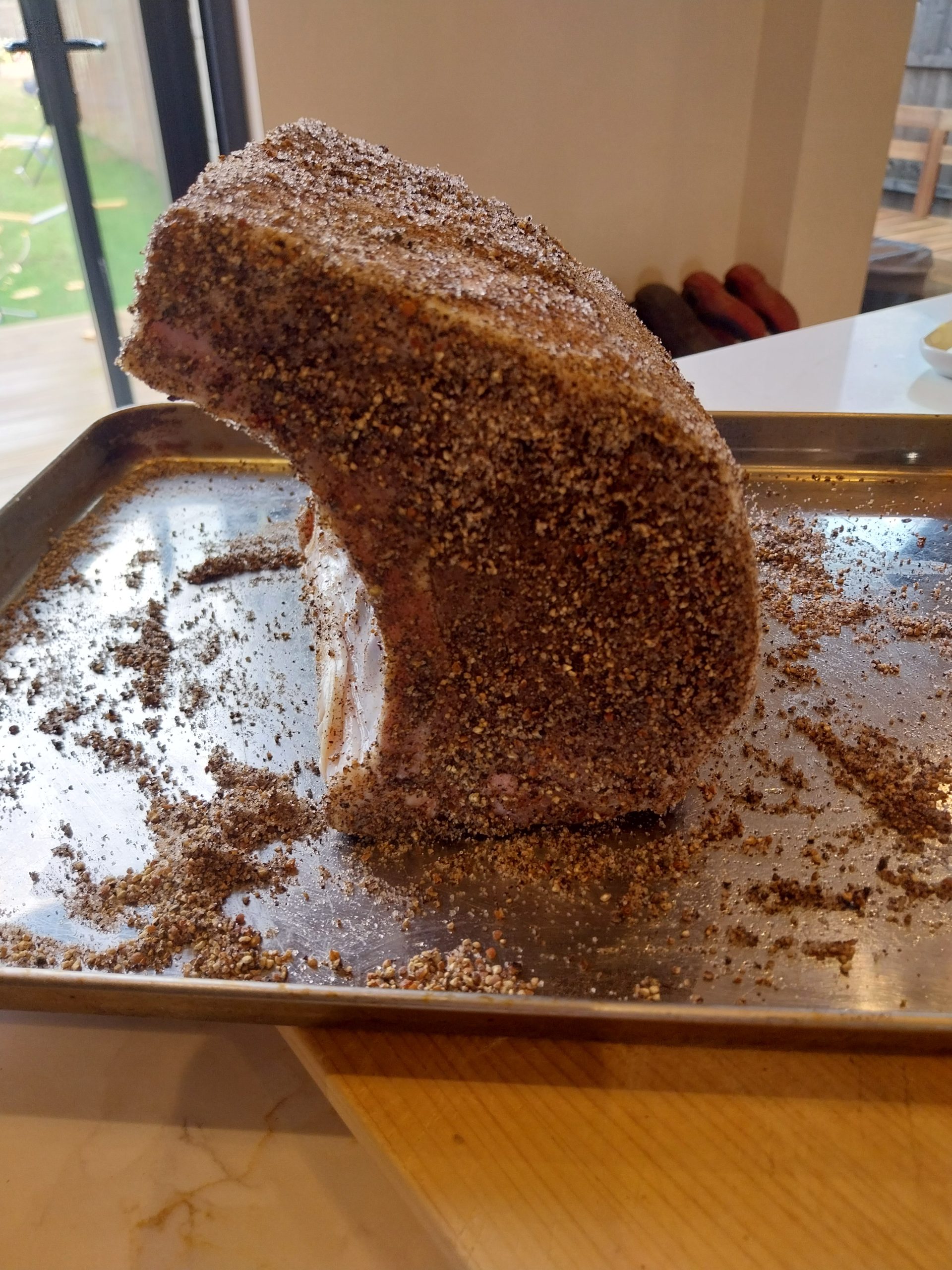
I set the Egg up indirect at 140°C (284°F), with the ConvEGGtor (ceramic deflector) in and a drip tray on top of it. Two chunks of oak go on the lit charcoal before the deflector goes in. I let them burn for about ten minutes, until the thick white smoke has gone, before the meat goes on.
The rack sits on the grate with a leave-in probe in the thickest part of the meat, not touching the bone.
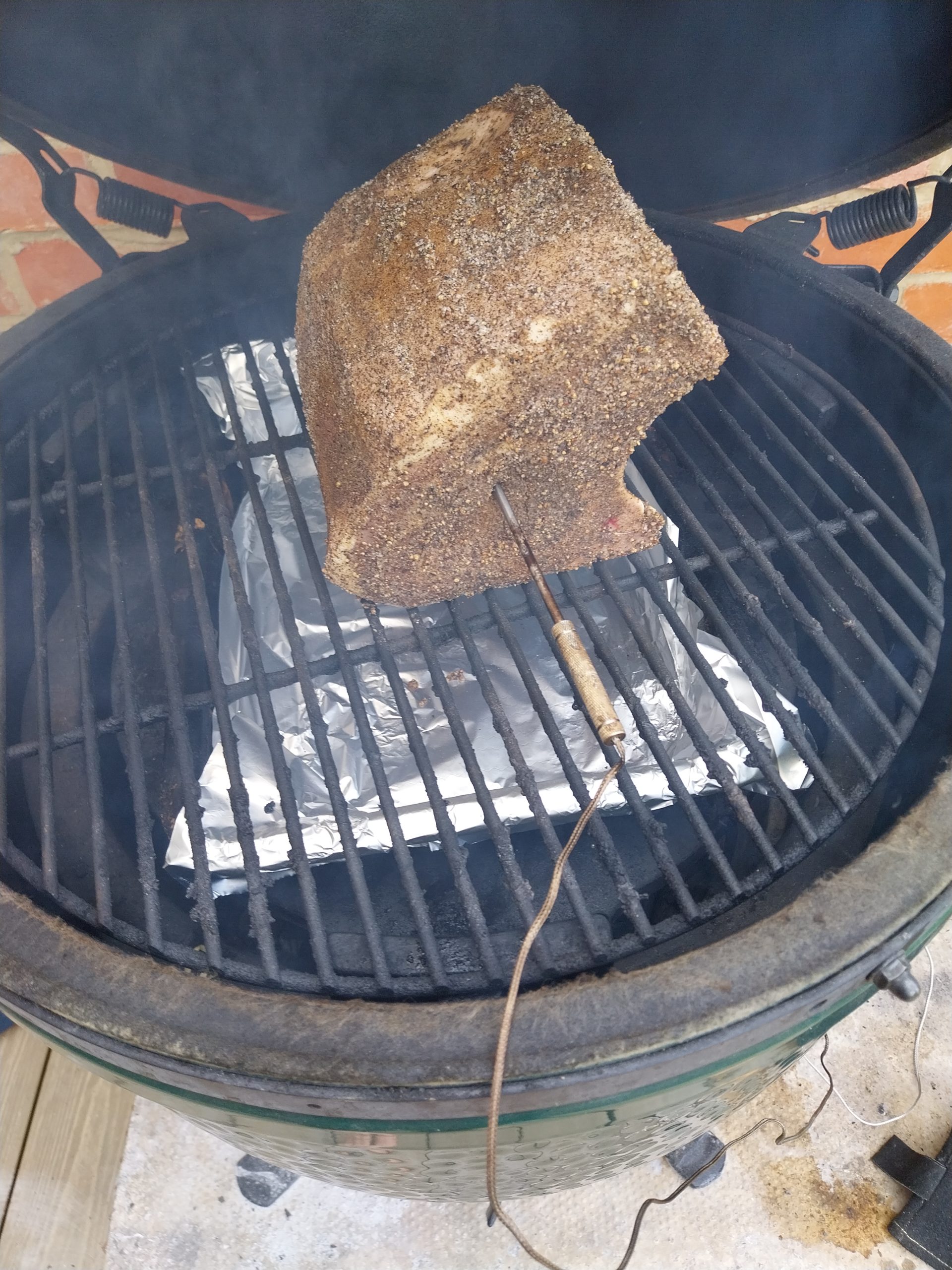
In September the fire was slow to get going. I think the charcoal had got damp. I put the rack on anyway at about 100°C (212°F), with the Egg still climbing. It probably took a bit longer, but that wasn’t a problem. I had the probe in, so I knew where it was.
In May and June the 2.2 kg racks took about two and a half hours. In September the 2.46 kg rack was at 53°C (127°F) after 2 hours 16 minutes and came off at 62°C (144°F) after 2 hours 37 minutes.
I take it off at 61–62°C (142–144°F) and wrap it in foil. In May and June I rested it in a cold oven with a tea towel on top for 40 minutes. In September it rested for nearly two hours while everything else got done, and it was great.
If the rack is chined, I run a knife along the inside of the bones and they lift away in one piece. If it isn’t, I run the knife down the back of the backbone first. On the September rack that was easy. Then I slice it like any bone-in pork loin roast.
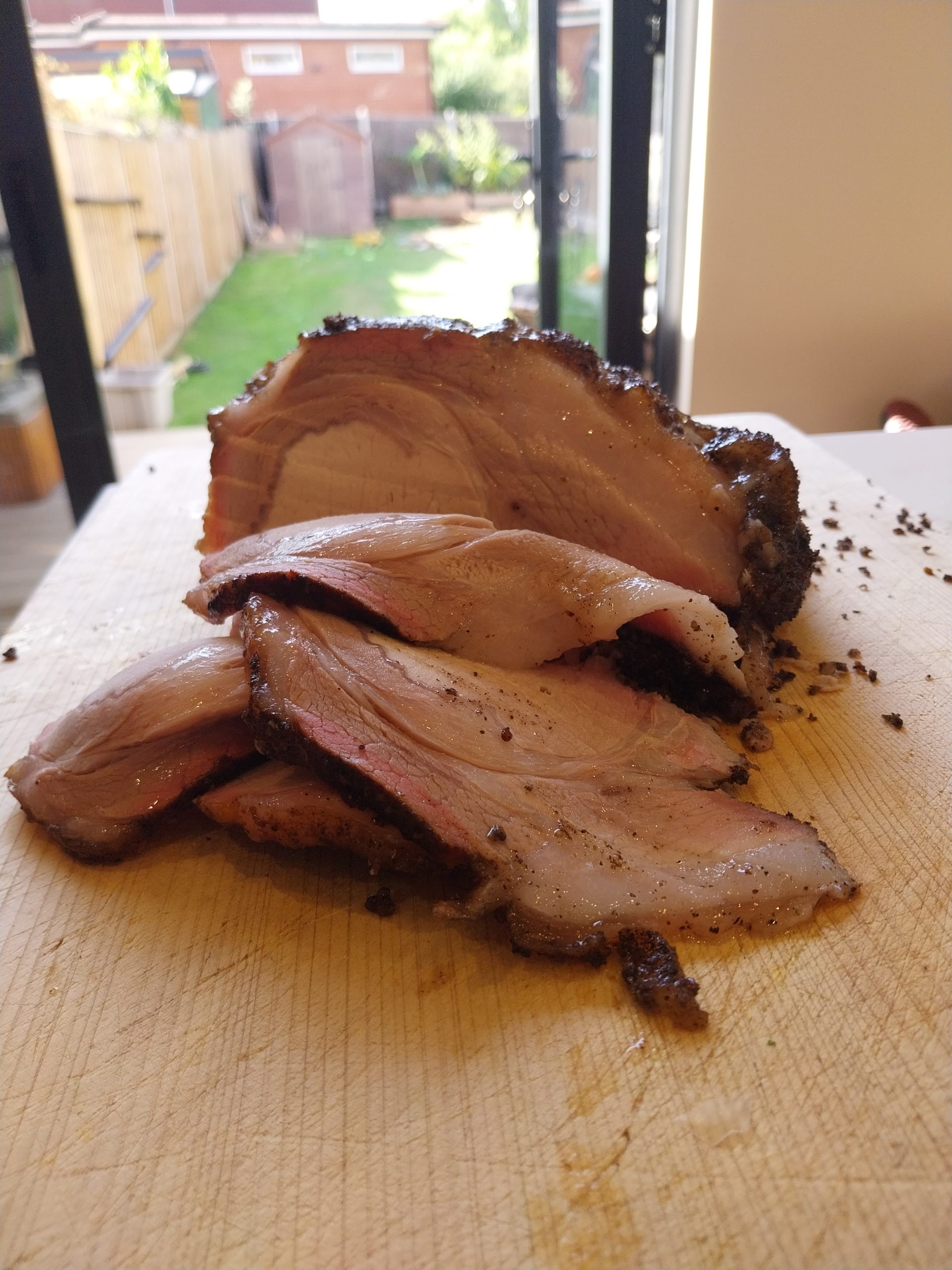
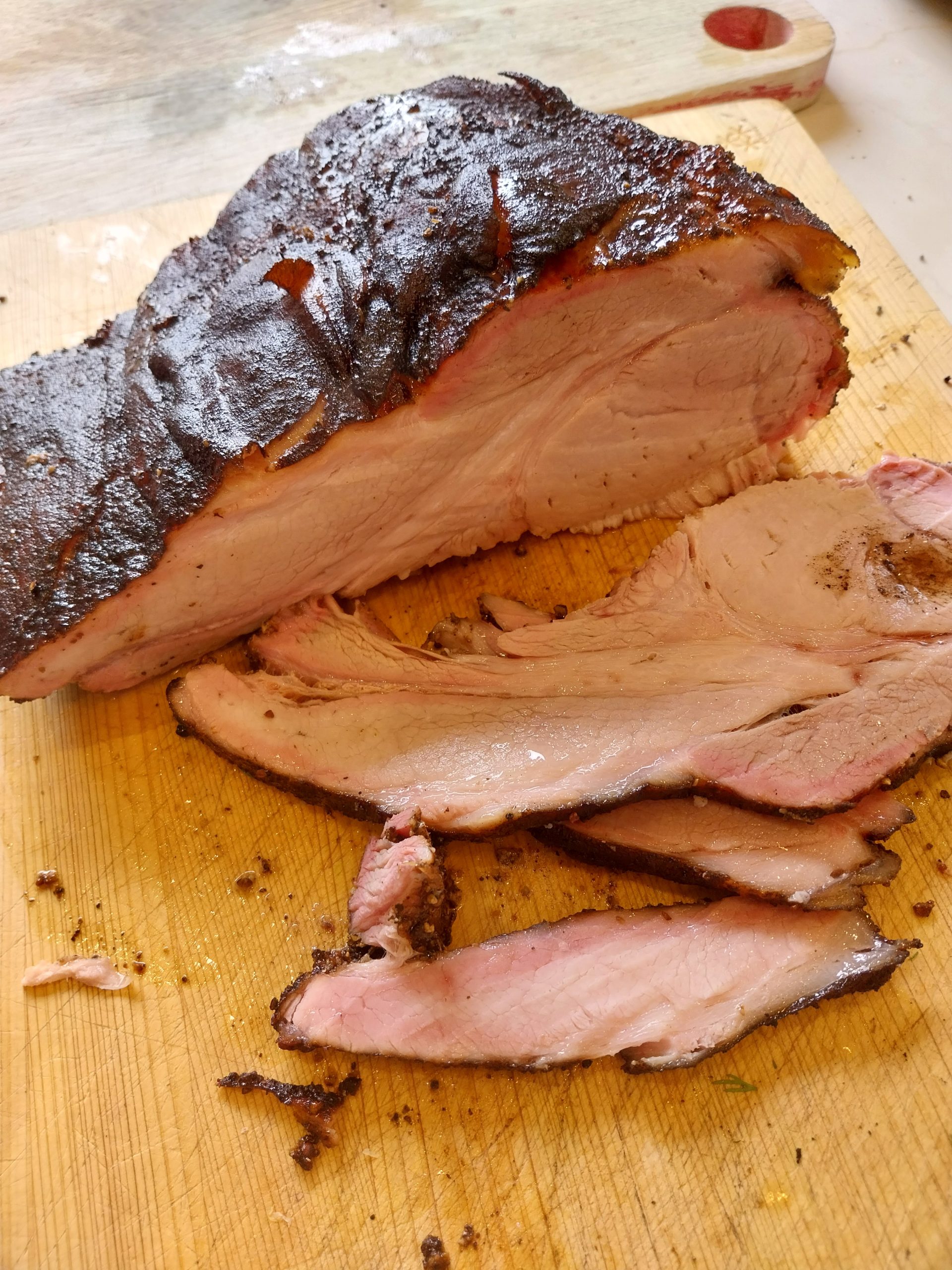
It came out pink and juicy all three times, with a smoke ring round the edge.
What to serve it with
In May it was potato salad, greens from the garden, bread and a tray of crackling. In September I did some salads and a few other bits.
What I learned
You don’t need the rack chined. The September one came without it, and I thought I might need a saw. A knife down the back of the backbone took it straight off.
Variations
If you’d rather serve chops, cut between the bones instead of taking them off.
For a boneless loin, see my boneless pork loin.
Related
- Boneless pork loin on the BGE Large — the boneless version.
- Pork crackling on the kamado — what to do with the rind.
- Pork belly burnt ends with a mango chutney glaze — reheated on the same fire in September.
- Big Green Egg Large review — the unit this was cooked on.
- Christmas gammon on the BBQ — another pork joint, cooked indirect with oak.
FAQ
What’s the best way to cook a bone-in pork loin?
I brine it for 24 hours, rub it with SPG, and cook it at 140°C (284°F) indirect on my Big Green Egg over two chunks of oak until it reads 61–62°C (142–144°F). Then I rest it, take the bones off and slice it like a roast.
How long to cook bone-in pork loin?
About two and a half hours at 140°C (284°F) for a rack of 2.2–2.5 kg. My 2.46 kg rack took 2 hours 37 minutes. Go by the probe, not the clock.
What’s the right bone-in pork loin temperature?
I take mine off at 61–62°C (142–144°F) in the thickest part and serve it pink. That’s below the UK Food Standards Agency guidance, which is for pork to reach 70°C (158°F) for 2 minutes. The US guidance is 63°C (145°F) with a 3-minute rest.
How do you stop a pork loin drying out?
I brine it for 24 hours and take it off at 61–62°C (142–144°F). All three times it came out pink and juicy.
Do I need my butcher to chine the rack?
It helps, but you don’t need it. On an unchined rack, run a knife down the back of the backbone before you carve. On my September rack that was easy.
What do you serve with a rack of pork?
I’ve done potato salad, greens from the garden, bread and crackling. In September it was some salads and a few other bits.
Disclosure and provenance
I cooked this on my own Big Green Egg Large and paid for all three racks, from Graham Turner in May and June and HG Walter in September. Smoke and Lump has no commercial relationship with either and earns nothing from this recipe.
Sourced from the 31 May, 7 June and 20 September 2026 cook logs — three cooks of bone-in pork loin on the Big Green Egg Large.