Published 10 August 2026 · Last updated 10 August 2026 · By Ben Austen · Affiliate disclosure
If your kamado or kettle cooking has got as far as low-and-slow, sooner or later you want wood smoke in the mix — and chunks are how you get it. This piece names the six best smoking wood chunks for UK buyers in 2026, from £9 bags of oak and apple to a £23 box of Welsh beech, and where to buy each one — with stock checked the day I wrote this, because plenty of the obvious sellers are sold out this August. Oak is the only one I’ve actually cooked with — my supply is a fallen tree from my parents’ garden, cut into chunks and air-dried — so oak is Tested and the other five are Consensus, built from what UK retailers stock and what the wider BBQ community reaches for. If you only ever buy one bag, make it oak. And whichever bag you buy, how you use it matters more than which wood it is. Prices verified 10 August 2026. Entries update as I burn through bags.
The six picks
Key takeaways
- If you’re buying one bag, buy oak. It sits in the middle of the intensity scale, and across twenty-plus cooks I’ve yet to find a protein it doesn’t suit — pork, beef, chicken, even whole trout.
- Apple and cherry are the gentle end. Reach for them on pork and poultry when you want a fruit note under the rub rather than competing with it.
- Hickory is the biggest smoke of the six. Save it for beef short ribs, brisket and pork shoulder — it’s too much for chicken or fish.
- Whisky barrel oak is the special-occasion bag: regular oak with a cask note that lifts a Sunday centrepiece. Nobody needs it, which isn’t really the point of it.
- Beech is the mildest and the most British option — fish, ham and cheese territory, from a Welsh supplier working with 100% UK wood.
- Chunks, not chips, on a kamado — chips burn through too fast. And one or two chunks per cook, never a pile.
- Wait five to ten minutes for the thick white smoke to burn off before the meat goes on. That wait is the difference between clean smoke and an ashtray.
At a glance
| Wood | Intensity | Best for | Verified price | UK availability |
|---|---|---|---|---|
| Beech | Mildest | Fish, cheese, delicate proteins | £22.95 for a 25L box (£9 per 1.5kg bag elsewhere) | UK-grown; bags in and out of stock |
| Apple | Mild | Pork, poultry | £9 for 1.5kg | Widely stocked |
| Cherry | Mild-medium | Pork, poultry, beef | £14.95 for a 15L box | Thin — most 1.5kg bags sold out |
| Oak | Medium | Everything | £9 for 1.5kg | Widely stocked, some UK-grown |
| Whisky barrel oak | Medium, with a whisky note | Centrepiece cooks, gifts | £8.99 for ~1kg | Scarce — most sellers dry right now |
| Hickory | Bold | Beef, brisket, pork shoulder | £9 for 1.5kg | Imported (US), cut in the UK |
Prices and stock verified 10 August 2026 at BBQ Land, Gwernyfed Wood and Mokutan direct; Harry J’s and Hot Smoked checked and sold out the same day.
Oak — best overall (BBQ Land, 1.5kg, £9)
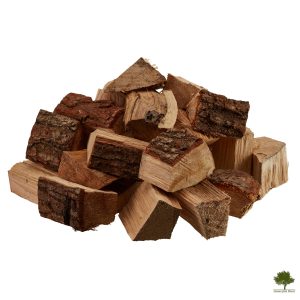
Classic bonfire — the smoke flavour most people picture when they think BBQ. It sits in the middle of the intensity scale: softer than hickory, more assertive than apple or cherry. If you’re only keeping one wood around, this is the one.
Mine isn’t a bought bag. A tree came down in my parents’ garden, and I’ve been cutting it into chunks and air-drying it over the last couple of years — so my Tested view is on my own supply rather than on a commercial brand. Twenty-plus cooks in, that oak has been under everything: pork loin, pork belly burnt ends, sausages, beef short ribs, a vertical-roaster chicken, whole trout. It worked everywhere. That’s the appeal — you stop thinking about matching wood to protein and just cook.
One thing the multi-protein Sundays taught me: the smoke from one phase of a cook carries into the next. When the pork loin comes off and the sausages go on, the oak that flavoured the loin is still working, and the sausages pick it up without a fresh chunk. Plan the order of a mixed cook around that and one or two chunks covers the whole afternoon. The boneless and bone-in pork loin recipes both run exactly this way.
My method on the BGE Large: light it, let the temperature stabilise at whatever the cook needs, lift the grid and the ConvEGGtor (ceramic deflector), drop one or two chunks onto the lit coals, close the dome, and wait five to ten minutes for the first white smoke to burn off. Then the meat goes on.
On drinks, the through-line is simple: oak-smoked meat pairs with oak-aged wine — the barrel note echoes the smoke note, and Rioja is the classic bridge. With pork I’d pour a Rioja Crianza or Reserva, or a Côtes du Rhône. Beef short ribs can carry an Argentine Malbec or a Barossa Shiraz. Chicken suits an oaked Chardonnay or a Pinot Noir. Trout is the deliberate exception — break the oak-on-oak pattern with a clean unoaked white like Chablis, a dry Riesling, or a Grüner Veltliner. Beer drinkers: English brown ale or a milk stout with beef. And if it’s cocktails, an Old Fashioned is the direct bridge — bourbon spends its life in oak too.
To buy: BBQ Land carry Smokewood Shack oak chunks in the standard 1.5kg bag at £9, in stock when I checked. Harry J’s sell UK-grown oak — processed and packaged here, from £4.95 a kilo — but they were sold out in every size on the day I checked, so treat them as one to watch for restock. Gwernyfed Wood do a 15-litre box of Welsh oak at £14.95, and Weber UK sell own-brand oak chunks direct. Or do what I did and keep an eye out for a fallen oak — air-dried and free is hard to argue with.
Apple — best for pork (BBQ Land, 1.5kg, £9)
Apple is the classic first step past oak, and the wood UK retailers consistently point pork cooks at. Smokewood Shack — the same brand as the oak and hickory picks — do a 1.5kg bag through BBQ Land at £9. The description retailers agree on is a light, fruity smoke with a little sweetness, and that’s the story everywhere apple is sold: gentle, slightly sweet, made for pork and poultry.
I haven’t burned a bag of apple yet, so I can’t tell you what it does on a slice that oak doesn’t. What I can tell you is where it would go first if I did: a pork loin, where a mild fruit note could sit under the rub instead of competing with it — the sort of cook where hickory would be a blunt instrument. If your weekends are mostly pork and chicken, apple is the obvious bag to try against an oak baseline you already know.
To buy: BBQ Land for the Smokewood Shack 1.5kg bag, or Weber’s own apple chunks a pound more on the same shelf. Gwernyfed Wood box Welsh apple in 15 litres at £14.95, Firefly BBQ sell 8-litre bags, and Harry J’s UK-grown apple (40-80mm, roughly fist-size) is the restock to watch — sold out when I checked.
Cherry — best all-rounder (Gwernyfed Wood, 15L box, £14.95)
Cherry gets sold as the crowd-pleaser, and the retailer descriptions all tell the same story: slightly sweet, a touch more presence than apple, happy across pork, poultry and beef. It’s also the wood UK stock struggles with — every 1.5kg cherry bag I checked was sold out. Gwernyfed Wood, a Welsh supplier working with 100% British timber, had it: a 15-litre box at £14.95 that outlasts a bag several times over.
Cherry earns its slot on flexibility. Of the five woods I haven’t cooked with, it’s the one I’d point at a reader who wants a single fruit-wood bag for mixed cooking — the consistent retailer claim is that it does the apple job on pork and chicken while holding up on beef in a way apple isn’t sold as doing. If I bought a bag, it would go on a mixed Sunday first — a loin and chicken thighs sharing the grid — to find out whether it really covers both.
To buy: Gwernyfed Wood for the 15-litre box. If you’d rather start with a smaller bag, Smokewood Shack cherry through BBQ Land (£9 for 1.5kg) and Harry J’s UK-grown cherry are the ones to watch — both sold out on the day I checked, both worth a look when they’re back.
Hickory — best for beef and big cooks (BBQ Land, 1.5kg, £9)
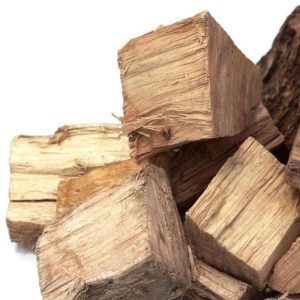
Hickory is the wood American BBQ is built on — the heavy, savoury smoke underneath most of the brisket and pulled pork the whole scene is famous for. It doesn’t grow here, and UK supply shows it: Smokewood Shack buy imported hickory planks and cut them into blocks — 25-30mm thick, 7-8cm square — sold through BBQ Land in 1.5kg bags at £9. Smokewood Shack’s own advice on the bag is telling: they blend it two parts oak to one part hickory rather than burning it neat.
I haven’t put hickory on my fire yet, but it’s on every American BBQ site for a reason, and the retailer story is consistent: medium-to-heavy smoke with a savoury note, for meat that can carry it. That means beef short ribs, brisket, pork shoulder — long cooks on big cuts. It also means the chunk-count discipline matters more here than anywhere else on this list. If one or two is the rule for oak, treat hickory as a one-chunk wood until you know what it does; the failure mode is the same over-smoked bitterness as any wood, just arriving faster.
If I bought a bag, it would go under beef short ribs first — the cut I already know carries big smoke well from my oak cooks — not under a chicken, where that much smoke has nothing to do but take over.
To buy: BBQ Land for the Smokewood Shack blocks, or Weber’s own hickory chunks at £10 on the same shelf. Harry J’s US-imported hickory is sold out in every size as I write; Wilko and The Range list 2.7kg bags at value pricing if beef is most weekends, and ExstreamBBQ do a 25-litre box for the properly committed.
Whisky barrel oak — best special-occasion (Mokutan, ~1kg, £8.99)
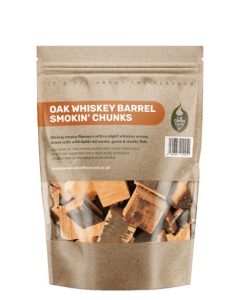
Mokutan — a Surrey kamado specialist — cut these chunks from retired whisky barrels out of Spain’s Rioja region, in 3-10cm pieces. The pitch is regular oak smoke with a cask note carried out of the barrel, and the Rioja provenance closes a loop this piece has already opened: the same region’s oak-aged wine is what I’d pour next to oak-smoked pork anyway. Here the barrel echo is built into the fuel itself.
I cook on plain oak, so this is the pick I’m most curious about — my wood with a twist, and the twist maps onto drinks I already pour. It isn’t the everyday bag and it doesn’t need to be. This is the one for a Sunday centrepiece, or the one you buy someone who cooks — a bag of smoking wood with a story attached beats another rub in the stocking.
One thing I’d do differently with barrel wood: it has spent years soaked in spirit, so I’d give the white-smoke burn-off the full ten minutes here. Whatever is coming off that surface, you want it burned clean before the meat goes anywhere near it.
To buy: Mokutan, £8.99 and in stock as I write — which matters, because whisky-barrel chunks are the hardest wood on this list to actually buy right now. On the day I checked, Harry J’s whisky oak and Hot Smoked’s whisky barrel chunks were sold out in every size, Caradoc Charcoal had stopped selling theirs altogether, and Love Logs had moved from chunks to staves. Gwernyfed Wood box a 15-litre whisky option at £15.95 if you want the bigger format.
Beech — best UK-native (Gwernyfed Wood, 25L box, £22.95)
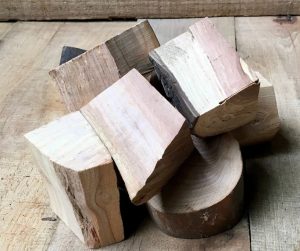
Beech is the quiet local option. It grows all over Britain, it’s what European smokehouses used on salmon, ham and cheese long before American-style BBQ arrived here, and it’s the mildest wood on this list — retailers describe it as light, slightly nutty, suited to poultry, pork and fish. Gwernyfed Wood, a Welsh supplier working with 100% British timber, box it in 25 litres at £22.95 — a season of smoke in one order, with the strongest sourcing story short of cutting up your own tree.
Beech is here instead of a seventh import for a simple reason: if the mild end of the scale is where you cook — fish, delicate poultry, cheese if you get into cold-smoking — there’s no need to reach past a British-grown wood to get it. I’ve cooked whole trout over my own oak and it worked; beech is sold as gentler still, and it’s the first wood I’d test against my own supply next time trout goes on the grid.
To buy: Gwernyfed Wood for the 25-litre British-sourced box. If you’d rather try a small bag first, BBQ Land carry Smokewood Shack beech at £9 for 1.5kg — in stock when I checked — and The BBQ Shop stock Green Olive beech chunks.
Blue smoke, not white — the one thing most guides don’t tell you
Which wood you buy matters less than what the smoke looks like when the meat goes on.
The method, exactly as I do it:
- Light the kamado and stabilise the temperature first — 110–140°C dome for a low-and-slow, 200°C for direct grilling.
- Lift the grid and the deflector plate.
- Drop one or two chunks onto the lit coals.
- Close the lid.
- Wait five to ten minutes for the initial white smoke to burn off.
- Then put the meat on.
Thick white smoke is dirty — incomplete combustion that deposits heavy creosote and makes meat taste bitter, harsh, and like an ashtray. Blue smoke is wispy, nearly transparent, faint blue or heat-shimmer, and it quickly disappears into the air. It means the wood and coals are burning at a hot, efficient temperature with plenty of oxygen, and the organic compounds in the wood are burning up completely. The result is clean bonfire on the slice, with none of the chemical harshness.
Those five to ten minutes cost nothing, and they’re the difference between a Sunday roast that tastes properly smoked and one that tastes like a bonfire went wrong.
How to use smoking wood chunks
Chunks, not chips. Chunks smoulder — one or two keep smoke going across a two-hour cook, which is how a kamado wants to run anyway. Chips flare and burn through in about twenty minutes, so save them for a gas grill’s smoker box, where the fast burn matches the shorter window.
One or two chunks, never a pile. This is the mistake that ruins more cooks than the wrong wood ever will. Smoke is a seasoning: at one chunk it seasons, at three it takes over, and once meat is over-smoked there is no walking it back. If you can taste the smoke by itself when you slice, you used too much.
Don’t soak them. Soaking gets repeated in older BBQ guides and I’ve never seen the point — wet wood has to boil off its water before it can smoke, so all you buy is a delay and extra white smoke at the start of the cook. Dry chunks straight onto lit coals.
Kiln-dried is fine; air-dried is a bonus. Every commercial UK bag — Big K, ProSmoke, Weber, Smokewood Shack, the Harry J’s range — is kiln-dried, and it works. My own oak is air-dried because it came off a fallen tree, and if you can source wood like that, take it. If not, kiln-dried is what everyone else is buying and it’s fine. I don’t inspect or test my wood before it goes on, and you don’t need to either — buy named-species chunks from a proper retailer and cook.
Placement is simple: straight onto the lit coals. On a kamado, lift the grid and deflector, drop the chunks on the lump charcoal, put everything back, close the dome. For a very long cook you can tuck a chunk into the unlit lump so it catches as the fire spreads — same logic as the Minion method — but for anything under eight hours, on-the-coals is all it needs.
How to spot wood chunks that aren’t worth buying
The bags to avoid are the cheap, no-name “hardwood chunks” packs — the ones that never tell you what species is in the bag. My rule is blunt: you are eating the smoke on your food. If the seller won’t say what tree it came from, you don’t know what you’re eating — it could be resinous, pine-contaminated, wet, or just off. That isn’t snobbery about budget wood; beech at £10 is on this list. It’s about knowing what’s burning under your dinner.
The fix costs nothing: buy named-species chunks from named brands. This isn’t a blanket Amazon warning either — Big K, Weber and other proper brands sell perfectly good chunks through Amazon. It’s the unbranded “smoker pack” filler to leave on the shelf.
Signs a bag isn’t worth it: no species named anywhere on the listing; “mixed hardwood” with no breakdown; no country of origin; a price well under everyone else’s for a suspiciously big bag. Any one of those and I’d move on — the named-brand bag is rarely more than a couple of quid extra.
How to choose
If most of what you cook is pork and chicken, start with apple or cherry — and if it’s strictly one bag, cherry, which retailers sell as covering beef too.
If you cook a bit of everything across a weekend — some pork, some chicken, the odd fish — buy oak. That’s me, and it’s the answer I’d give anyone who wants one bag that never asks to be thought about.
If your ambitions are brisket, beef ribs and pulled pork, hickory is the wood those cooks are built on in the States. Keep oak on the shelf too for the lighter cooks in between.
If the cook is a centrepiece — or the bag is a present — whisky barrel oak. Nobody reaches for £16-a-kilo wood on a Tuesday, and that’s fine; it isn’t a Tuesday wood.
Fish is beech territory, with oak as the tested fallback — I’ve done whole trout over oak and it works. Keep hickory and whisky barrel oak away from fish entirely.
And if you’re brand new to smoke — or still working through your first low-and-slow — oak, one chunk at a time. It’s forgiving, there’s no wrong protein to pair it with, and after a few cooks you’ll know whether you want to head towards the fruit woods or the heavier stuff.
Frequently asked questions
How many wood chunks should I use per cook?
One or two — never a pile. I use one or two on my own cooks, and one is usually enough for anything under three hours. Smoke is a seasoning, not a marinade: if the sliced meat tastes bitter or like an ashtray, you used too many.
Do I need to soak wood chunks in water?
No. Wet wood has to boil off its water before it can smoke, so soaking just delays the smoke and adds white smoke to the start of the cook. Older guides recommend it; I’ve never seen the point. Dry chunks straight onto lit coals.
Chunks or chips for a kamado?
Chunks. One or two chunks smoulder for two hours or more, which matches how a kamado runs. Chips burn out in about twenty minutes — fine in a gas grill’s smoker box, useless on a long kamado cook. Chips only earn their place on gas.
What’s the difference between kiln-dried and air-dried wood chunks?
Kiln-dried is the commercial standard — dried to consistent moisture, burns cleanly, and it’s what every major UK brand sells. Air-dried wood, like my oak from a fallen tree, burns a little mellower and costs nothing if you can source it. Both work; buy whichever you can get.
Can I use wood chunks on a gas grill?
You can, but chips suit gas better — in a smoker box or a foil pouch with holes in the top, sat over a burner. Chunks want lit charcoal to smoulder against. If you’re serious about smoke on gas, though, I’d put the money towards a cheap kamado or a kettle instead.
Which wood is best for smoked fish?
Beech, traditionally — it’s the mildest wood here, and European smokehouses have used it on salmon for centuries. Oak works too: I’ve cooked whole trout over my own oak chunks. Keep hickory and whisky barrel oak away from fish — too heavy for delicate proteins.
Which wood chunks should I avoid?
Cheap no-name packs that don’t say what species is in the bag — you are eating the smoke on your food, and “mixed hardwood” could be anything. Named-species bags from proper brands — Smokewood Shack, Harry J’s, Big K, Weber, Gwernyfed Wood, Mokutan — are all fine.
Sources and method
The oak view here is Tested: twenty-plus cooks on my Big Green Egg Large — pork loin, pork belly burnt ends, sausages, beef short ribs, vertical-roaster chicken, whole trout — using air-dried oak chunks from a fallen tree in my parents’ garden. (My BGE Large was a Christmas gift from my sister Kate, disclosed on the About page.)
The other five woods — apple, cherry, hickory, whisky barrel oak, beech — I haven’t cooked with. For those, I started from Google’s top-ranking UK retailer per wood type (9 August 2026), then stock-checked every pick the following day — and the stock check rerouted most of them. Harry J’s, the top-ranking seller for oak, apple and hickory, was sold out across the board; two whisky-barrel sellers had dropped the product entirely. The picks above route to retailers with stock verified on 10 August: BBQ Land (Smokewood Shack oak, apple and hickory), Gwernyfed Wood (Welsh cherry and beech), and Mokutan (whisky barrel oak). Flavour descriptions come from the retailers’ own product pages and the wider BBQ community’s consistent positions, and I’ve said so wherever I lean on them.
Wine pairings follow one rule I stand behind: oak-smoked meat pairs with oak-aged wine, because the barrel note in the glass echoes the smoke note on the plate. Rioja is the classic bridge.
Prices and stock checked 10 August 2026 at BBQ Land, Gwernyfed Wood, Mokutan, Harry J’s, Hot Smoked, The BBQ Shop, ProSmoke BBQ, Caradoc Charcoal and Love Logs direct.
Provenance and final verdict
Disclosure: no commission earned yet on any retailer named here. All outbound retailer links use /go/ redirects for click tracking; where affiliate programmes exist, they’re disclosed per Smoke and Lump’s affiliate disclosure. I don’t link to anything I wouldn’t recommend to a friend. Full disclosure log at /disclosures/.
Buy oak first. It’s the only wood on this list I can vouch for from my own fire, and it has earned that spot across every protein I’ve thrown at it. Build from there if the cooking calls for it — apple or cherry for pork weekends, hickory when the brisket ambitions arrive, whisky barrel oak for the occasion cooks, beech for fish. But the wood matters less than the habits: chunks not chips, one or two not a pile, no soaking, named species only, and blue smoke before the meat goes anywhere near the grate. Get those right with a £9 bag of oak and you’re most of the way there.