Pulled pork on the kamado

Pulled pork on the kamado — what a UK supermarket shoulder taught me about the cook

Published 26 May 2026 · Last updated 26 May 2026 · Tested by Ben Austen · Affiliate disclosure

The short version

A UK supermarket pork shoulder on the BGE Large at 110°C indirect for nine hours, then rested overnight in a faux-cambro (a foil wrap and a cold oven full of tea towels, holding the meat warm without continuing to cook it) when the cook didn’t quite close before bedtime. Pulled the next morning. The smaller piece broke through during the overnight rest and pulled cleanly into sliders; the larger piece got chopped into sandwich-sized chunks because the collagen hadn’t fully rendered. What the cook actually taught me, including what I’d do differently next time, is in “What I learned” below.

Key takeaways

  • 110°C indirect on the BGE Large held steady for nine hours straight. Pit control is the strength of this cook. Vents barely touched the whole way; UK May ambient and the BGE’s seal do the work for you.
  • UK supermarket pork shoulders can come in two pieces once the skin and fat layer come off. Took me a while to figure out, because none of the recipes I’d read mentioned it as a possibility. If the joint’s been butchered with the seam intact, the two halves separate naturally. They cook at different rates.
  • Nine hours at 110°C wasn’t quite enough for both pieces to render. At 21:50 the smaller piece was at 88°C, the larger at 85°C, both still short of probe-tender. Start earlier next time, or run 121°C / 250°F from the off.
  • Faux-cambro overnight rescued the smaller piece. Foil, tea towels, cold oven (or insulated cooler if you have one) for ~10 hours. The residual heat finished the close-but-not-quite piece. It didn’t rescue the larger one.
  • The verdict: smaller piece pulled cleanly into proper sliders; larger piece chopped sandwich-sized because forcing a pull on under-rendered collagen doesn’t deliver pulled pork. Both went on the plate.

At a glance

Prep time20 minutes active (trim + season)
Cook time9 hours on the kamado
Rest time~10 hours faux-cambro overnight (the cook needs this if 9 hours doesn’t close it)
Total time~20 hours from light-up to slider plate (with overnight rest)
Servings8–10 sliders (from a ~2.5–3.5 kg shoulder in two pieces)
Cooking methodKamado, indirect with ConvEGGtor
Temperature110°C steady (consider 121°C / 250°F if you want collagen rendered in a tighter window)
DifficultyMedium (long cook, the faux-cambro decision is a real skill)
EquipmentBGE Large or equivalent kamado, ConvEGGtor (heat deflector), probe thermometer, foil, insulated cooler or cold oven with clean tea towels
CuisineBritish BBQ

What you’ll need

Equipment

  • BGE Large or equivalent kamado (I cooked this on my BGE Large)
  • ConvEGGtor (heat deflector) for indirect setup
  • Probe thermometer with a heat-rated wire that can run through the dome seal without lifting the lid
  • Drip tray, foil-lined, sized to sit on top of the ConvEGGtor with room around the edge for airflow
  • Heavy-duty aluminium foil for the overnight wrap
  • Insulated cooler OR a clean cold oven plus a stack of clean tea towels for the faux-cambro rest

Ingredients

  • 1 UK supermarket pork shoulder (approximately 2.5–3.5 kg total, expect two pieces once the skin and fat layer come off)
  • SPG rub: equal parts coarse black pepper and sea salt, half-part garlic granules (1:1:0.5)
  • Lump charcoal (I cooked this on Fuel Express Restaurant Grade)
  • Oak chunks for smoke (3 to 4 fist-sized chunks)

What to expect from a UK supermarket shoulder

A UK supermarket pork shoulder usually comes rolled, skin-on, fat-cap-on, tied with butcher’s string. Tesco, Sainsbury’s, Morrisons, Lidl, Aldi all sell this cut as a roasting joint. Most recipes assume you’ll cook it as-is for a Sunday lunch. For pulled pork you want to do the opposite: cut the string, peel back the skin (save it for crackling), and trim the thick exterior fat layer back to where the meat starts. That’s when you might discover the joint isn’t a uniform single piece.

If the prep team has butchered the shoulder cleanly along the natural bone seam, what you’re left with is two pieces of different sizes. That’s not damage; it’s how the shoulder anatomy goes together. Two pieces with their own surface area for bark and their own internal mass to render. That’s what a properly-prepped supermarket shoulder looks like before the cook starts. The recipe is built around that reality because the cook plays out around it.

If you want to skip the two-piece state, premium UK butchers (Tom Hixson, Pipers Farm, your local independent) will sell you a single-piece boneless shoulder at materially higher cost. The supermarket version is accessible and the cook works on it. The trade-off is documented in “What I learned” below.

The cook

  1. Prep the shoulder. Cut the butcher’s string. Peel back the skin (set aside for crackling; see the pork crackling recipe). Trim the thick exterior fat layer back to where the meat starts. The joint will separate into a smaller and a larger piece along the natural bone seam. Don’t fight that; let them be two pieces.
  2. Season generously. Pat both pieces dry. Rub SPG on all surfaces, including the cut faces where the two pieces came apart (1:1:0.5 pepper:salt:garlic granules). Don’t rest the seasoned meat overnight: kamados take seasoning on the way through the cook better than they do from extended dry brine.
  3. Set up the kamado. Light the lump single-spot minion-style on one side of the firebox. Drop the ConvEGGtor in with the drip tray on top (no water; water makes the cook produce too much moisture for proper bark). Bring the dome up to 110°C with both vents barely cracked open. UK ambient and good seal quality mean this temperature holds with much less vent than American articles call for.
  4. Pieces on, fat cap up. Place both pieces on the grate at the same time. Drop the probe into the larger of the two for a representative reading (it’ll lag the smaller piece slightly through the cook).
  5. The first six hours are hands-off. Hold 110°C, don’t peek. The bark develops slowly through this window. Vents may need a tiny tweak once or twice; that’s the cook itself, not babysitting.
  6. The decision check at around 8 hours in. Both pieces should be reading somewhere between 80°C and 90°C internal. If the smaller piece is at 88°C or higher and the larger is at 85°C or higher, you’re in faux-cambro territory: the residual heat from an overnight rest will finish the cook on the smaller piece. If they’re below those temperatures, you have a choice: bump pit temp to 121°C and add another two hours, or commit to an overnight cook with the kamado holding 110°C through the night (you’ll lose some sleep and the fuel demand goes up).
  7. The faux-cambro wrap. When you call it, wrap each piece tightly in foil. Move both wrapped pieces into an insulated cooler with the lid down, or into a clean cold oven with a stack of clean tea towels piled on top for insulation. The insulated cooler holds heat better; the cold oven works if it’s all you’ve got. Rest ~10 hours overnight.
  8. The morning unwrap. Open each piece and try a pull with your hands. If the meat falls apart in strands, you’re done; pull it. If the meat resists and the collagen hasn’t fully rendered, don’t force the pull. Chop the piece into sandwich-sized chunks and serve as chunked pork rather than pulled. Both work on slider buns.
  9. Plate. Lettuce or slaw on the bun, pork on top (pulled where it pulled, chopped where it didn’t), pickles or jalapeños if you want a sharper bite. Crackling on the side if you saved the skin.
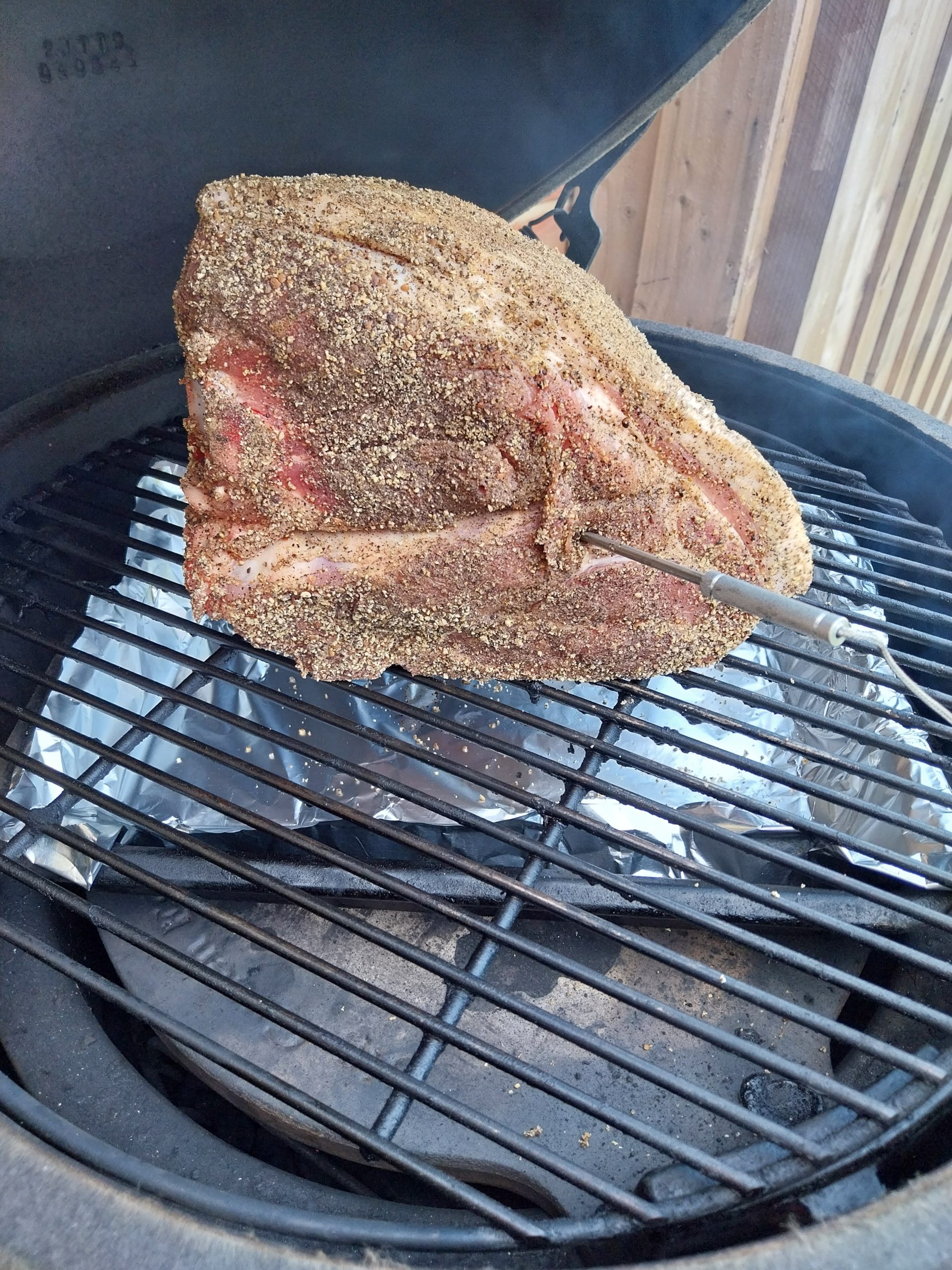
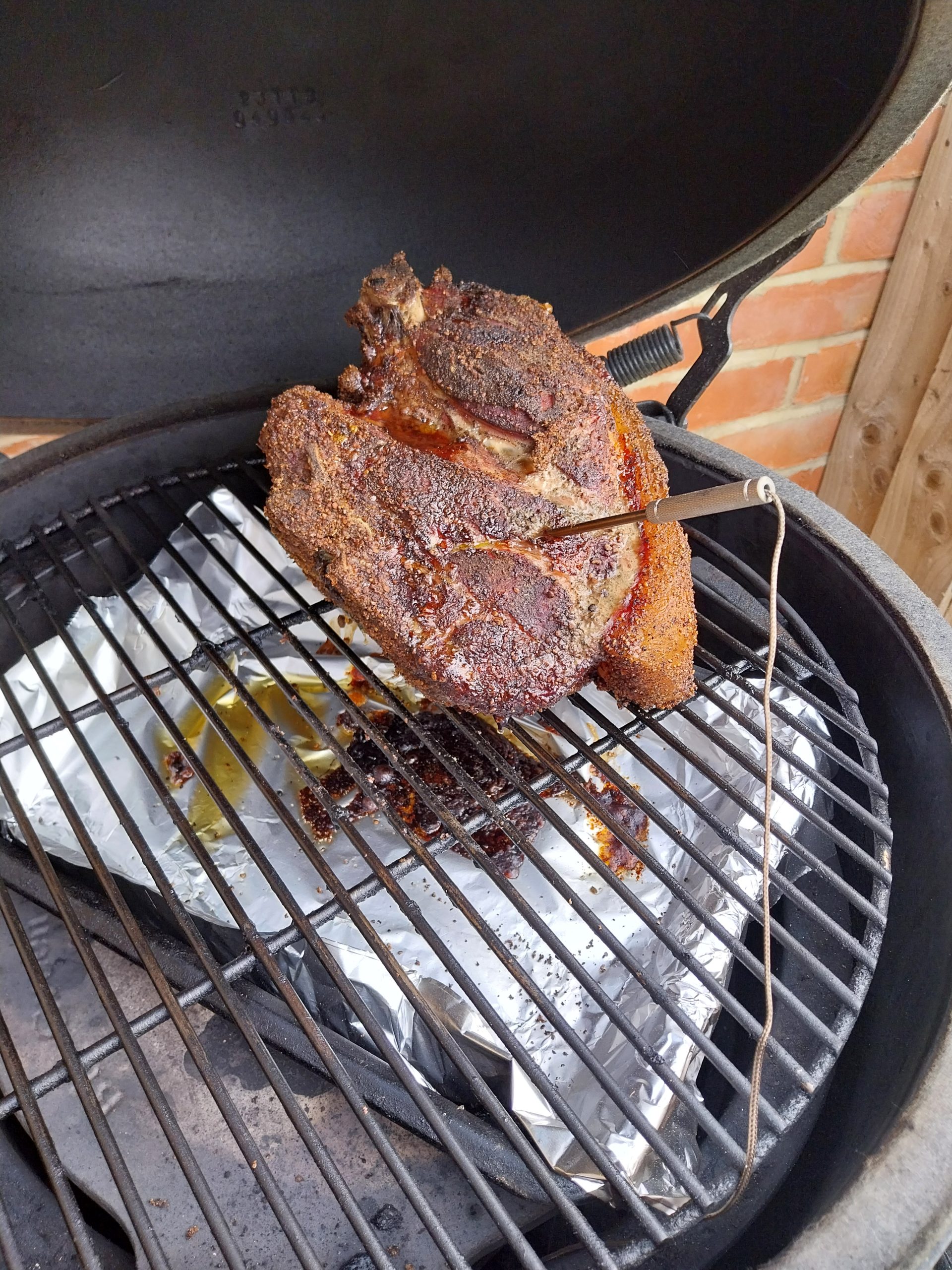
Two pieces of seasoned UK supermarket pork shoulder going on the BGE Large grate at the start of a 110°C low-and-slow cook — the natural two-piece state once the skin and fat layer were peeled back.
Two pieces of seasoned supermarket pork shoulder on the BGE Large grate at the start of a 110°C low-and-slow cook.

What to serve it with

Pulled pork on a kamado wants something sharp and crunchy on the plate to cut the richness. Slider buns are the obvious carrier: open, soft, holding the pork in proper proportion. Quick-pickled red cabbage, a vinegar-led slaw, or thinly-sliced pickled red onions all work for the cut-through.

If you saved the skin for crackling, the bar-snack crackling recipe cooks alongside another protein on the kamado earlier in the cook window. The two pieces of the shoulder produce more pork than you’d think; pulled into sliders and finished with chopped chunks for the slower-rendering piece, an average two-piece shoulder feeds 8–10 people comfortably.

For drinks: a decent IPA cuts through the fat nicely. If you prefer wine, a chillable red (something like a young Beaujolais or a peppery Côtes-du-Rhône) holds up to smoky pork well. Not a session lager; the fat will swamp it.

What I learned, and what I’d do differently

I had two questions going into this cook. First, would a UK supermarket pork shoulder actually pull cleanly on a kamado without all the things a typical recipe assumes you have (a butcher who’d hand you a uniform untrimmed joint, a Saturday with twelve hours of cook time you could babysit, a wireless thermometer with an alarm). Plenty of UK home cooks don’t have those things. They have a shoulder from the supermarket meat aisle, a kamado that holds temperature beautifully but doesn’t tell you anything about the meat itself, and a bedtime that arrives whether the collagen has rendered or not. Second, would 110°C (the steady control temperature the BGE Large makes effortlessly easy to hold) actually close the cook in a reasonable working window, or whether 121°C / 250°F was the right call for this scale of joint.

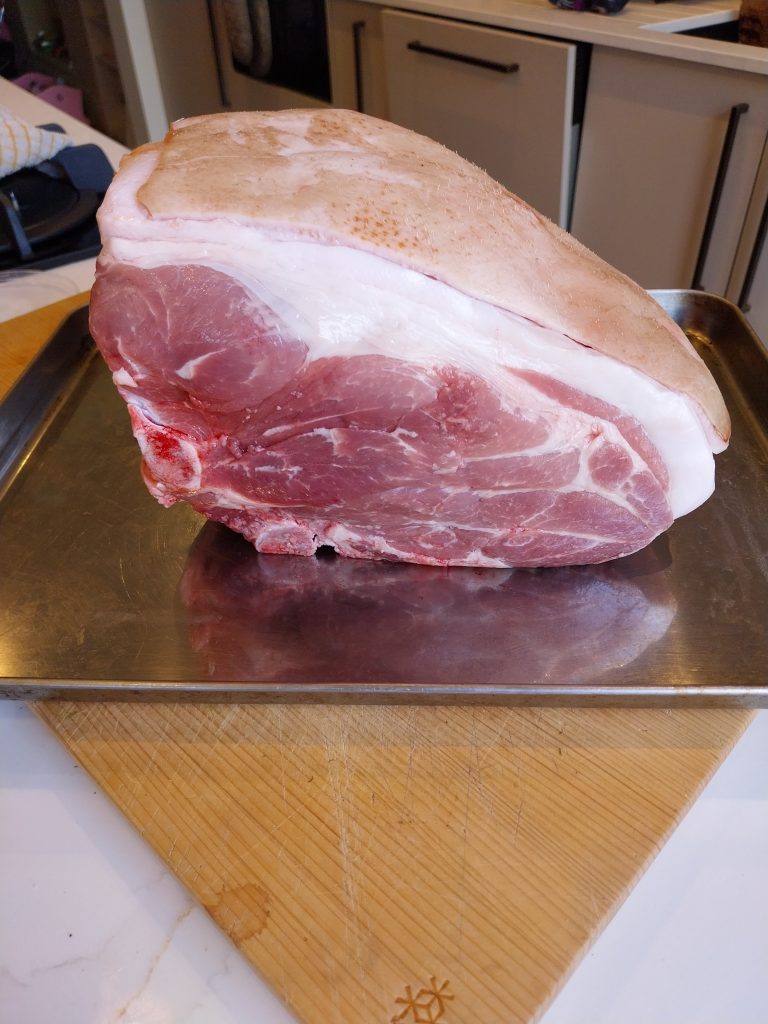
The shoulder came home from the supermarket in two pieces. Pork shoulders typically come rolled, skin-on, fat-on. Once you peel back the skin and trim the fat layer to season the meat properly, the joint can come apart along the natural bone seam: a smaller piece and a larger piece, both untidy, both different sizes, both with their own surface area for bark and their own internal mass to render. That’s what a properly-prepped supermarket shoulder looks like before the cook starts.

Two pieces of UK supermarket pork shoulder seasoned and on the BGE Large grate mid-cook at 110°C indirect, showing the natural two-piece state most UK BBQ recipes don't acknowledge.
The two-piece state on the grate mid-cook — what supermarket pork looks like once you’ve peeled back the skin and seasoned both pieces.

The pit control was the strong skill of this cook. I lit the BGE Large single-spot, dropped the ConvEGGtor in, set the dome to 110°C and walked away. The cook held 110°C for nine hours straight. The vents barely needed touching: UK May ambient (around 16°C that day) and the BGE’s excellent seal meant the fire didn’t need much air to maintain temperature. If you’re learning to cook on a kamado, this is the temperature to practice on. Steady, forgiving, easy to read on the dome thermometer once you’ve calibrated by eye against an oven thermometer.

But pit control isn’t the whole cook.

By 21:50, nine hours in and well past the 9pm window I’d budgeted for slicing, both pieces were still short of probe-tender. The smaller piece measured 88°C internal, the larger piece 85°C. Probe-tender wants 93–95°C and the right feel through the meat, resistance like warm butter. Neither piece was there. 110°C is a great temperature for control discipline but slow for collagen at this scale. In hindsight, 121°C from the start would probably have closed the cook before bedtime. Either start earlier (lighting up at 10am instead of midday), or run hotter (121°C with vents fractionally wider). The discipline isn’t punishing the cook for being slow; it’s planning realistically for what 110°C delivers on a pork-shoulder-sized joint.

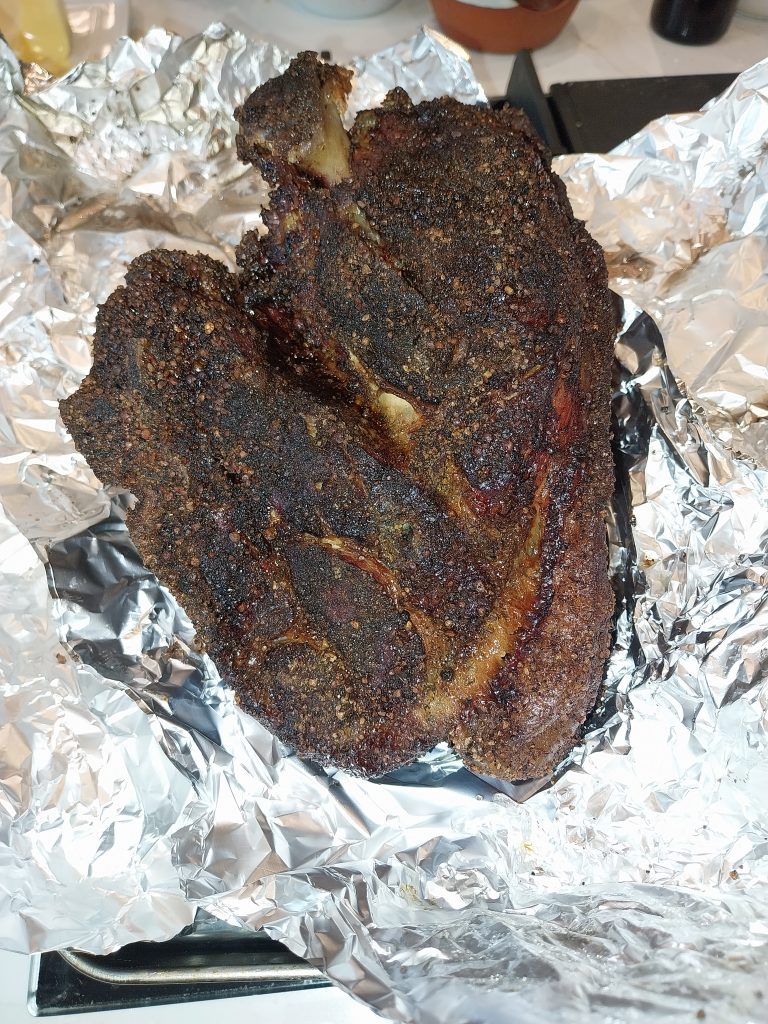
Smaller pork shoulder piece at the 21:50 bedtime check, around 88°C internal — bark set, strands starting to pull but the cook isn't quite there yet. The moment that triggered the overnight faux-cambro.
The 21:50 bedtime check — smaller piece at 88°C, bark fully set, strands starting to pull but the cook hadn’t closed yet.

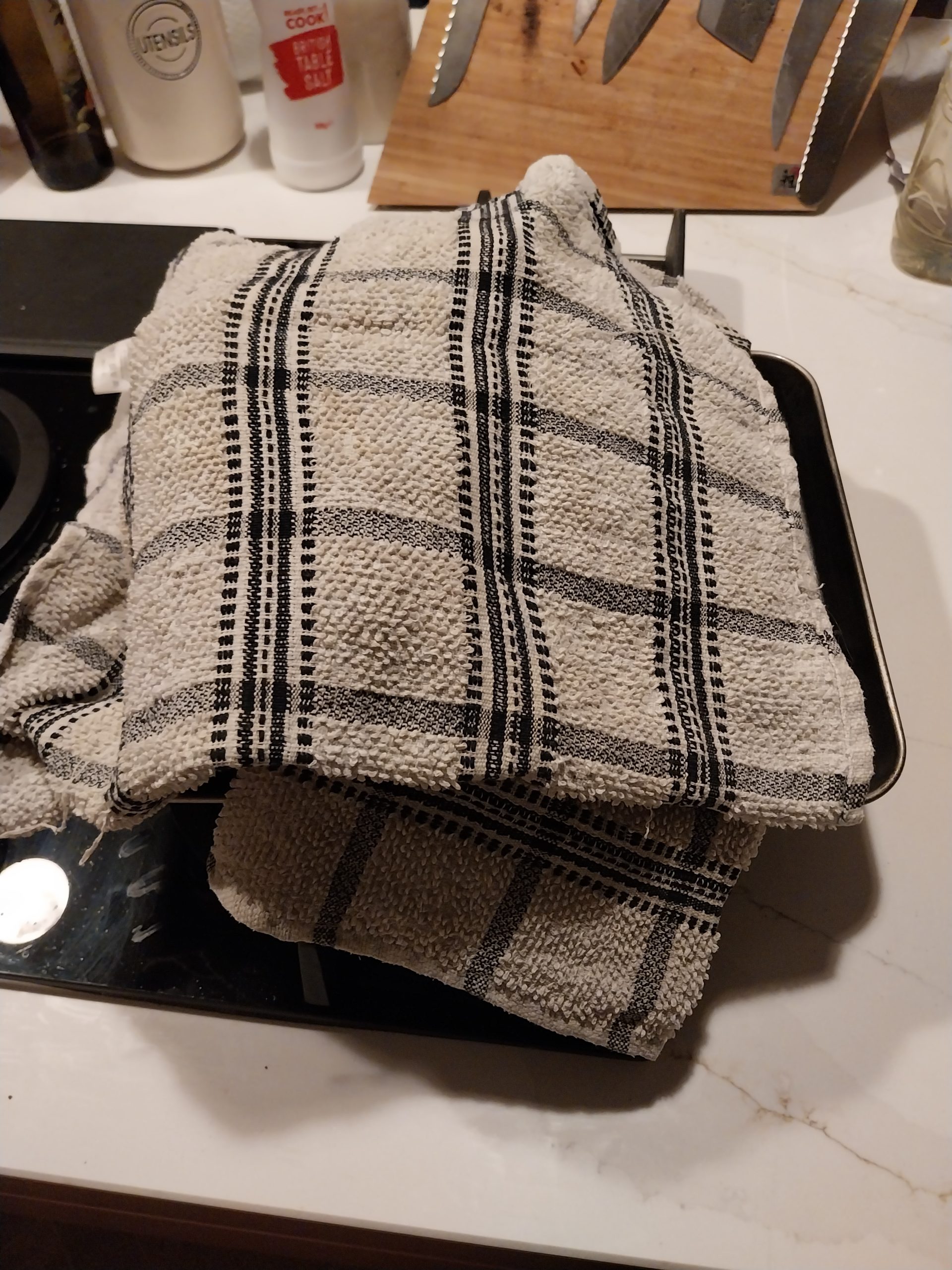
Around 22:00 I made the call. I wrapped both pieces in foil, brought them inside, piled them with clean tea towels, and faux-cambro’d overnight. Not in an insulated cooler (which would have held heat better), but in a cold oven with the towels for insulation. The principle is the same: keep the meat warm enough to keep working but not actively cooking, let the residual heat finish what the cook hadn’t quite closed.

Friday morning, the unwrap went two different ways.

The smaller piece pulled cleanly. It came apart in strands when I tugged at it. The overnight rest from 88°C downward had been enough for the collagen that was close-but-not-quite to finish rendering. The flavour was right, the bark held its character, the texture had the give you want from pulled pork. This is the piece that became the slider plate: five open buns, lettuce, the pulled pork sitting on top in proper strands. A good lunch.

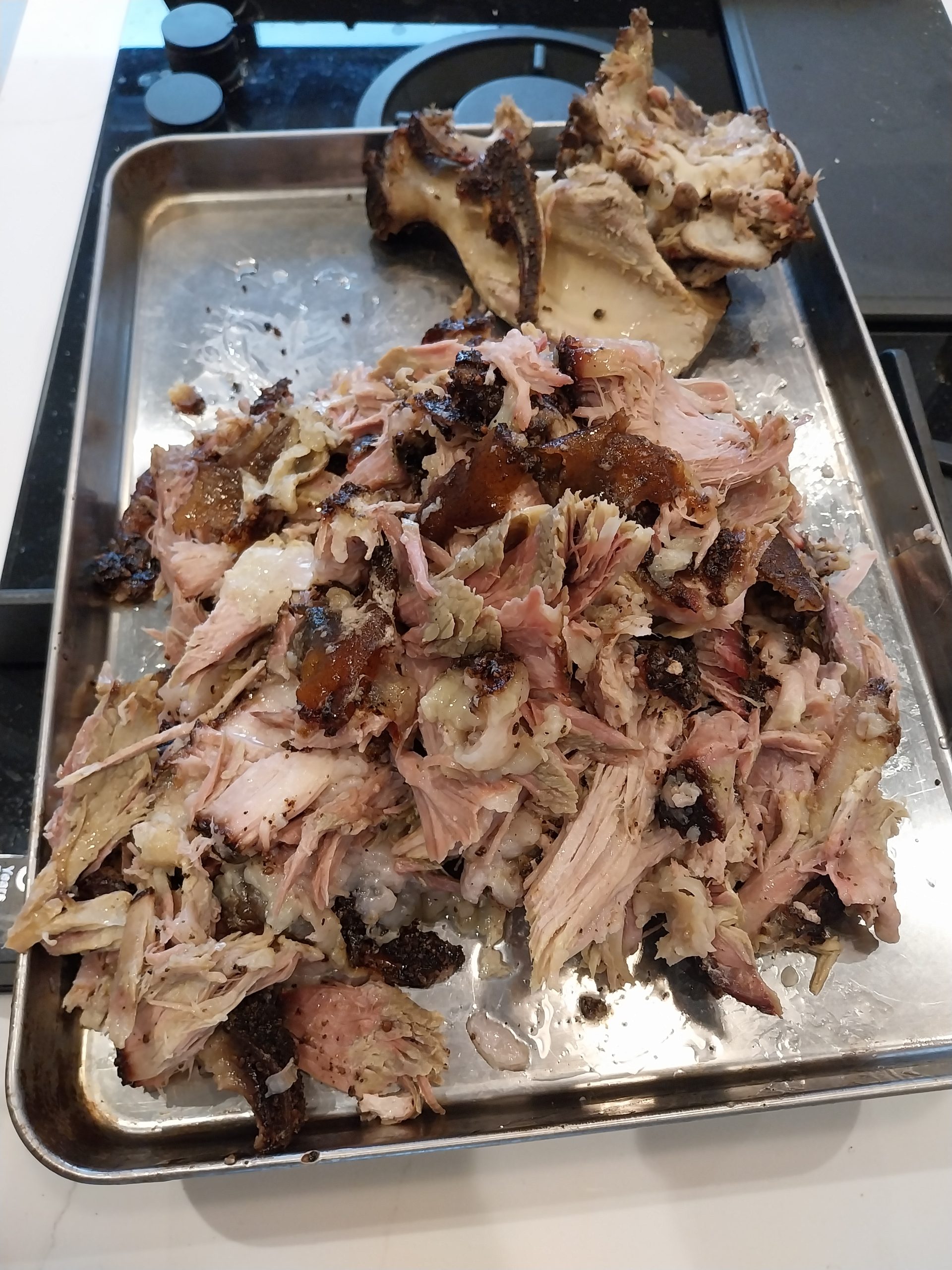
The larger piece didn’t quite get there. It came out of the cambro at a temperature that should have been pull-tender but the meat didn’t break apart the way pulled pork wants to. Collagen wasn’t fully rendered. I chopped it into sandwich-sized chunks rather than force a pull. Chunked pork on the same buns alongside the properly-pulled smaller piece. Different texture, same flavour, no pretending it was something it wasn’t.

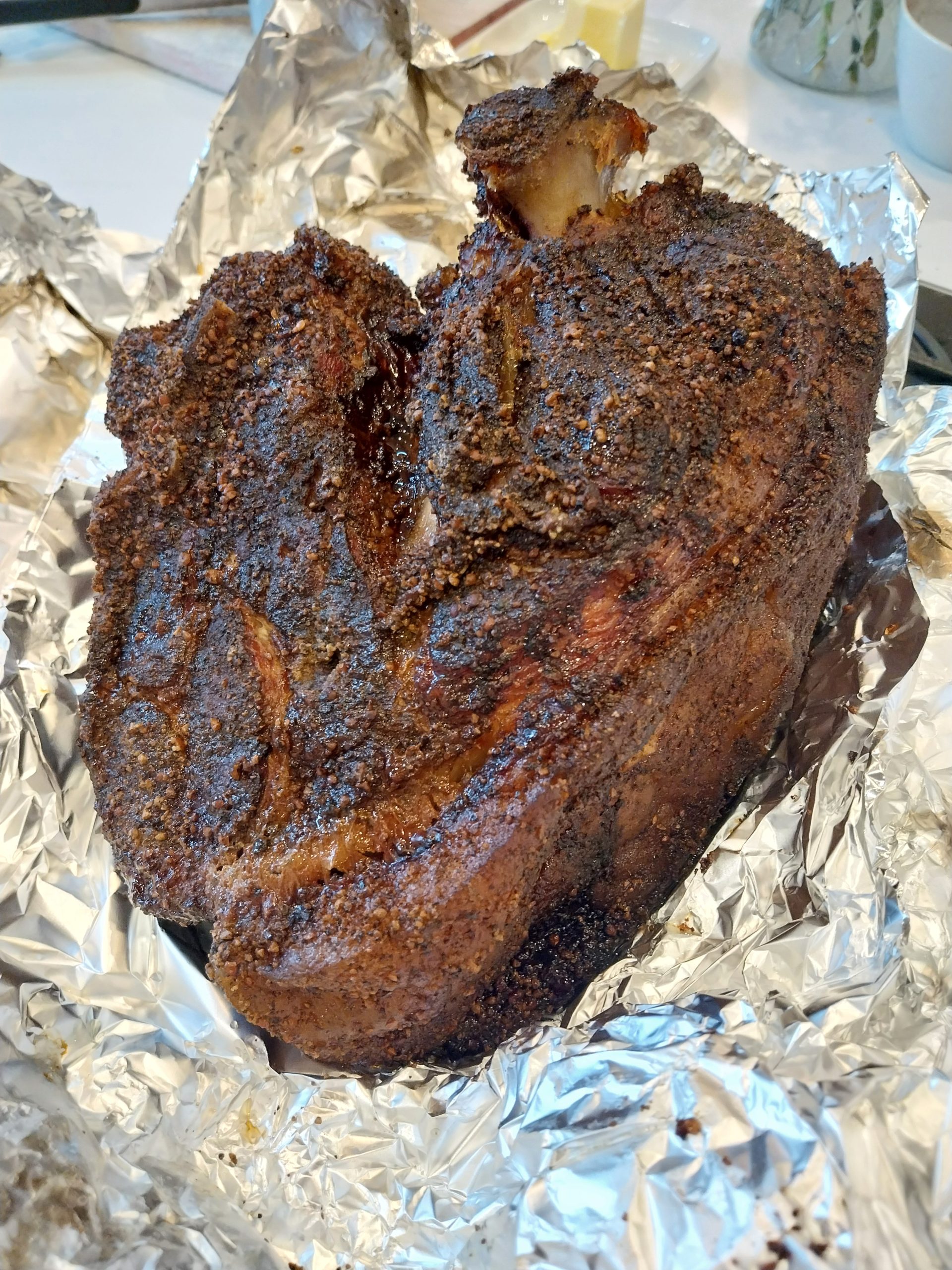
Pork shoulder after the overnight faux-cambro rest — smaller piece pulled cleanly, larger piece needed chopping rather than pulling because its collagen hadn't fully rendered before the cook was cut short.
The morning unwrap split the result in two: smaller piece pulled cleanly, larger piece chopped into sandwich-sized chunks because the collagen hadn’t fully rendered.

The read: 110°C plus a 9-hour window plus a supermarket two-piece state didn’t quite add up to clean pulled pork. The cook was good. The control was excellent. The faux-cambro overnight rescued the close-but-not-quite piece. The larger piece needed more active cook time, not just more hold time, and chopping it was the right call.

Where this leaves me:

Next cook, I’m doing three things differently: starting earlier, running 121°C, and having the wireless thermometer on the kit list before the cook, not after.

The smaller piece tells me the method works on supermarket meat. The larger piece tells me nine hours at 110°C isn’t quite the time budget supermarket shoulders need.

Variations

Things I’d try next time, with notes on which I’ve cooked versus which are still on the list:

Start earlier, same 110°C. If the time budget is the bottleneck, light the kamado at 10am rather than midday. The extra two hours at the same temperature gets the cook to probe-tender before bedtime without changing anything else.

Run 121°C / 250°F from the off. A higher pit temp closes the cook faster on the same time budget at the cost of slightly more attention to vent control. The higher dome temp is less forgiving than 110°C, and you’ll want a small tweak every couple of hours rather than once or twice across the cook. I’ll cook this variation properly and update the piece with a side-by-side once I have it.

Premium butcher single-piece shoulder. Tom Hixson, Pipers Farm, your local independent. Materially more expensive but uniform internal mass, no two-piece state, easier prep. The cook protocol works the same; you just don’t deal with the smaller-vs-larger piece divergence. Worth it for a dinner party where presentation matters.

Wireless meat thermometer. This is the kit gap I’d close before the next cook. A probe with an alarm at 88°C and 93°C would have told me, hours earlier in the evening, whether I needed to bump the pit temp or commit to the faux-cambro. Without it, the bedtime decision becomes a guess based on the dome thermometer and the probe reading at one moment in time. I’ll cook this again with the wireless thermometer once it’s in the kit list, and I’ll update this piece with the result.

FAQ

What’s a “faux-cambro”?

A faux-cambro is the home-cook version of a Cambro (the insulated brand-name food carrier used in professional kitchens to hold cooked food warm). For BBQ, the technique is to wrap cooked meat tightly in foil, then bury it in a stack of clean tea towels inside an insulated cooler (best) or a clean cold oven (works fine for shorter holds). The wrap and the towels insulate the meat so it cools slowly from cook temperature down to safe serving temperature over hours, not minutes. The cook keeps working through the rest in two ways: collagen that was close-but-not-quite renders the rest of the way as the meat holds warm, and the muscle relaxes and reabsorbs juices. For pulled pork specifically, the faux-cambro is the bedtime tool: when the cook hasn’t quite closed before you need to sleep, the foil-and-towels overnight rest finishes the job if the meat is close enough to probe-tender.

Can I cook pulled pork on a kettle barbecue instead of a kamado?

Yes, with adaptation. Snake method for the coal, target dome temperature around the same 110°C, same foil overnight wrap if you need it, same probe-tender check. Vents need more attention on a kettle than on a kamado because the heat-loss profile is wider. Total cook time similar to slightly longer. I haven’t done this specific recipe on a kettle yet, so treat the kettle version as a sketch not a recipe.

What if my supermarket shoulder comes in one piece, not two?

Possible: occasionally a supermarket shoulder is prepped as a single piece rather than separating along the bone seam, particularly the smaller “half” shoulders. The cook works the same way, but expect the single piece to take slightly longer to probe-tender (single mass renders slower than two smaller pieces side by side). Plan for 10 hours rather than 9 as a working baseline. Premium butcher single-piece shoulders behave the same: longer cook, more uniform outcome.

Why 110°C if you wished you’d run 121°C?

Control discipline. 110°C is the temperature a kamado holds with almost no vent adjustment, especially in UK ambient conditions. If you’re learning to cook on a kamado, this is the temperature to practice on. 121°C is faster but less forgiving on vent control; you’ll be making small adjustments every couple of hours. The recipe documents the 110°C cook because that’s what I did. The variation above gives you the 121°C alternative when control isn’t the thing you’re learning.

How do I know whether to faux-cambro or keep cooking?

A temperature-based decision rule, taken at around 8 hours in. If the smaller piece is at 88°C internal or higher and the larger is at 85°C or higher, faux-cambro will finish the cook on the smaller piece during a 10-hour overnight rest. If either piece is significantly below those temperatures, you need more active cook time, not just rest time. The right move there is to bump pit temp to 121°C and add 2–3 hours, accepting the longer cook.

Can I do this in a regular oven instead?

Yes, but you lose the smoke entirely. Set the oven to 110°C fan-off, place both pieces on a rack over a tray (the tray catches drippings), and cook for the same 9-hour window. The cook protocol works; the bark is softer and there’s no oak smoke flavour. If you want a smoke note in an oven version, a teaspoon of smoked paprika in the SPG rub gets you closer than you’d expect, but it’s a different beast from kamado-cooked.

How long can I keep the faux-cambro going?

A comfortable maximum is around 10–12 hours in an insulated cooler with the lid down and the meat wrapped tight in foil. A cold oven with tea towels for insulation works for 8–10 hours before the meat starts losing meaningful heat. Past 12 hours you’re approaching food-safety territory; the meat surface needs to stay above ~60°C through the rest. If the cook ends up needing more than 12 hours of hold time, the right move is to refrigerate after the wrap and gently reheat the next day rather than holding warm overnight.

What’s the best way to use the larger piece if it didn’t pull?

Chop it sandwich-sized rather than forcing a pull. Chunked pork on slider buns alongside the properly-pulled smaller piece works perfectly on a plate; the texture difference reads as variety rather than failure. Alternative uses: pork ragu the next day (chunk the meat further, simmer in tomato sauce for an hour), tacos (chunked or shredded), or in a sandwich with sharp pickles. Don’t waste it; the under-rendered piece is still good pork.

Sourced from cook log 21–22 May 2026. The cook documented a UK supermarket pork shoulder in its natural two-piece state through a 9-hour 110°C indirect cook on the BGE Large, the bedtime decision to faux-cambro overnight, and the morning outcome.