Published 31 July 2026 · Last updated 17 October 2026 · By Ben Austen · Affiliate disclosure
If it’s your first time smoking meat, I’d start with a brined pork loin. I think it’s the easiest one to do. It cooks at 140°C (284°F) on my Big Green Egg, and you can eat it the same afternoon. For low-and-slow BBQ I’d do a pulled pork second, because thirteen hours of wondering whether it’s working is a lot for a first go. On my first proper low-and-slow, a pulled pork, I made all of the mistakes. The pieces of meat were too small, I had no probe, and I think I cooked it too hot. I’ve cooked on the Egg about 35 times now.
Key takeaways
- Close the vents early and aim under your temperature. Pork sitting at 90°C (194°F) for 45 minutes just takes a bit longer, but if you overshoot it can take an hour to an hour and a half to come back down.
- You need lump charcoal, a firelighter, gloves, tongs and at least an instant-read probe. On a kamado add a deflector, but you don’t need a chimney starter.
- For the long cooks I run my Egg at 110°C (230°F), and that means the top and bottom vents open just a crack.
- I take the pork loin off at 62°C (144°F) and serve it pink. That’s below the UK Food Standards Agency’s guidance for pork, which is 70°C (158°F) for two minutes.
- On my pulled pork the stall held the meat between 75°C and 80°C (167–176°F) for about four hours. Leave it alone and do something else.
At a glance
| Step | Temperature | How long |
|---|---|---|
| Practise the fire, then cook something cheap | Hold 180°C (356°F), nudge up to 220°C (428°F), then bring it back down | No set time |
| Light the fire and let it settle | 110°C (230°F) | 20–25 minutes with good lump, up to 40 while you’re learning |
| First cook: brined pork loin | 140°C (284°F), off at 62°C (144°F) | About two and a half hours for a 2.2–2.5 kg rack |
| The long one: pulled pork | 110°C (230°F), off at 93°C (199°F) | About 13 hours for a 3.3 kg shoulder |
| Brisket | I haven’t cooked one yet |
What is low-and-slow BBQ?
Low and slow cooking means cooking meat at a low temperature for hours rather than minutes, with the meat kept off the direct heat of the coals. On my Egg that’s 110°C (230°F) for the long cooks, like a pulled pork, and 140°C (284°F) for something shorter, like a pork loin. The smoke gets into the meat, and on a cut like a pork shoulder the long cook turns tough meat soft enough to pull apart. Doing this is why I moved to charcoal. I had a gas barbecue for a couple of years, and gas always feels like cheating.
1. Get the kit
For charcoal, the B&Q restaurant grade lumpwood is what I use most of the time. Big K is the best I’ve used, but it’s expensive. Don’t buy Diall, B&Q’s own-label lump: when I tried it the lumps were tiny, and fifteen minutes after lighting it had barely caught. There’s more on all three in my charcoal guide. For firelighters a natural one is all you need. Avoid the old white paraffin blocks, because the paraffin taste carries into the food.
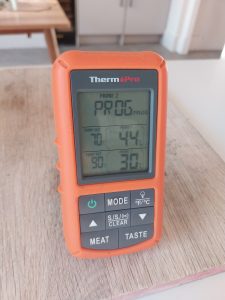
I’d have at least an instant-read probe for the first cook. For the long ones I use a ThermoPro TP20, a leave-in thermometer with two wired probes and a wireless receiver, so I can keep an eye on the meat from the kitchen. It’s about £40, and my thermometer guide has the others I’d look at.
On a kamado you need a deflector to cook indirect. On my Egg that’s the ConvEGGtor (ceramic deflector), and it goes in for every low-and-slow. If your kamado didn’t come with one, my deflector guide goes through them.
If you’ve got a kettle, a chimney starter is how I’d light it. Until about five years ago, I’d used a Weber Master-Touch for more than twenty years, always with a chimney. Low and slow works on any kettle, Weber or not, but I’ve only done it on my Egg, so my kettle guide is the place to start.
2. Light it
For a long cook I use the minion method. I fill the basket with lump, put one firelighter in the middle and light it, and the fire spreads slowly through the rest of the charcoal over the cook. Fill it up loads. I use an ash basket, so after the cook I shake the ash out and use what’s left next time, which means you can’t really put too much in.
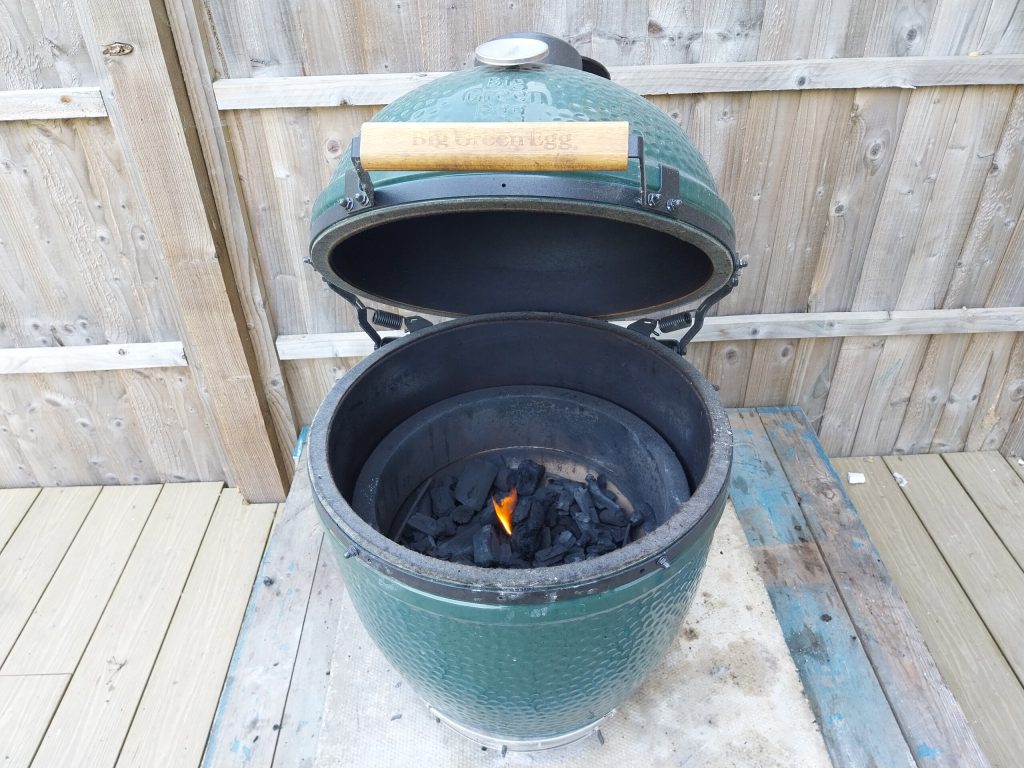
When I started I used three firelighters, and it lit far more charcoal than I needed. One is enough. Leave the lid open for a few minutes while it catches, then close it with the vents open so it draws air through like a chimney. The deflector isn’t in yet at this point.
3. Get it to 110°C (230°F) and don’t overshoot
With good charcoal my Egg gets to 110°C (230°F) in about 20 to 25 minutes. It can take up to 40 minutes, especially while you’re learning, and it’s easy to overshoot. So close the vents down early. At 110°C (230°F) mine has the top and bottom vents open just a crack.
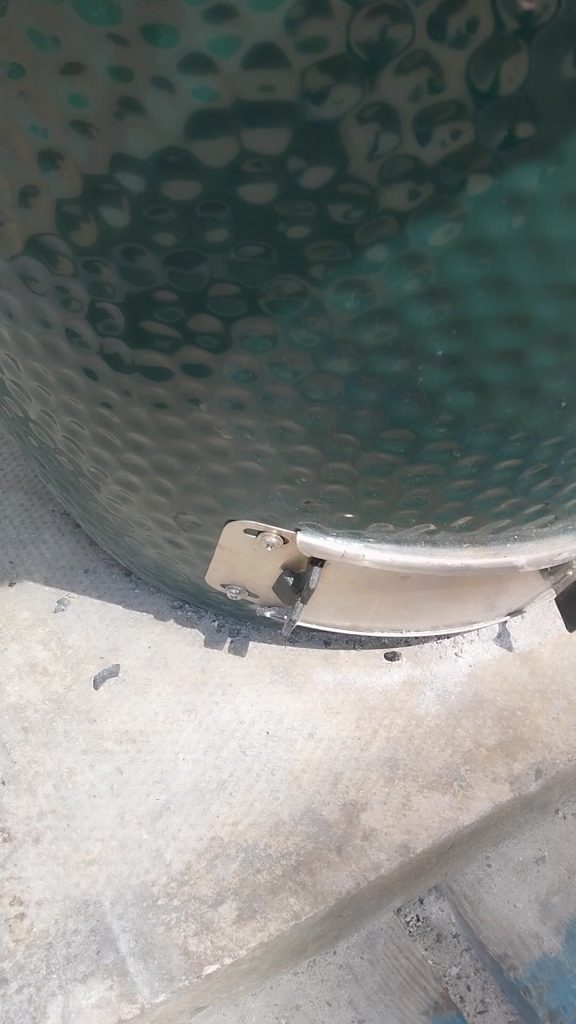
The deflector, the drip tray and the meat all bring the temperature down when they go in, or at least stop it climbing as quickly, so you can afford to aim low. If you go over, it takes ages to come back down, an hour to an hour and a half. If you undershoot there’s no drama. Pork sitting at 90°C (194°F) for 45 minutes just takes slightly longer. I’d always rather undershoot. A small vent tweak can move the temperature 15 to 20°C (27 to 36°F).
I go by the dome thermometer for the Egg’s temperature. I’ve checked it against the TP20 and it’s within about five degrees, so it’s a good guide, but it’s nowhere near as good as having a probe in the meat. Wind has never changed a long cook for me, and drizzle has been fine. I haven’t cooked through a cold spell or proper rain yet.
4. Practise on something cheap
Before you put a pork loin on, have one go with no food at all. Light it, hold it at 180°C (356°F), then nudge it up to 220°C (428°F) and bring it back down again. Going up is easy, and coming down is the hard part. To hold 220°C (428°F) on my Egg the bottom vent is open about a finger’s width, maybe two.
Then cook something cheap, like peppers, onions, courgettes or a pack of sausages. Ruining a pepper costs you 50p. Ruining the sausages costs a fiver and your dinner.
5. Set up for indirect and add the smoke
Once the fire has caught, the deflector goes in, and a drip tray lined with foil sits on top of it, under the grate. I leave the tray dry.
For smoke I use oak, one or two chunks. I give it five or ten minutes, until the smoke goes from thick and white to blue, before the meat goes on. You don’t need to soak the chunks, because on a low-and-slow they don’t burn through quickly. My wood chunks guide has where to buy them.
6. Your first cook: a brined pork loin
A bone-in pork loin goes in a salt and sugar brine for 24 hours, gets an SPG rub (salt, pepper and garlic), and cooks at 140°C (284°F) indirect until the middle reads 62°C (144°F). For a 2.2 to 2.5 kg rack that takes about two and a half hours, but go by the probe, not the clock. I serve it pink, which is below the UK Food Standards Agency’s guidance for pork of 70°C (158°F) for two minutes.
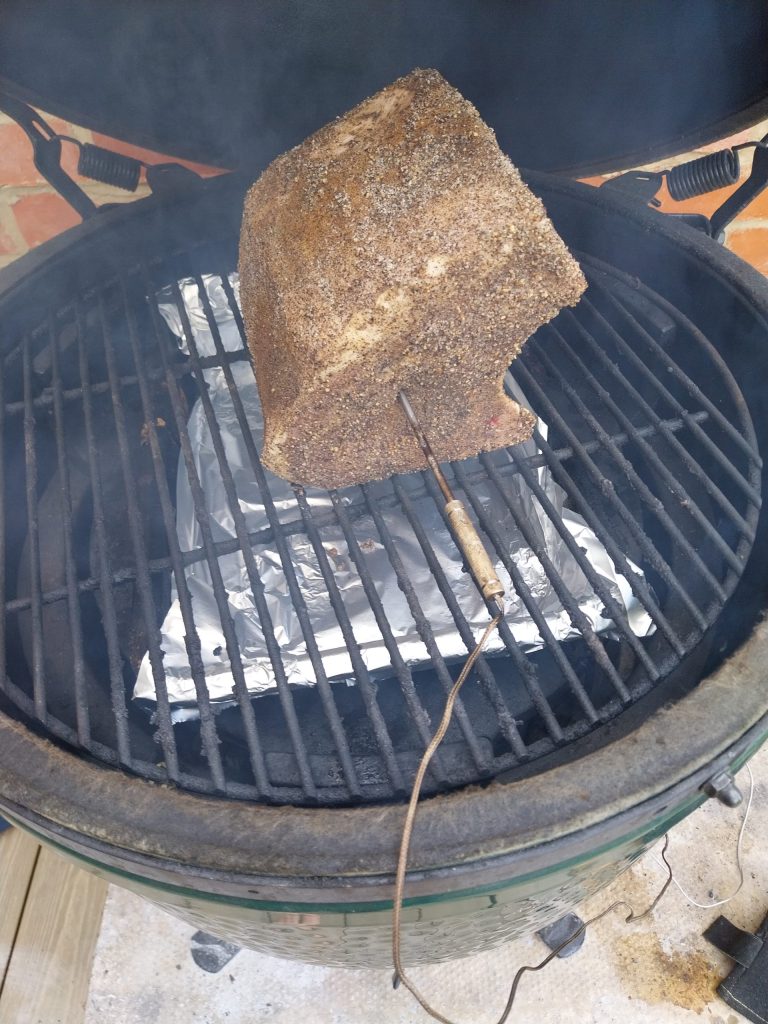
Then wrap it in foil and rest it, for longer than you think. My September one rested for nearly two hours and it was great. The full method is in my bone-in pork loin recipe.
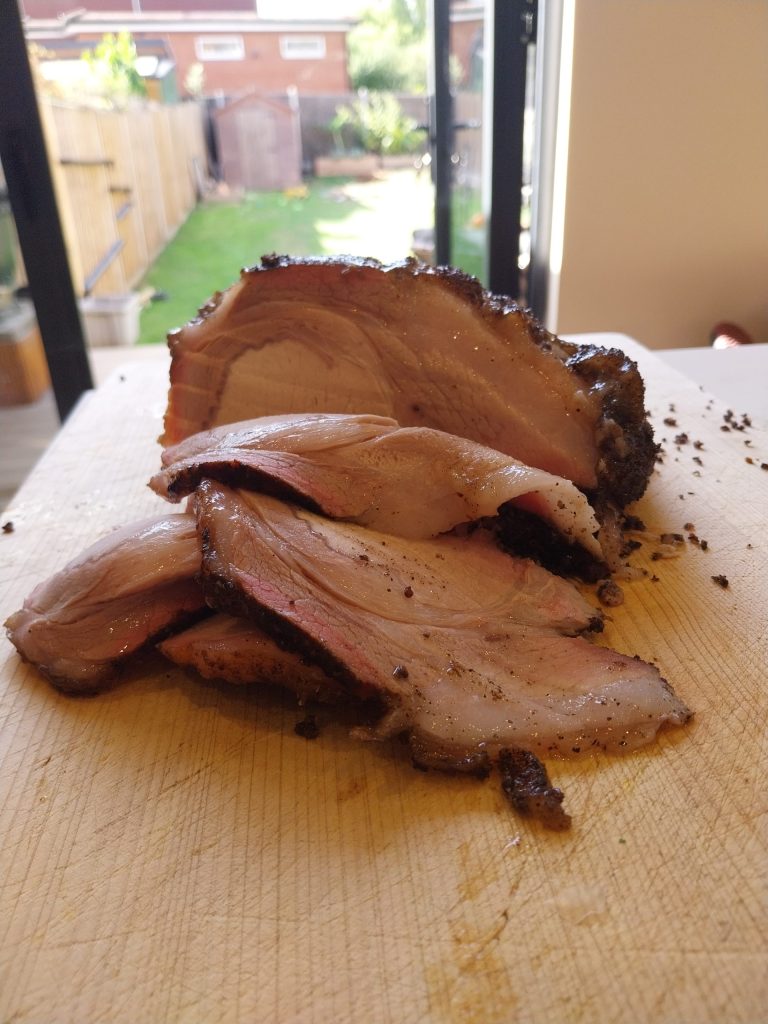
Pork belly works as a first cook too. I’d run it a bit hotter than the long cooks, at about 140°C (284°F). I wouldn’t start with burnt ends, though, because they’re more complicated.
7. The long one: pulled pork
For my pulled pork I put a 3.3 kg bone-in shoulder on at 10am with a lot of SPG rub, at 110°C (230°F) over three small chunks of oak. It came off at 22:46 at 93°C (199°F), when the probe went in smooth as butter. This is the cook a leave-in probe is for, because I could see where the meat was from the kitchen all day.
The hard part is the stall. Mine got to 75°C (167°F) just after 4pm and then barely moved, and it took until just after 8pm to reach 80°C (176°F). It’s like hitting a wall when you’re running a marathon: it doesn’t budge for longer than you think. The best thing to do is not watch it and get on with other things.
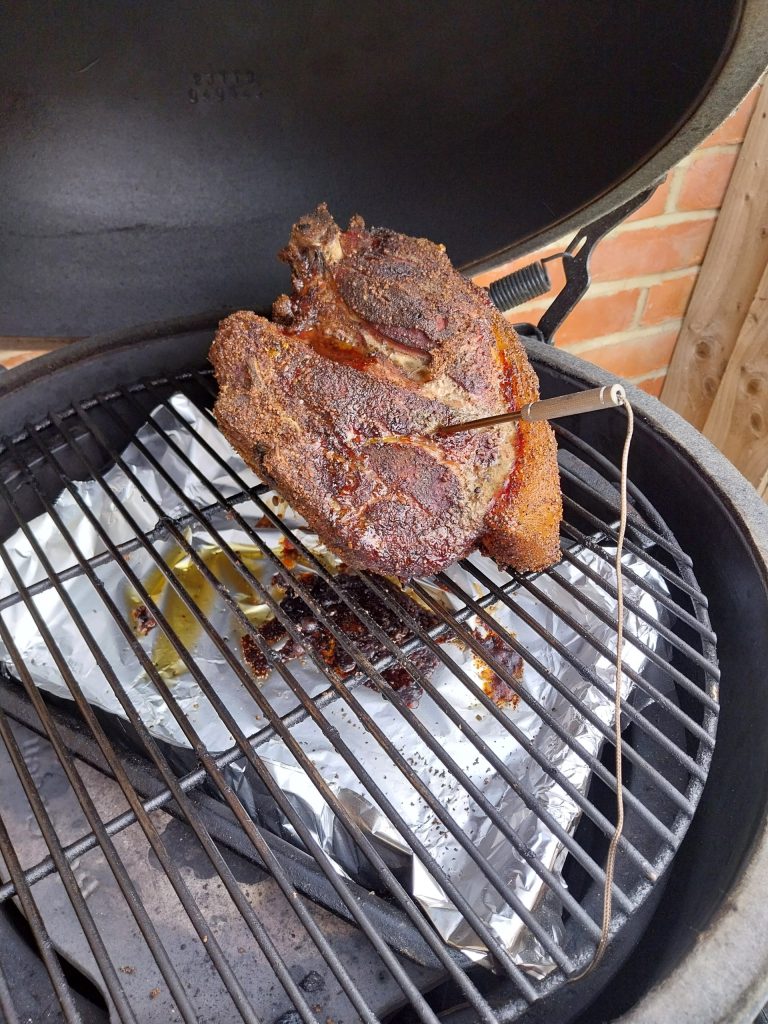
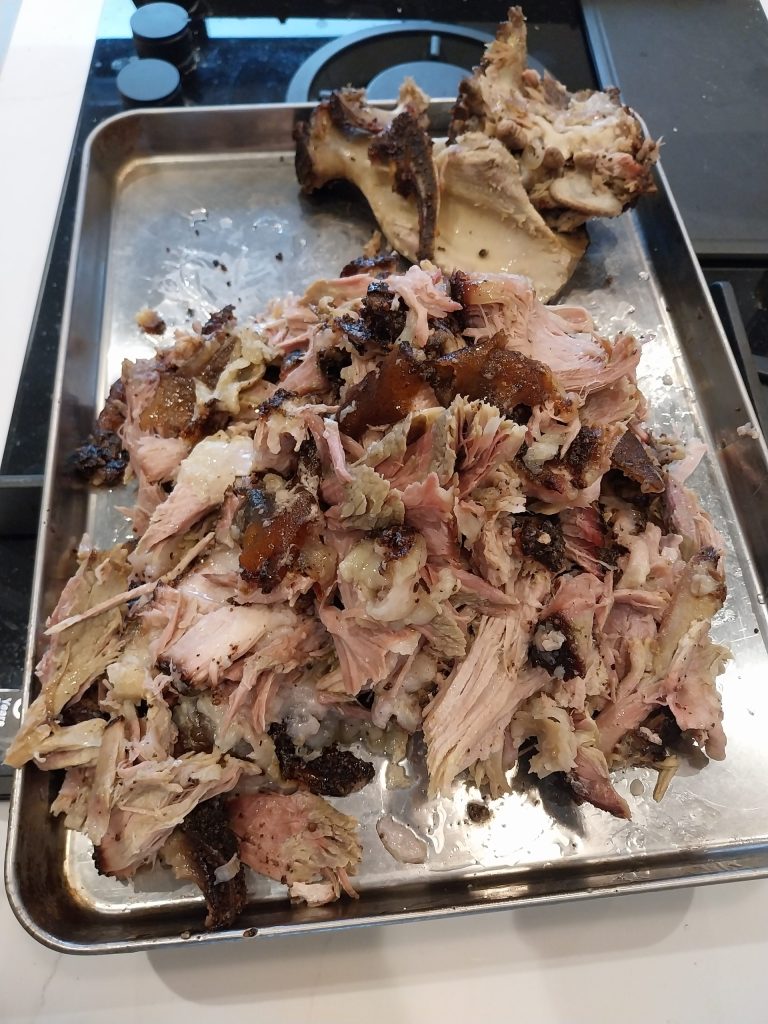
I tend to wrap, because I think it speeds things up slightly, but I didn’t wrap this one, and I think you get better bark if you don’t. Try both. It was too late to pull it that night, so I double-wrapped it in foil, wrapped that in tea towels and left it in the switched-off oven until the morning. The full cook is in my pulled pork recipe.
8. Brisket, later
I haven’t cooked a brisket yet. I’d leave it until you’ve done a few long cooks like the pulled pork and you trust your fire.
What to skip
Don’t use a chimney starter on a kamado. It works, but it lights too much charcoal at once, and then the kamado is fighting to stay low. You don’t need a temperature controller to start, either. I’ve never used one, and I think learning the vents is part of the fun.
If you’re going to put a pulled pork on first anyway, that’s fine. Get a probe in it, close the vents down early, and give it the whole day.
Frequently asked questions
What temperature should I use for low and slow BBQ?
I use 110°C (230°F) for the long cooks, like pulled pork and short ribs, and 140°C (284°F) for a pork loin.
What is the best BBQ for low and slow cooking?
A kamado or a kettle will both do it. I cook on a Big Green Egg Large, and my best kamado guide compares it with the others.
Should I cook pork loin direct or indirect?
Indirect. I cook mine at 140°C (284°F) with the deflector in.
How long does a kamado take to get up to temperature?
With good lump my Egg gets to 110°C (230°F) in about 20 to 25 minutes. Allow up to 40 while you’re learning.
Do I need to soak wood chunks?
No. On a low-and-slow they don’t burn through quickly, so there’s no need.
Can you cook low and slow on a kettle?
Yes, on any kettle, Weber or not. I’ve only done it on my Egg, so my kettle guide is the place to start.
Sources and method
Everything here comes from my own cooks on a Big Green Egg Large, which I’ve had since Christmas 2025 and cooked on about 35 times. On the Master-Touch before it I only ever cooked direct, and I’ve never done a low-and-slow on a kettle or cooked a brisket. I checked my dome thermometer against a ThermoPro TP20, and the TP20’s price on 17 October 2026.
- Food Standards Agency, Cooking your food
- Barbecue FAQ, Minion method
Wrapping up
Start with the loin. All three times I’ve cooked it, it came out pink and juicy. Then put a pulled pork on first thing one morning, get the probe in, and leave it alone through the stall.
My Big Green Egg was a present from my sister Kate. Big Green Egg had supplied it to her for a paid content partnership, which has since ended.