Kamado vs gas grill — when each is the right choice for a UK garden

Published 9 August 2026 · Last updated 9 August 2026 · By Ben Austen · Affiliate disclosure

If you’re weighing a kamado against a gas grill for a UK garden, you’ve probably read a few pieces that tried to name a winner. Often these oversell one side or duck the question entirely.

Both are legitimate tools, and which one is right for you depends on your inclination. There are three real reasons to move away from gas towards charcoal, whether that’s a kettle or a kamado: if you want the moral high ground, if you want the challenge of learning something, or if you want to go low and slow. If none of those three apply, gas is a perfectly good tool. Weeknight burgers on gas is a fine life.

I own a Big Green Egg Large today. Before that I had an Outback 3-burner gas BBQ for a couple of years, and I owned a Weber Kettle before that. So I’ve cooked on both sides of this for real. For me, gas always felt like cheating — but I’m a purist and want to sit on the moral high ground that most people don’t care about.

Key takeaways

  • If you want low-and-slow — brisket, pulled pork, ribs at 110°C for twelve hours — you want a kamado, or a kettle if you’re willing to babysit it. Gas can’t hold the temperature control, the ceramic mass, or the long-cook fuel efficiency the cooks need.
  • If you’re feeding kids four nights a week in 30 minutes flat, gas honestly earns its keep. A kamado can be cooking in twenty minutes — but that number wants some experience.
  • The three real reasons to move away from gas: the moral high ground, the challenge of learning something, or the low-and-slow ambition. If none apply, gas is fine.
  • Rough price band: kamados run £250 (Aldi Specialbuy) to £3,000+ (BGE XL); mainstream gas grills sit £150 to £2,000. Per-cook fuel costs come out roughly even in the UK once you actually run the numbers.
  • Both are legitimate. This is a category question, not a hierarchy.

At a glance

KamadoGas grill
Typical UK price range£250 (Aldi Specialbuy) – £3,000+ (BGE XL)£150 – £2,000+
Max temperature500°C+~280-300°C
Low-and-slow capabilityYes — 8-12 hours at 110°C on a single fuel loadVery limited (smoker box is a compromise)
Ignition to cooking temperature15-40 min (skill-dependent)3-5 min
Fuel per cook1-2kg lump charcoal (~£2.50/kg)Propane/butane bottle (~£30 for 13kg, lasts 40-50 hours)
PortabilityHeavy ceramic; not built to moveWheeled cart usually; more portable
UK retailersBGE UK, Kamado Joe (Birstall), Monolith (Black Box BBQ), B&Q GoodHome Sagami, Aldi/Lidl SpecialbuysWeber, Napoleon, Outback, Beefeater — most garden centres and big-box retailers
Learning curveReal. Weeks to months to feel confident.Minimal.

What’s actually the same

Comparison pieces exaggerate the differences. Before naming what actually separates the two, it’s worth grounding what they share, because a lot of it is what matters when you’re standing in the garden on a Sunday.

Both are outdoor grills. Both want a weather-protected spot in the garden — a cover matters on either. Both need dedicated fuel storage: bags of lump charcoal for the kamado, spare gas bottle for the gas. Both benefit from a two-zone cooking setup — direct heat on one side, indirect on the other, for anything you want to sear then finish.

Both need the same peripheral kit — a decent probe thermometer, tongs, gloves, cleaning brush, cover. Both feed similar portion counts at any given price tier: a £600 gas grill and a £600 kamado will both handle a family Sunday.

Both survive UK weather with reasonable care. Both throw enough heat for direct grilling — sausages char, chicken skins crisp, burgers seal. And both reward you learning the specific tool. Neither is plug-and-play. Anyone who tells you gas is the “just fire it up and cook” option hasn’t cooked on one long enough to know that predictable weeknight burgers still take practice.

Build quality — materials and long-term wear

A kamado is a ceramic body with a cast-iron grate and a spring-hinged dome. My Big Green Egg Large is twenty-plus cooks in across five months — no build issues, no reliability worries. The long-term wear items on a kamado are the felt gasket (replace every few years) and the metal band tension around the dome (check once a year, tighten if needed). The ceramic itself doesn’t fail.

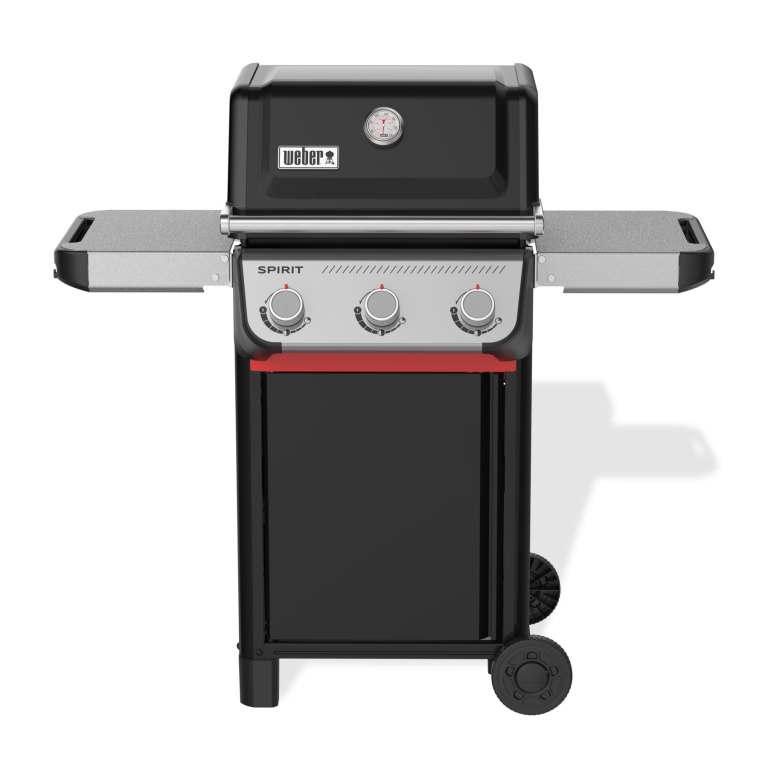
Gas grills are stainless steel body + porcelain-coated grates + gas burners. Long-term wear is on the burners (they eventually rust out), the built-in thermometer (dies before the rest of the grill does), and the drip tray (warps).

The Outback 3-burner I owned before I moved to the kamado came free — my next-door-neighbour was upgrading and posted it on our street WhatsApp group. The fold-out wooden side tables were a bit rotten on arrival, so I put in a new drip tray, sanded and re-oiled the side tables, put sand underneath the burners, and bought a cover. That got another good couple of years out of it. Gas grills tend to have a fair amount of life left in them past their first owner, if you’re willing to restore the small stuff.

If you want to see how two kamados compare on build, the BGE Large vs Kamado Joe Classic III comparison goes into the kamado-side detail.

Fuel + running cost

Kamado: lump charcoal. My daily is Big K El Cubano at about £2.50 per kilo. A weeknight cook uses maybe half a kilo; a long low-and-slow uses one to two kilos. Call it £1 to £5 per cook, most landing around £2.

Gas: propane or butane bottle. A 13kg bottle refill runs around £30-35 in most UK areas and lasts a good number of weekly cooks before you need a top-up. Cheaper per-cook than kamado — but by pennies, not pounds.

The old line that gas is dramatically cheaper doesn’t hold up once you actually cook regularly. What differs more is convenience: charcoal wants to be stored dry, and running out mid-cook is a real thing. Gas needs a spare bottle in the shed. Both want thinking about.

Heat range + control

Here’s where the two really diverge.

Kamado. 100°C to 500°C plus. The BGE Large I’ve been cooking on holds 220°C with the bottom vent open by a finger’s width — sometimes two. For 120°C low-and-slow, the bottom vent is essentially fully closed — around 99 percent shut. Small vent tweaks produce fifteen to twenty degree jumps, because 180°C is a small slice of the kamado’s 500-degree range and opening the vent slightly opens up a lot of headroom.

The hard skill isn’t holding a temperature. It’s moving between them. Nudging 180°C up to 220°C is reasonably straightforward. Bringing 220°C back down to 180°C is much harder — the ceramic retains heat, and once you overshoot it can take an hour to come back down. Overshoot is much worse than undershoot. Go past your target and you’re waiting.
Gas. Burner dials. Predictable, immediate response. You dial down, the flame drops, the temperature drops. Most 3-burner gas grills run 180°C to 280°C reliably. Below 180°C the flame won’t stay lit — that’s what rules gas out of the low-and-slow question.

So the trade is: gas gives you response speed and predictability. Kamado gives you range and precision, at the cost of learning the vents. If you want 110°C for twelve hours, gas can’t. If you want 220°C in three minutes, gas has the kamado beat.

Full Tested cook data — vent settings, cook times, hold data — lives in my Big Green Egg Large review if you want to read the specifics.

Cook style — where each shines

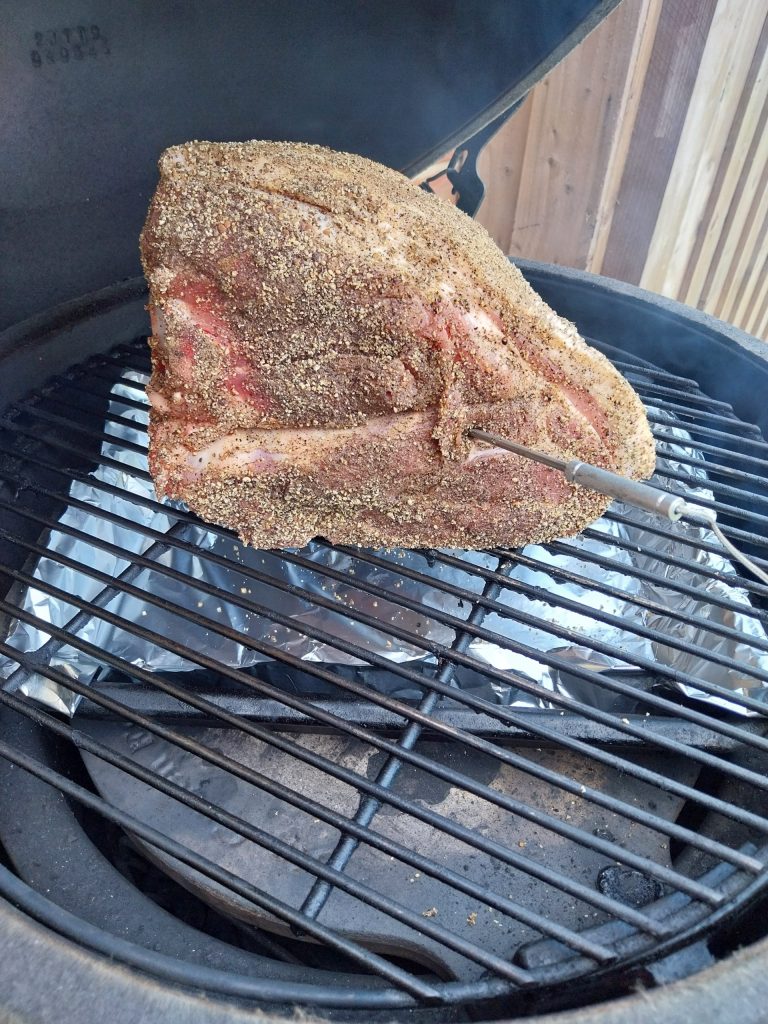
Kamado. Low-and-slow is where the kamado owns everything. 110°C dome indirect with a ConvEGGtor (ceramic deflector), a wireless probe in the meat, close the dome, and the thing runs eight to twelve hours without any intervention on a single fuel load. Real wood smoke goes on via chunks of oak or cherry or fruit wood. The ceramic mass holds heat when you open the dome to check the meat, so temperature recovery is fast.

Direct grilling on a kamado is fine too. ConvEGGtor off, vents wider, dome up to 200°C for whole trout, or the direct-after-indirect pattern where you cook a low-and-slow protein first and then throw something fast on the same fire when the main cook comes off.

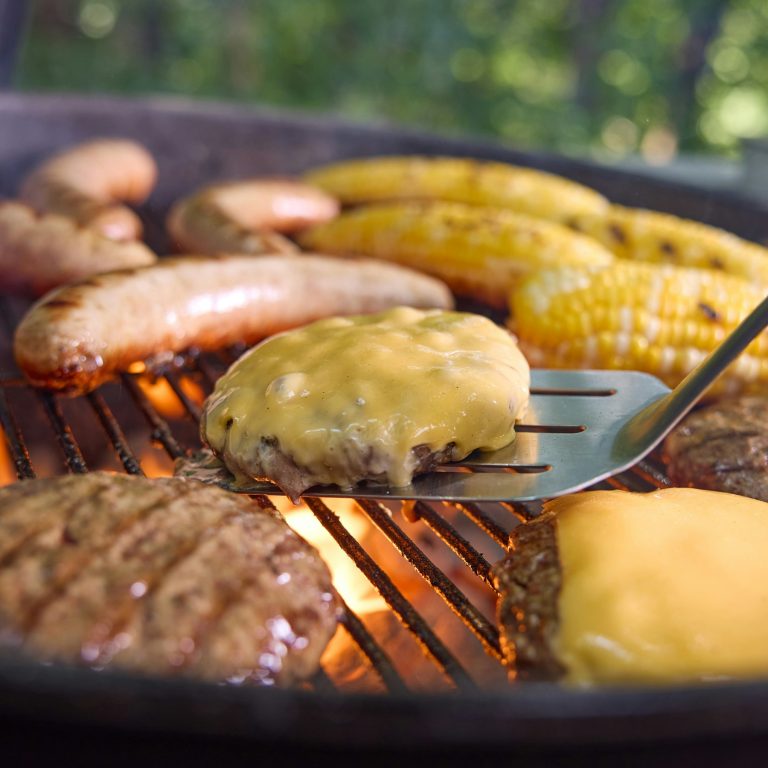
Gas. Weeknight speed cooking is where gas earns everything. Sausages, chicken thighs, kebabs, koftas, burgers, veg — all the 15-25 minute direct cooks. Big thing of gas, happy days. It’s easy. Fires up quickly, pretty even heat. No fuel logistics friction, no ash cleanup, no gasket to worry about. Kids waiting, dinner in half an hour — gas earns its space.

The question that comes up a lot: what about gas plus a smoker box for the low-and-slow reader?

If you’re a Sunday low-and-slow enthusiast, you’re beyond the gas grill smoker box. You should look to get a cheap kamado if you’re trying to get an on-ramp — the Sagami route (B&Q GoodHome Sagami at £500), or an Aldi/Lidl Specialbuy kamado at £250-£300 when they come round on the seasonal cycle. Gas plus smoker box compromises exactly the thing you’re trying to do: temperature control, ceramic mass, long-cook fuel efficiency — none of it is there. You get a bit of smoke and a lot of frustration.

Time-to-cook — weeknight vs weekend

Weeknight sausages with kids waiting. Gas: cold to cooking in three to five minutes. Kamado: fifteen to forty minutes depending on skill and load. With experience — one firelighter cube in a fistful of lump, close the dome — twenty minutes is a real number. New buyer straight out of the box, forty is more realistic for the first month while you’re learning the fire.

Weekend low-and-slow. Kamado: from cold, thirty to forty minutes to a stable 110°C, then eight to twelve hours of autonomous cook while you get on with your Sunday. Gas: can’t really do the equivalent. A gas grill can run all day at 180°C plus but not down at the temperatures a proper low-and-slow needs, and not with the fuel efficiency (you’ll drain a bottle).

Cleanup. Gas: brush the grates, cover it. Kamado: run a clean-out cycle at 300°C to burn off residue, empty the ash bin every few cooks. Both take a few minutes. Neither is significant.

UK availability + where to buy

Kamado UK options.

  • Big Green Egg — BGE UK direct, plus a network of authorised dealers, many of them garden centres. Full range from MiniMax (£925) to XL (£2,050+).
  • Kamado Joe — Birstall Garden Centre is the biggest UK dealer; various BBQ specialists carry the Classic III and Big Joe range.
  • Monolith — Black Box BBQ carries the full range.
  • Weber — Weber makes kettles rather than ceramic kamados, but the Weber Summit Charcoal (~£1,400) is kamado-adjacent.
  • B&Q GoodHome Sagami — £500 middle-rung kamado, year-round stock at B&Q.
  • Aldi and Lidl Specialbuys — around £250-£300, seasonal windows (May typical). If you want the budget entry, watch the flyers.

Gas grill UK options. Weber (both direct and every big garden centre), Napoleon (Wickes and specialists), Outback (Argos, AppliancesDirect), Beefeater (large retailers), Bosch (John Lewis-style outlets). Much wider mainstream distribution than kamados — gas grills are a garden centre category, kamados are a specialist one.

Dealer support quality differs too. If you buy a kamado, you’ll want a dealer who knows the product — parts, replacement felt gaskets, that kind of thing. Gas grills, most spares are generic enough to source from Amazon UK if the retailer isn’t helpful.

Where the kamado wins and where the gas grill does

Named reader profiles, each with a straight answer.

The weeknight-cook family — kids need feeding four nights a week.

Gas wins. If you light the fire on the kamado — the Big Green Egg — you can be cooking in twenty minutes, but that takes some experience. If you’re buying straight up and haven’t cooked on a kamado before, there’s a real learning curve. So for the family cooking straight out of the box, gas earns its keep.

If you’ve got the garden space and the money — and especially with kids — having both works. Gas covers weeknights, kamado covers Sundays. Speaking for myself, if I had both, I wouldn’t use the gas — I’m a purist by inclination and I’m happy to spend a little bit more time getting the kamado up to speed. But that’s my preference, not a recommendation for a busy family. For a lot of readers with kids, the two-tool config is what makes sense.

Cross-referenced with our UK BBQ first-time buyer’s guide if you want the kettle options too.

The Sunday low-and-slow enthusiast — pork loin, brisket, pulled pork.

Kamado. Not gas plus smoker box. If you’re a Sunday low-and-slow enthusiast, you’re beyond the gas grill smoker box. If £1,500 for a full BGE Large or Kamado Joe Classic III is out of reach, you’re looking at a cheap kamado — the Sagami route (B&Q GoodHome Sagami at £500) or an Aldi/Lidl Specialbuy kamado at £250-£300. Same category, budget entry point, real low-and-slow capability. If you want the full picture on the kamado ladder, the best UK kamado guide has the full breakdown; and if you’re at the “how do I actually do this?” stage, your first low-and-slow is the piece to read next.

The first-BBQ buyer under £500 — doesn’t yet know what they want to cook.

Kettle. Not gas, not budget kamado. A Weber Master-Touch GBS at around £265, a Weber Original Kettle at £190, or an Aldi/Lidl Specialbuy kettle at £100-£150 — any of these covers direct grilling and enough low-and-slow experimentation to reveal what you actually want. A kettle is a genuine multi-tool at that price point. The Weber Master-Touch I owned before does more than most first-time buyers expect.

The Sagami-route budget-kamado answer is right for the reader who already knows they want low-and-slow. The reader who doesn’t know yet is better served by a kettle they can learn on before committing to a category.

The apartment or small-patio cook — limited space, storage matters.

A small kettle, or a pizza oven — one of the Ooni or Gozney units. Not gas. Gas grills scale poorly to true small-space cooking because the burner-array design assumes a footprint apartment and small-patio cooks don’t have. Compact kettles (Weber Smokey Joe class) handle balcony scale and charcoal cleanly; pizza ovens handle limited-space high-heat cooking and are increasingly built for outdoor apartment scenarios. Two legitimate options — pick whichever matches the food you actually want to make.

Common questions

Can a gas grill really do low-and-slow with a smoker box?

Not properly. The temperature control isn’t there — gas struggles below 180°C, and low-and-slow wants 110°C. The ceramic mass isn’t there. The long-cook fuel efficiency isn’t there. You get some smoke and a lot of frustration. If you want low-and-slow, you want a kamado — even a cheap one.

What about pellet grills?

Different category. Pellet grills sit between gas and kamado — automated temperature control, wood-pellet flavour, longer low-and-slow than gas can manage but shorter than a kamado. Pellet vs kamado is its own comparison, and it’s the next question rather than this one.

Is a kamado worth £1,500 if I only cook weeknights?

Honestly, probably not. If low-and-slow isn’t on your list — no ambition to smoke brisket, no interest in pulled pork all day, just weeknight burgers and Sunday-lunch chicken — gas earns its keep at a fraction of the cost. £1,500 buys a lot of grill you won’t use. The kamado question is a low-and-slow question.

How long does a gas bottle last?

Rough number: a standard 13kg propane bottle gives 40 to 50 hours of active cooking. That’s ten to fifteen weekly weeknight cooks, or seven or eight big weekend cooks. Depends on burner count and heat setting. Keep a spare in the shed — running out mid-cook is a special kind of unwelcome.

Can I use a kamado in winter?

Yes. Ceramic mass actually helps in cold weather — once the fire’s established the dome insulates it beautifully, and cook times don’t stretch much. Ignition takes slightly longer on a very cold morning, but not dramatically so. I’ve cooked through winter into spring on the BGE Large without complaint.

Kettle or kamado if I have £500?

Depends whether you already know you want low-and-slow. If yes — Sagami-route kamado, straight to the category. If you don’t know yet — Weber Master-Touch kettle, learn what you actually want to cook, upgrade later if the kamado question crystallises. Both are legitimate answers.

Do I need a chimney starter on a kamado?

No. Kamado ignition is one firelighter cube tucked into a fistful of lump in the firebox, close the dome, done. The kamado’s own chimney effect draws the fire through the fuel. Chimney starters are for kettle cooks; using one on a kamado defeats the point (over-lit fuel fights kamado efficiency).

Sources and method

Twenty-plus cooks on the Big Green Egg Large across the last five months back the kamado numbers here — vent settings, ignition times, cook data. My BGE Large is a Christmas gift from my sister Kate, disclosed on the About page. Kamado Joe Classic III context is Consensus — I haven’t cooked on one; the numbers come from owner reports and my recent BGE Large vs Kamado Joe Classic III comparison piece.

Gas side: I owned an Outback 3-burner for a couple of years — inherited free from a neighbour via our street WhatsApp group, restored with a new drip tray and sand under the burners. Real cook data on gas comes from that, so it’s Tested-leaning rather than Consensus.

UK retailer prices and stock verified 9 August 2026 across BGE UK direct, Birstall Garden Centre, Black Box BBQ, B&Q, Weber UK, Argos, AppliancesDirect, and the Aldi and Lidl current Specialbuys pages.

Provenance and final verdict

Disclosure: no commission earned yet on any of the retailers named. All outbound retailer links use /go/ redirects for click tracking; where affiliate programmes exist, we disclose per Smoke and Lump’s affiliate disclosure. Standard editorial policy: I don’t link to anything I wouldn’t recommend to a friend. Full disclosure log at /disclosures/.

It comes down to your own inclination. It’s either if you want the moral high ground, you want the challenge of learning something, or if you wanna go low and slow — that’s when you move away from gas. If none of those three apply, gas is a perfectly good tool. Weeknight burgers on gas is a fine life; a Sunday afternoon spent nursing a fire is a different one. Neither is a hierarchy.

If you’re the Sunday low-and-slow enthusiast, you’re beyond the gas grill smoker box — get a cheap kamado. If you’re the family with kids who need feeding four nights a week and you’ve never cooked charcoal before, gas earns its keep. If you’re just getting into BBQ under £500 and don’t know your cook style yet, kettle. And if you’re the apartment or small-patio cook, small kettle or a pizza oven — gas doesn’t scale down as well as either.

That’s the shape of it.