Aldi and Lidl ceramic kamados vs the Big Green Egg Large — what the £1,250 difference actually buys

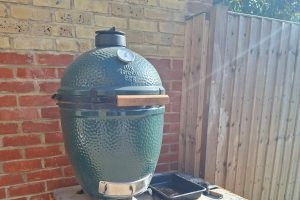
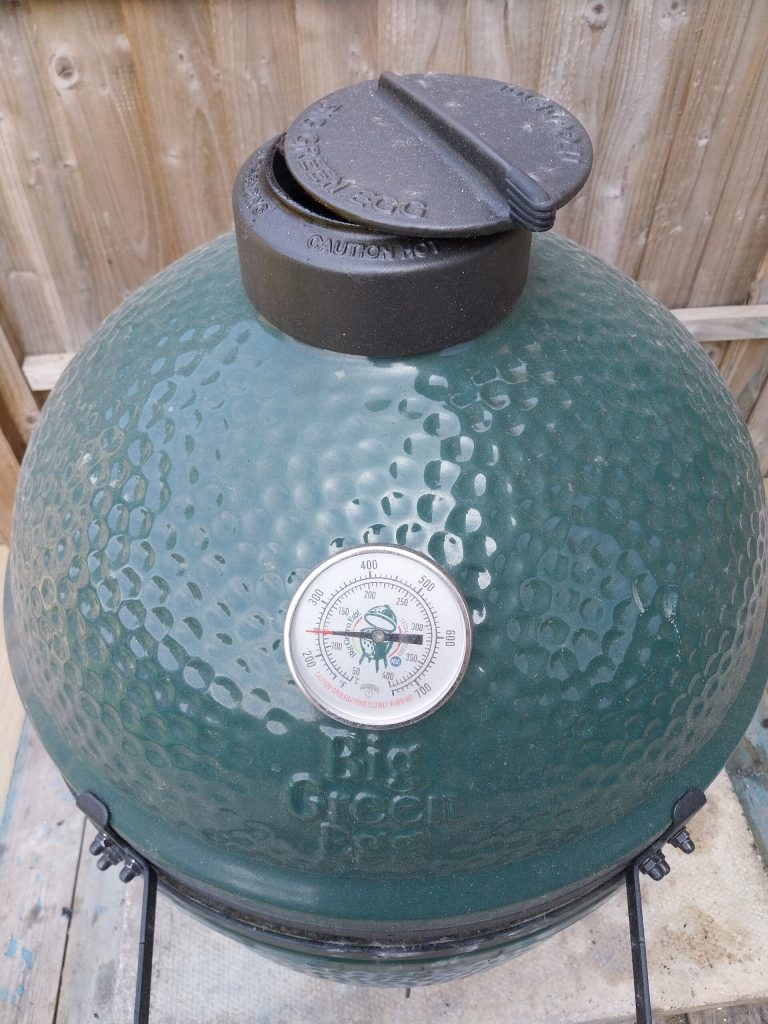
Big Green Egg Large with lid open, charcoal lit minion-style — single small flame visible at the front of the firebox, fence backdrop
The Tested side of this comparison: my Big Green Egg Large lit minion-style at 7am on 9 May 2026, ready for a six-hour short-rib cook.

Up front — I cook on a Big Green Egg Large but haven’t cooked on the Aldi or Lidl units; that side is sourced from named UK reviewers, full disclosure and sources below.

The reason I’m writing this piece, and writing it in May 2026 specifically, is that two budget ceramic kamado grills landed on UK shelves in late April and early May at prices that look — at first glance — like they should make the £1,494 Big Green Egg Large look ridiculous. Lidl’s Medium Ceramic Egg Grill went on sale to Lidl Plus members at £249 from 30 April; Aldi’s Kamado Egg BBQ hit stores at £244.99 from 3 May. The lifestyle press has covered both as Big Green Egg dupes, and the PistonHeads forum already has a “Big Green Egg vs Kamado Joe vs Aldi/Lidl” thread running. The question every UK kamado-curious buyer is sitting on right now is whether the cheap one is good enough, or whether they’re going to regret not spending the £1,250 difference.

That’s a real question and it deserves a real answer. The answer in this piece is: it depends on what you’re actually going to do with it. There are buyers for whom the Aldi unit is the right call, and others for whom the BGE is genuinely the cheaper unit over five years. I’ll show you which is which.

What this piece is NOT: an attempt to talk you into a Big Green Egg. The lifestyle press articles I’ve read in the past fortnight tend to land on “you can’t beat the real deal in terms of quality and durability” without substantiating what that actually means. That’s editorial laziness, and it’s also wrong for a meaningful slice of buyers. If you’re going to cook three or four times a year on flat ground in a small garden and you’re price-sensitive, the £244 Aldi unit is a perfectly reasonable answer. The piece below tells you when each unit is the right call, what the £1,250 actually buys, and where the cheap units fall down in ways that aren’t visible on the box.


The short version

Aldi at £244.99, Lidl at £249, Big Green Egg Large at £1,494. The headline price gap is £1,250, and the budget units come out £1,050–£1,390 cheaper than the BGE over five years of ownership across all realistic usage profiles. What the BGE buys for the premium is build quality, coal efficiency, an accessory ecosystem, lifetime ceramic warranty, and £600–£800 of resale value at year five. Cook weekly for a decade, the BGE is the better tool. Cook five times a year, the Aldi or Lidl unit is the right answer.


Key takeaways

  • Price gap. Aldi Kamado £244.99, Lidl Medium Ceramic Egg Grill £249, Big Green Egg Large £1,494 — about a £1,250 price gap (May 2026).
  • Five-year ownership cost. The cheap units come out £1,050–£1,390 cheaper than the BGE across all realistic usage profiles. The BGE doesn’t pay for itself on cost alone.
  • Build quality. BGE: thicker ceramic, tighter seal, lifetime ceramic warranty. Aldi/Lidl: thinner ceramic, standard-grade gaskets, firebox cracking inside the first two years is documented under heavy use.
  • Coal efficiency. On the BGE I hold 115°C with vents barely cracked open in UK ambient. The cheap units need wider vents and burn ~10% more lump per cook.
  • Accessory ecosystem. BGE: plate setter in the box plus side shelves, nest, ash tool, kamado aftermarket. Supermarket units: no platform; what ships is what you have.
  • Buyer-conditional verdict. Cook weekly for a decade — BGE Large. Cook five times a year on a budget — Aldi or Lidl.
  • Verdict: the cheap kamado wins on five-year cost; the BGE wins on five-year quality. Choose the unit that matches your cook frequency, not the one that feels like the right tier.

At-a-glance

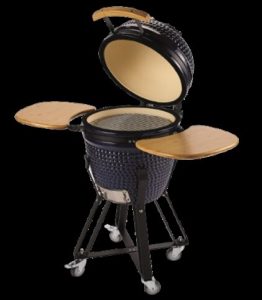
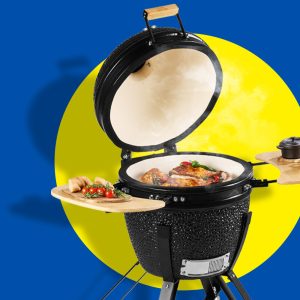
The two units I haven’t cooked on — Aldi Kamado Egg BBQ (left) and Lidl Medium Ceramic Egg Grill (right). Manufacturer / press imagery; specs and assessment in this piece are sourced from named UK reviewers and owner-forum threads (see Section 15).

The three units side-by-side. The Aldi cooking-area figure is hedged below pending confirmation from Aldi UK Press Office; I’ll update it as soon as it lands.

SpecBGE LargeAldi Kamado Egg BBQLidl Medium Ceramic Egg Grill
UK price (May 2026)£1,494£244.99£249 (Lidl Plus)
Cooking area46cm grid (~0.16m²)Approx. 46cm class (awaiting confirmation from Aldi UK Press Office)40cm grid (per Lidl product page)
Build materialHigh-density ceramicCeramic with steel frameEnamel-coated ceramic
GasketReplaceable feltStandard felt; replacement reportedly difficult to sourceStandard felt; replacement availability unclear
Top ventCast iron daisy wheelStainless steelStainless steel
WarrantyLifetime on ceramic dome and base; 5-year on metalwork (bands, hinge, grid, fire grate, vents); 3-year on ConvEGGtor / plate setter (per biggreenegg.co.uk)3 years (defects in material/workmanship, per Aldi UK Press Office May 2026)3 years (per Lidl product documentation)
Replacement partsBGE UK plus authorised dealers — full availabilityLimited; firebox replacement reportedly difficultLimited; replacement availability unclear
Accessory fitmentBGE-specific ecosystem (ConvEGGtor, EGG Mates, nest, ash tool, table fitments)Generic / non-standard; BGE accessories do not fitGeneric / non-standard; BGE accessories do not fit
Side tablesSold separately (BGE EGG Mates side shelves, ~£260)Wooden folding side tables includedBamboo side tables included
Where to buyBGE UK direct / BBQ World / John LewisAldi stores (in-store only, seasonal)Lidl stores + Lidl Plus app (seasonal)

The table is the structural anchor for the analytical sections that follow — Section 5 expands on the price line, Section 6 on build material and gasket, Section 7 on temperature stability and coal efficiency (which the top vent and seal between them determine), Section 8 on accessory fitment, and Section 9 on warranty and replacement parts.


What you actually get for £244 vs £1,494

The table above gives you the spec sheet. What it doesn’t give you is the answer to the obvious question every reader’s sitting on, which is: £1,250 is a lot of money. What does it actually buy?

The honest answer, in five categories — each of which the next four sections cover in turn:

Build quality and seal integrity

The BGE’s ceramic is thicker, denser, and built to tighter tolerances than the supermarket units. Five months in with mine, the felt gasket around the dome rim still seals nearly airtight. The cheap units use thinner ceramic with looser tolerances and standard-grade gaskets — they don’t leak meaningfully on the showroom floor, but they leak more over time and use, and that shows up everywhere else.

Coal efficiency and temperature precision

A tight seal means vent settings translate directly into airflow, and airflow translates into temperature. On the BGE in UK conditions I can hold 115°C with both vents barely cracked open. On a leakier unit you need wider vents to compensate for heat lost through seams — so you burn through about 10% more lump per cook, and your dome temperature is harder to hold steady.

Accessory ecosystem

The BGE Large comes with a plate setter in the box; from there it pairs with side shelves, a rolling nest, ash tools, and an aftermarket of fitments. The cheap units don’t have an ecosystem. Generic accessories sometimes work, but the platform doesn’t grow with you.

Replacement parts and longevity

The BGE has a lifetime ceramic warranty — BGE UK does honour it, and there are dealers who service the units. The Aldi and Lidl units are seasonal SKUs; replacement parts are reportedly difficult to source, and the firebox-cracking failure mode that gets reported on owner forums is largely terminal for the unit because there’s no easy replacement.

Resale value

A BGE Large in good condition holds £600–£800 of resale value at year five. The supermarket units have no meaningful second-hand market. If you sell up at year five, that resale figure narrows the BGE premium considerably (more on this in Section 10).

What the £1,250 doesn’t buy is “pays for itself in five years on cost alone” — the maths in Section 10 are direct about that. What it buys is a unit that’s tighter, more efficient, longer-lasting, with a real platform around it and a real second-hand market behind it. Whether those are worth £1,250 to you depends on the buyer profile, which Sections 11 and 13 take on directly.


Build quality

The ceramic on a kamado is doing more work than it looks like it’s doing. It’s not just the cooking chamber — it’s the thermal mass that lets the unit hold a temperature for hours after you’ve stopped feeding the fire, the insulator that translates radiant heat into convection, the body the gasket has to seal against. A kamado is essentially a ceramic oven with a charcoal floor. The quality of the ceramic determines almost everything about how the unit cooks.

Ceramic

On the BGE the ceramic is genuinely thick, and the density holds heat efficiently across a long cook. The build resists thermal shock, doesn’t crack under the temperature swings of a low-and-slow cook, and shows no surface degradation in five months and twenty-plus cooks — no spider cracks, no glaze chips, nothing on either dome or base. The surface looks the same as day one.

The Aldi and Lidl units use thinner ceramic with looser tolerances. From the Ideal Home and T3 launch coverage, the supermarket-egg ceramics are visibly similar to the BGE on the showroom floor — same green hammered glaze, same dome-and-base configuration. They look the part. Where the build quality shows up is over time and use: forum threads on the MIG Welding Forum and PistonHeads describe firebox cracking inside the first two years on the Lidl unit. Owner reports are consistent on the failure mode if not on its frequency.

Gasket and seal

The felt gasket around the dome rim creates the airtight seal between dome and base — the bit that determines whether vent settings actually translate into temperature control. On the BGE the gasket is replaceable felt, designed to be swapped out every few years as it wears. After five months and twenty-plus cooks mine still seals airtight; the dome closes flush against the base with a satisfying weight, no visible gap, no smoke escape from the seam. When the gasket eventually wears, replacement is a £25 part and a half-hour job.

The supermarket units use standard-grade gaskets that compress under heat cycles and don’t recover. Owner reports describe gasket compression failure inside the first two years and dome-to-base alignment that drifts as the felt wears unevenly. There’s no easy aftermarket replacement gasket for either unit.

Hardware

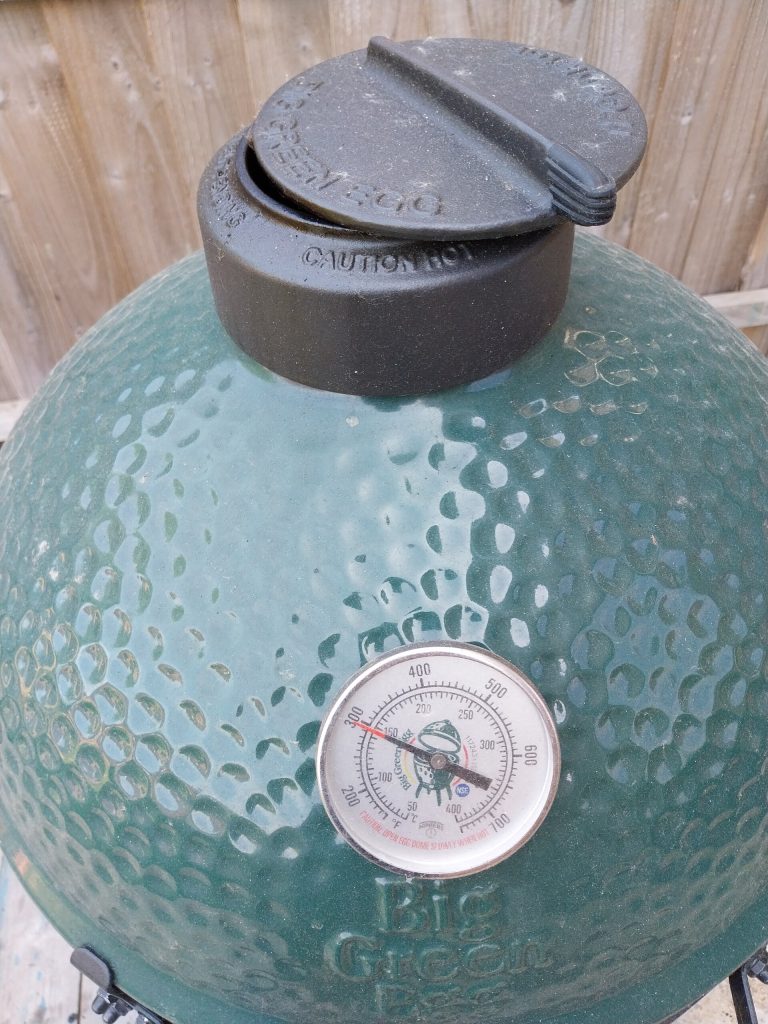
Cast-iron daisy-wheel top vent on a Big Green Egg Large with green hammered glaze visible — close-up showing build detail
BGE Large daisy wheel and dome glaze — cast iron, properly engineered, no grinding after twenty-plus cooks. The supermarket units use stamped stainless.

The BGE’s cast-iron daisy wheel top vent and stainless steel band-and-spring hinge are properly engineered. The hinge holds the dome at any angle without slipping; the daisy wheel turns precisely without grinding; the bands haven’t shifted in five months. The Aldi and Lidl units use stainless steel for the top vent (cheaper to manufacture but functional), and the hinge mechanisms are visibly less robust in the launch press photography. None of this is visible to a buyer on the day of purchase. It only shows up at year two when the springs start sagging.

The honest summary: build quality differences exist and are real, but most of them aren’t visible at point of purchase. The BGE earns its build-quality price tag in the units that go the distance.


Coal efficiency and temperature stability

The BGE Large held 115°C steady for six hours of short-rib cook on 9 May 2026, with both vents barely cracked open — top vent on a hairline crack, bottom vent at maybe 5mm. UK May ambient was 12–18°C, the firebox was lit from a single spot in the lump (the minion method — only a small area of charcoal burning at any one time, the fire spreading slowly through the rest of the load), and 1.2kg of Fuel Express Restaurant Grade lump charcoal carried the whole cook. That’s the kind of efficiency this section is really about, and it’s where the price difference between a BGE and an Aldi or Lidl ceramic egg shows up most clearly.

If you’ve read kamado advice online and tried to apply it in a UK garden, here’s the variable that’s probably been throwing you off: ambient temperature. UK ambient through April to October sits around 12–22°C; most online kamado guidance is calibrated to American summer conditions at 25–35°C. That 10–15°C delta isn’t decorative — it directly determines how much heat your kamado has to generate to hold a target dome temperature. The hotter the air around the unit, the less heat the unit has to produce. So advice calibrated to American conditions prescribes wider vent openings than UK conditions need. Light the unit, open the vents to whatever the article said, and you’ll overshoot the target by 30 or 40°C inside fifteen minutes. The first time it happens you assume you’ve done something wrong. The second time, you realise the advice doesn’t fit the climate.

Bottom vent on a Big Green Egg Large open at roughly a 5mm hairline crack, dome closed and stable at 115°C — UK May ambient
Bottom vent at ~5mm hairline. Top vent on the same crack. Dome holding 115°C. UK May ambient, cook hour two.

The fix on a properly-sealed kamado is to run the vents far more closed than American advice suggests. Hairline cracks rather than visible openings. On the BGE Large in UK May ambient, both vents on a barely-open setting hold 115°C for hours. There’s no exotic technique here; the kamado is doing what kamados do, the climate is just gentler than the advice was written for.

Where the comparison gets interesting is the seal. A kamado’s airflow control is only as good as its seal — the felt gasket around the dome rim, the ceramic-on-ceramic contact between dome and base, the metalwork on the vents. A vent setting translates directly into airflow only if airflow can’t bypass the vents and leak out of the seams. The BGE is built tight; once stable, mine holds within 5°C of target across hours of cook. Cheap kamados with thinner ceramics, lower-grade gaskets, and looser hardware tolerances don’t seal as cleanly. Owners on the MIG Welding Forum and the PistonHeads “BGE vs Kamado Joe vs Aldi/Lidl” thread report Aldi and Lidl units needing vents notably wider open to hold the same dome temperatures — or, worse, dome temperatures drifting upward despite vent settings being closed. That’s heat escaping through the seal seams, being compensated for by more lump on the fire.

The practical knock-on is coal consumption. The BGE Large gets me about ten cooks per 12kg bag of restaurant-grade lump at low-and-slow temperatures — the 9 May cook used roughly 1.2kg over six hours, which is consistent with that ratio. Aldi and Lidl owners on the MIG Welding Forum and PistonHeads threads don’t report exact bag-per-cook figures, but they consistently flag two patterns: needing vents notably wider open to hold the same dome temperatures, and getting through bags of lump faster than they expected. That’s the seal quality showing up in the fuel bill. The 10% lump premium I’ve baked into Section 10’s calculations is an estimate calibrated to those reports — directionally honest, deliberately conservative.

This is the kind of quality difference you can’t see on a showroom floor. A buyer comparing the BGE and the Aldi at point-of-purchase has no way to know that one of them will burn 10% more lump per cook for the next five years. You can’t measure seal quality with a demo. You can only know it from the cook data, which you only get after you’ve owned the unit. That’s part of what the £1,250 buys at the BGE end — the seal that translates vent settings into temperatures, the temperature that translates into a consistent cook, the coal efficiency that compounds over years of use.

Dome thermometer on a Big Green Egg Large reading 115°C — close-up showing stable dial position mid-cook
115°C on the dome dial, hour three of a six-hour short-rib cook. The reading didn’t move more than 5°C in either direction across the rest of the cook.

What I’ve ended up doing in UK ambient: vents tighter than American advice suggests, dome thermometer in eyeline, adjust from there.


Accessory ecosystem

The BGE Large comes with a plate setter in the box. That’s the ceramic deflector that turns the kamado from a direct-grill into an indirect-cook oven — essential for low-and-slow brisket, pork shoulder, ribs, roasts, and pizza. Mine sees more indirect-cook hours than direct-grill hours by some margin. From there, the accessory ecosystem expands depending on what you want to cook and how you want to set up: side shelves attached to the nest for working surfaces, a rolling nest for moveability, the ash tool for cleanouts, table fitments for built-in installations.

The compatibility is genuine, not marketing. The kamado accessory market manufactures grates, pizza stones, probe ports, and smoking-wood formats specifically for BGE-spec fireboxes. Kamado Joe runs a parallel ecosystem with reasonable cross-compatibility for some fitments — there’s a forthcoming Smoke and Lump piece comparing the two premium kamados directly. Buying into either premium kamado means buying into a platform where every accessory you’d reasonably want is available, fits, and works.

The Aldi and Lidl units don’t have a platform. There’s no manufacturer accessory range — the units ship with what they ship with (a wooden side shelf for Aldi, bamboo for Lidl) and that’s it. Forum threads on PistonHeads and the MIG Welding Forum repeatedly flag the same problem: the firebox is a non-standard size, the dome geometry doesn’t accept BGE or Kamado Joe accessories, and the third-party kamado accessory market doesn’t manufacture fitments for one-season seasonal SKUs. Generic accessories sometimes work — a round pizza stone the right diameter will sit on the cooking grate — but the unit isn’t designed around the platform of accessories the way the BGE is.

The long-term consequence for the buyer: a cheap kamado is what you have. It’s not a starting point that becomes more capable as you add to it. If you outgrow what the cheap unit does, you upgrade by replacing the unit, not by adding accessories. The BGE is the inverse — a platform you settle into across a decade, adding the parts that match how you cook, with each addition extending what the unit can do.

That’s an editorial framing, not a promise. Whether the platform argument matters depends on the buyer profile in Section 13.


Replacement parts and longevity

Warranties on kamados are a real differentiator. The Big Green Egg covers the ceramic dome and base for the original owner’s lifetime, plus a 5-year warranty on metalwork (bands, hinge mechanism, stainless cooking grid, fire grate, rEGGulator top vent, lower draft door) and a 3-year warranty on the ConvEGGtor / plate setter (per biggreenegg.co.uk). That’s the standard the category measures itself against. The claim process is photograph plus email plus replacement-part dispatch — I haven’t had to use it on mine, but the warranty terms are documented and BGE UK has a long track record as a supplier.

The Aldi unit carries a 3-year warranty covering defects in material and workmanship (per Aldi UK Press Office, May 2026); Lidl’s Grillmeister Ceramic Kamado BBQ also carries a 3-year warranty (per Lidl product documentation). Three years sounds reasonable on the showroom floor. The reality, as flagged by owners on the MIG Welding Forum and PistonHeads, is that the supermarket-egg-grills are seasonal SKUs — they’re sold for a few weeks each spring and then the product line moves on. When something fails inside the warranty period (most commonly the firebox cracking under heavy use), the experience owners report is: contact Customer Services, get told the product is no longer stocked, get offered a refund or a partial credit toward a different garden product. You don’t get a replacement firebox. You don’t get a like-for-like fix. The unit becomes effectively non-functional once a critical ceramic component cracks, because there’s no aftermarket source for replacement fireboxes for these specific units.

That’s the practical longevity gap the price difference buys. The BGE is a 10-year-plus unit with a path back to working condition if something fails in years 1, 5, or 8. The cheap kamado is a 2–3 year unit under heavy use, with no realistic repair path when it fails. That’s a meaningful difference for any high-frequency cook, and it’s the source of Section 10’s replacement assumption: at 40 cooks per year, the supermarket units are reportedly seeing firebox cracking inside the first two years, leading to the 1–2 unit replacements over five years that the cost calculation factors in.

For a low-frequency cook, the longevity gap is less material — the unit doesn’t get the heat cycling that drives ceramic failure, and the 3-year warranty period likely covers the unit’s effective lifespan at that use level anyway. Section 11 takes the buyer-fit question on directly.


Five-year ownership cost

The headline-price calculation is the easy one: £1,494 for the BGE Large, £244.99 for the Aldi Kamado, £249 for the Lidl Medium Ceramic Egg Grill. The £1,250 gap looks decisive on its own. But the five-year ownership cost — which includes lump charcoal, accessories, replacement parts, and in the cheap-unit case the unit itself when the firebox cracks — tells a more interesting story than “BGE is overpriced” or “BGE is justified”. Here’s the working, with all the assumptions visible. You can quibble with any of them.

I’m going to take three buyer profiles in turn — high-frequency, medium-frequency, and low-frequency — because the right answer depends on how often you actually cook. I’m using £2.50 per cook as a working figure for lump charcoal on the BGE (roughly 1.2kg of restaurant-grade lump at £25 for a 12kg bag, getting around ten cooks per bag — close to what I burn on a typical low-and-slow). Cheap kamados need wider vent openings to compensate for less efficient sealing, so I’m adding a 10% lump premium on the Aldi and Lidl figures; that’s an estimate, but it lines up with what owners report on the MIG Welding Forum and PistonHeads threads.

The high-frequency cook (40 cooks per year)

200 cooks over 5 years. The maths land roughly here:

Cost lineBGE LargeAldi KamadoLidl Egg Grill
Unit£1,494£245£249
Lump charcoal (5 years)£500£550£550
Realistic accessories£500£150£150
Replacement units (firebox cracking)£0 (lifetime warranty)£490 (2 replacements)£498 (2 replacements)
Five-year total£2,494£1,435£1,447

The honest answer at high frequency: the cheap kamado is cheaper, by about £1,050 over five years, even if the firebox cracks twice. That’s a real number and the lifestyle press articles glossing over it with “you can’t beat the real deal” aren’t doing you a service.

What the £1,050 BGE premium buys at high frequency, though, is meaningful:

  • A unit that’s still cooking at year 10 and likely year 20 (the BGE Large’s lifetime ceramic warranty is genuine, and BGE UK does honour it)
  • Resale value of £600–£800 at year 5 in good condition. That nets the BGE’s effective five-year cost down to ~£1,694–£1,894 — a few hundred quid above the Aldi path with replacements, not a thousand
  • The accessory ecosystem (the plate setter, table fitments, side shelves, the nest) — most of which simply isn’t available for the supermarket units
  • Better cook quality at the low end, which is where this kit earns its keep

If you cook 40 times a year for five years and then sell, the BGE costs about £250–£450 more than the Aldi path over that horizon — and you spent five years cooking on the better tool. That’s the honest framing. It’s more expensive, but not by as much as the headline price suggests, and what you’re paying for shows up in the cooking.

The medium-frequency cook (15 cooks per year)

75 cooks over 5 years.

Cost lineBGE LargeAldi KamadoLidl Egg Grill
Unit£1,494£245£249
Lump charcoal (5 years)£188£206£206
Realistic accessories£400£100£100
Replacement units£0£245 (1 replacement, ~50% probability under moderate use)£249
Five-year total£2,082£796£804

At medium frequency the gap widens. The cheap kamado is about £1,290 cheaper over five years, with or without one replacement. The BGE’s longevity argument doesn’t kick in over this horizon — you simply don’t cook enough to get the BGE-on-year-10 advantage at any meaningful per-cook level.

The low-frequency cook (5 cooks per year)

25 cooks over 5 years. Bank holidays, summer evenings, the occasional weekend.

Cost lineBGE LargeAldi KamadoLidl Egg Grill
Unit£1,494£245£249
Lump charcoal (5 years)£63£69£69
Realistic accessories£200£50£50
Replacement units£0£0 (likely lasts 5 years at this frequency)£0
Five-year total£1,757£364£368

At low frequency, the cheap kamado is around £1,390 cheaper over five years. The firebox-cracking failure mode reported on the forums is a heavy-use symptom; cooked on five times a year on flat ground, the supermarket units last the full period for most owners. The BGE buys you a beautiful piece of kit you’ll cook on once a month at most. That’s a Wagyu-steak way to spend £1,500.

Summary — five-year totals across all profiles

ProfileBGE LargeAldi KamadoLidl Egg GrillCheap-unit saving
High frequency (40 cooks/year)£2,494£1,435£1,447~£1,050
Medium frequency (15 cooks/year)£2,082£796£804~£1,290
Low frequency (5 cooks/year)£1,757£364£368~£1,390

What the maths actually mean

The cost-of-ownership maths don’t show a “BGE is cheaper if you cook enough” cross-over inside a five-year horizon. The cheap units are cheaper at every realistic usage profile. Anyone telling you the BGE pays for itself over five years is either using different numbers from these or hasn’t done the calculation.

What the maths DO show is that the BGE premium narrows considerably once you factor in resale value and the unit’s continued life beyond year 5. On a ten-year horizon for a high-frequency cook, the BGE works out cheaper per cook than two or three Aldi replacements — but you have to commit to the unit for that long for the maths to invert.

For most buyers, the honest answer isn’t “the BGE is the cheaper unit”. It’s “the BGE is more expensive but the better tool, the longer-lasting tool, the one with resale value, the one with the accessory ecosystem”. Whether those are worth the extra £1,050–£1,390 over five years is the genuine buyer-decision question — and it’s the question Sections 11 and 13 take in turn.


When the cheap unit is the right choice

I own a £1,500 kamado, and most readers shouldn’t — here’s why.

If you cook on a kamado four or five times a year — bank holidays, the odd Saturday in summer, a cook for friends when the weather turns — the £1,500 BGE is the wrong purchase for you. Not because the BGE is bad. It isn’t. It’s because £1,500 spent on a unit you light five times a year is paying premium-kit prices for occasional-cook needs, and the £244 Aldi unit will give you a real kamado cook for 16% of the BGE’s price. At that frequency, even if the firebox cracks at year three, you’ve had two and a half years of perfectly good kamado cooking for £245 — and you can buy another one if you want, and you’ll still be over a thousand pounds ahead of where the BGE would have left you.

Same logic if you’re a kit-curiosity buyer. You’ve read about kamado cooking and you want to try it before committing. The Aldi or Lidl unit lets you find out whether ceramic-egg cooking is for you for £245 instead of £1,500. If it turns out you love it and you cook every weekend, you sell the cheap unit on Gumtree for £100, eat the £145 difference, and buy a BGE knowing you’ll use it. If it turns out you’re more of a gas-grill weekday cook who doesn’t quite take to the eight-hour low-and-slow rhythm, you’ve found out without spending £1,500 to find out. That’s a decent £245 to spend on a personal experiment.

The garden-constraints case matters too. The BGE Large is genuinely a big object — it weighs around 100kg fully kitted, takes up real space, and isn’t moveable in any practical sense once it’s positioned. If your garden is small, or you live in a flat with a balcony, or your outdoor cooking happens on a paving slab in front of a back door, the Aldi unit — smaller and lighter — is the better fit for the physical space. A kamado you can actually use is worth more than a bigger one you’re constantly working around.

Then there’s the budget case. Kit budgets aren’t moral judgements. If you’ve got £250 in your head for a BBQ and that’s the budget, that’s the budget — trying to talk you into £1,500 isn’t editorial honesty. The Aldi unit is genuinely a good answer at that price, and the rest of this piece won’t pretend otherwise.

The thing the cheap unit doesn’t do is the long-haul ownership story. If you’re going to be cooking on this kamado every weekend for a decade, the maths from Section 10 starts inverting in the BGE’s favour around year seven or eight, and the gap widens from there. The accessory ecosystem matters more the longer you own the unit. The lifetime warranty pays out only if you stay in the relationship long enough to claim it. None of that helps if you cook five times a year.

So the honest summary for this section: if you cook on a kamado occasionally, or you’re testing the format before committing, or you have garden constraints, or your budget is genuinely sub-£300 — buy the Aldi or Lidl unit and don’t feel like you’ve compromised. You haven’t. You’ve matched the kit to the cook, which is what every kit purchase is supposed to do. Section 13 below names the opposite buyer — high-frequency, decade-plus, ecosystem-valuing — and makes the case for the BGE on its own terms.


Disclosure

I own and cook on a Big Green Egg Large. The unit was a Christmas 2025 gift; the full chain of supply is on /disclosures/. I haven’t cooked on the Aldi Kamado or the Lidl Medium Ceramic Egg Grill; the assessment of those units in this piece is sourced from named UK reviewers and owner-forum threads, listed in Section 15. I cross-checked every claim against the cited source.

Smoke and Lump has no commercial relationship with Aldi or Lidl. Affiliate links to BGE retailers are present in this piece per the format on /affiliate-disclosure/. I earn a small commission on qualifying purchases at no extra cost to you.


When the BGE is the right choice

If the previous section was about who shouldn’t pay £1,500 for a kamado, this one’s about who should — and why the cost premium is worth it for the buyer who fits the profile.

The buyer, named honestly:

  • You cook on the kamado weekly or close to it — forty cooks a year minimum, weekends in summer plus midweek in winter when you’ve planned ahead. The unit isn’t a curiosity or an occasional accessory; it’s how you cook.
  • You’re thinking about owning this thing for at least a decade. You already know kamado cooking is for you — you’re not buying to find out.
  • Low-and-slow matters. Brisket, pork shoulder, ribs, the eight-hour cooks where temperature stability earns its keep — the difference between a kamado that holds 110°C steady for twelve hours and one that drifts up and down by 20°C is the difference between a cook that came out right and a cook that came out merely OK.
  • The accessory ecosystem is worth something to you. The plate setter (included in the box) lets you cook indirect — pizza, roast chicken, low-and-slow joints; side shelves give you somewhere to put a probe and a plate of food while you work; the nest makes the whole rig moveable on the patio. Buying into the BGE is buying into the platform that fits around it.

If that’s you, the maths in Section 10 works out differently than it looks at first glance.

The £1,050 gross premium at high frequency narrows to £250–£450 after resale. A BGE Large in good condition holds £600–£800 of resale value at year five — the kit doesn’t go to the tip, it goes to the next owner. Net of resale, the BGE costs you £250–£450 more than the Aldi path over five years, which works out at £1.25–£2.25 per cook in BGE premium across two hundred cooks. That’s a reasonable trade for genuinely better kit on every one of those cooks.

The longer you own it, the more the maths flip. A high-frequency cook on the BGE in year ten is still cooking on the same unit with the same lifetime ceramic warranty. The same buyer on the Aldi path has bought the unit two or three times by year ten, and still hasn’t built an accessory ecosystem. The BGE inverts to the cheaper unit on a ten-year horizon, and the gap widens from there.

What the BGE actually does that the cheap units don’t, concretely:

  • Holds 115°C in UK May ambient with both vents barely cracked open. I tested this on 9 May 2026 — the BGE Large review covers the unit’s temperature behaviour in detail. That’s coal efficiency the cheap units don’t match because their seals leak.
  • Pushes through a twelve-hour low-and-slow cook on a single fuel load without intervention. Cheap units need lid opening more often to manage temperature drift, which costs you smoke retention and dome stability.
  • Comes with a plate setter in the box, which makes indirect 175°C cooking a one-step setup — pizza, roast chicken, low-and-slow joints. The cheap units don’t include a deflector; their indirect setups are improvised.
  • Holds resale value because there’s a real second-hand market for BGEs. There isn’t a meaningful second-hand market for an Aldi Kamado that’s seen four years of use.

So the recommendation, unhedged, for the buyer who fits the profile: buy the BGE Large and treat the £250–£450 net premium over five years as the price of cooking on the better tool weekly for a decade. The plate setter comes with it; side shelves are an option if you want a working surface beside the cooker, but the unit is fully functional without them. You’ll know inside the first ten cooks whether the unit’s earning the price tag. Mine did, and has — twenty-plus cooks in across five months and the kit’s earning its price tag on every one of them.


Frequently asked questions

The six questions UK readers most often ask before buying, answered with the same buyer-conditional framing the rest of the piece carries.

Is the Aldi kamado as good as the Big Green Egg?

On build quality, longevity, and accessory ecosystem, no — the BGE is the better unit. On day-of-cooking output for occasional use, yes, close enough that most users wouldn’t notice. The right answer depends on the buyer: high-frequency cooks should buy the BGE; low-frequency or budget-constrained cooks are well-served by the Aldi unit. Sections 11 and 13 take the question on by buyer profile.

How much cheaper is the Aldi kamado than the BGE?

The Aldi Kamado Egg BBQ is £244.99 in May 2026; the Big Green Egg Large is £1,494 from BGE UK direct. The price gap is £1,250. Over five years of high-frequency cooking, the BGE’s effective premium narrows to around £1,050 gross or £250–£450 net of resale value at year five — Section 10 has the working.

Will Big Green Egg accessories fit the Aldi kamado?

No. The Aldi unit’s firebox is a non-standard size and the dome geometry doesn’t accept BGE or Kamado Joe accessories. Generic accessories occasionally work — a round pizza stone of the right diameter will sit on the cooking grate — but the BGE’s accessory ecosystem (plate setter, side shelves, nest, ash tool) doesn’t transfer.

How long does an Aldi or Lidl ceramic egg grill last?

Owner reports on the MIG Welding Forum and PistonHeads describe firebox cracking inside the first two years under heavy use. At low-frequency cooking (4–5 cooks a year) the units typically last the warranty period. At high frequency (40+ cooks a year) you should expect to replace the unit once or twice over five years. The BGE Large, by contrast, is a 10-year-plus unit.

What’s the difference in coal efficiency between cheap and premium kamados?

On the BGE I hold 115°C with both vents barely cracked open in UK ambient. The Aldi and Lidl units, with thinner ceramic and lower-grade gaskets, leak heat through seams and need wider vent openings to compensate. That’s roughly a 10% lump-charcoal premium per cook — meaningful at high frequency, marginal at low frequency. Section 7 has the detail.

When is the cheap kamado the right choice?

For low-frequency cooks (4–5 times a year), kit-curiosity buyers testing whether kamado-style cooking suits them, garden-constrained buyers needing a smaller unit, or sub-£300 budgets where the BGE isn’t on the table. At those use profiles the Aldi or Lidl unit is genuinely a good answer — not a compromise. Section 11 takes the buyer profile on directly.


Sources

Every sourced claim in this piece links back to one of the references below. Where I’ve drawn on owner reports for the Aldi/Lidl assessment, the named forum thread or publication is cited in-text against the relevant passage above.

Aldi launch

Lidl launch

Owner reports + failure modes

Manufacturer + Smoke and Lump first-hand