Lamb rump on the BGE Large — the quick second protein after the kamado’s already running
Published 9 June 2026 · Last updated 9 June 2026 · Tested by Ben Austen · Affiliate disclosure
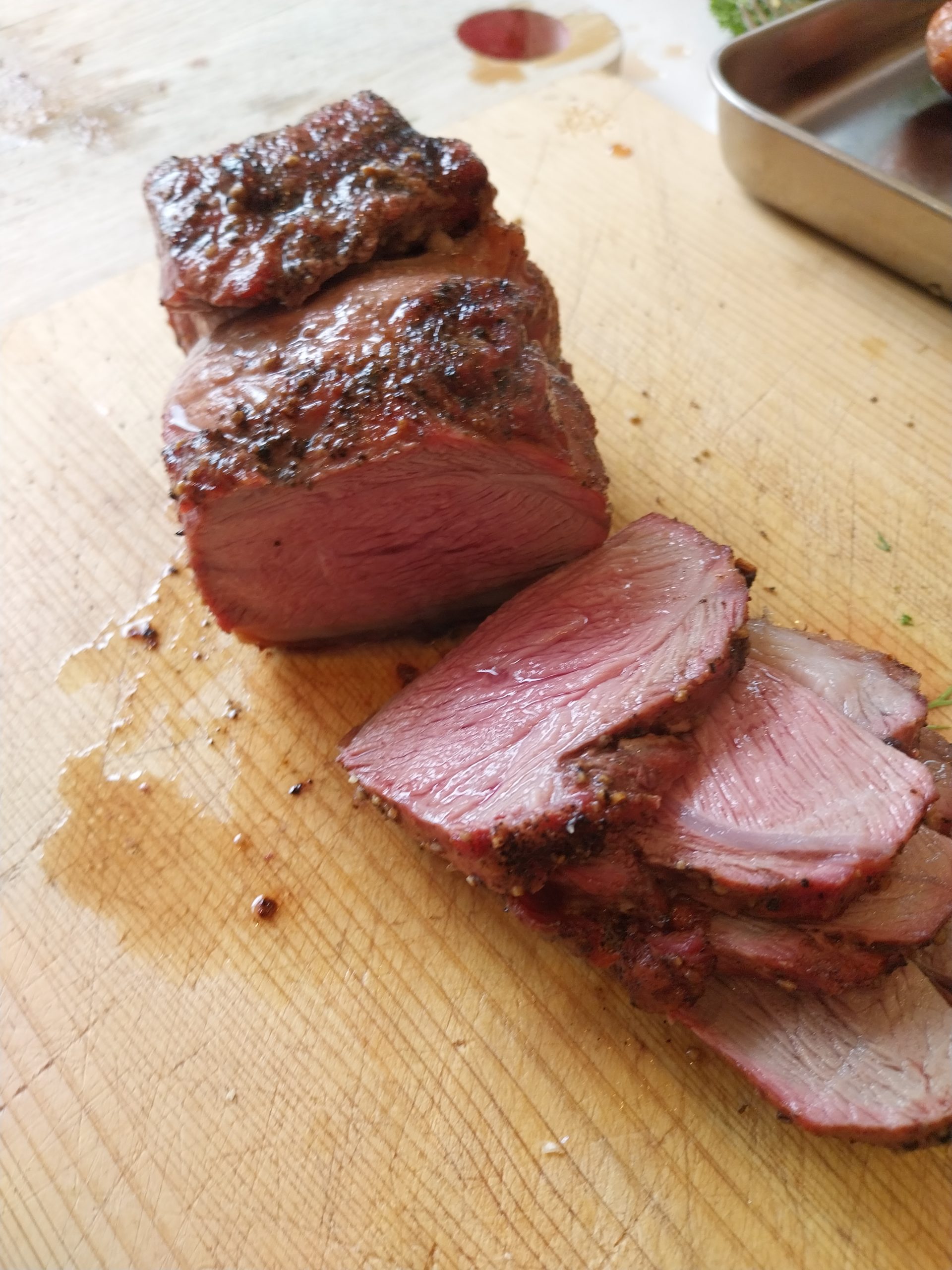
A 400g lamb rump with the fat cap left on, given a light rub of the same SPG I put on the pork — pepper, salt, garlic at 2:1:0.5. By the time the lamb’s ready to go on, the kamado’s already done 2.5 hours indirect at 140°C smoking my bone-in pork loin, and there’s still plenty of lit lump glowing under the grid. Lift off the plate setter (find somewhere safe to put it down — it’s properly hot, and there are usually kids underfoot) and push the dome up to 220°C. The lamb goes on fat-cap-down so the cap renders and crisps against the bars while the muscle picks up its crust from the dome heat above. Fifteen to eighteen minutes to 54°C internal, then a 30-minute rest under a loose foil tent before slicing across the grain into proper medium-rare rounds. No brine, no overnight prep, no fresh smoke wood — just the right cut on a kamado that’s already done the heavy work for something else. A 25-minute centrepiece on the back of a 2.5-hour cook. The second cook the kit gives you for free.
Key takeaways
- Lamb rump is the cut you reach for when you’ve already got the kamado running for something bigger. Whole hour-plus cooks need a centrepiece protein and a long cook — lamb rump is the quick second protein that uses the same fire on the back end. The whole prep-to-plate is roughly 25 minutes once the kamado’s already hot.
- A 400g rump runs about 15–18 minutes direct on the BGE Large with the ConvEGGtor pulled off, over the same lit lump that ran the indirect cook before it. Pull at 52°C internal for proper medium-rare (I pulled mine at 54°C and the slice was a touch more done than I’d want next time — see what I’d do differently).
- Keep the fat cap on for the cook — and put it down against the grid. The cap renders and crisps against the direct heat from below, and acts as a heat shield for the muscle during the high-heat phase. Comes off the grate as one of the better bites on the board once you slice.
- No brine, no overnight prep, no smoke. A light pinch of the same 2:1:0.5 pepper-salt-garlic SPG I use on pork is all the seasoning the cut needs. The fat cap and the kamado’s residual heat do most of the work.
- Rest matters more than the cook. A 25-minute cook needs a 30-minute rest — same ratio as a longer cook. Skip the rest and the slice loses half its juiciness onto the board.
When to reach for lamb rump on the kamado
| You should cook… | If you… |
|---|---|
| Lamb rump (this recipe) | Already have the kamado running for a bigger cook and want a fast second protein, want 15–18 minutes from grate-on to probe-off, are feeding 2–4 people as part of a wider spread, want medium-rare pink direct-grilled lamb without a marinade routine |
| A longer indirect lamb cook (slow shoulder, leg) | Are doing lamb as the centrepiece in its own right, have 4–8 hours of cook time, want pull-apart texture rather than slice-and-serve, or want the smoke ring you get from a long indirect cook |
| Lamb chops over direct heat | Want individual portions on the bone, prefer a 5–8 minute per-side fast grill, are feeding a crowd where each person gets their own piece |
At a glance
| Spec | Detail |
|---|---|
| Prep time | 5 minutes (just trim the cap if needed and apply the rub) |
| Cook time | 15–18 minutes on the kamado |
| Total time | ~55 minutes from rub-on to plate (including the 30-minute rest) |
| Servings | 2–4 as part of a wider spread, or 2 hungry adults if the rump is the only protein |
| Method | Kamado, direct heat (ConvEGGtor removed) |
| Temperature | Direct-grill over the lit lump that just ran a 140°C indirect cook |
| Pull temperature | 52°C internal for proper medium-rare (I pulled mine at 54°C — see What I learned) |
| Rest | 30 minutes, loose foil tent on a board |
| Difficulty | Easy |
| Equipment | Kamado, probe thermometer, sharp knife, carving board |
| Cuisine | British |
What you’ll need
Equipment
- A kamado-style barbecue. I cook this on my Big Green Egg Large — but any 46cm-class ceramic kamado that can run direct over lit lump will work the same way. The recipe assumes the kamado is already running from an indirect cook that’s just finished (in my case, the bone-in pork loin coming off).
- A probe thermometer. A leave-in probe is overkill for a 15–18 minute cook — an instant-read is the right tool here. Worth probing twice mid-cook because the rump’s small mass means the temperature climbs fast and overshoots are easy.
- A sharp knife for slicing across the grain after the rest.
- A wooden carving board with enough room to slice and arrange. The rump’s juice pools on the board during the rest; pick a board with a groove or accept that the juice goes somewhere.
- Tongs or a thin spatula for moving the rump.
Ingredients
- 1 lamb rump, around 400 g, fat cap left on. I get mine from Graham Turner Family Butchers near Wisley in Surrey — same butcher as the bone-in pork loin recipe. The lamb rump is the cut from the top of the back leg; one piece of meat with a clear fat cap on top. 400g feeds 2 hungry people on its own, or 3–4 as part of a wider spread.
- The same SPG dry rub from the bone-in pork loin recipe — black pepper, table salt, and garlic granules at a 2:1:0.5 ratio by volume. You need very little of it: a generous pinch over each side of the rump and the fat cap is all it takes. The lamb’s own flavour is the centre of the slice; the rub is supporting, not leading.
No brine, no marinade, no overnight resting. The lamb goes on the grate within 5 minutes of the rub going on.
The cook method
1. Pull the ConvEGGtor off the kamado
This recipe assumes the kamado has just finished a long indirect cook (like the bone-in pork loin) and the lit lump is still glowing underneath the deflector. Lift the ConvEGGtor out — careful, it’s screaming hot — and drop the grid back down directly over the lit lump. The kamado will spike from 140°C dome (its indirect cruising temperature) to high direct-grill temperatures within a couple of minutes as the lump gets fresh airflow.
If you’re starting cold (no prior indirect cook), the cook still works — light the kamado single-spot, run it without the deflector, and let the dome climb to a hot direct-grill temperature before the rump goes on. Plan on an extra 15–20 minutes of light-up time.
2. Light rub of SPG over both sides and the fat cap
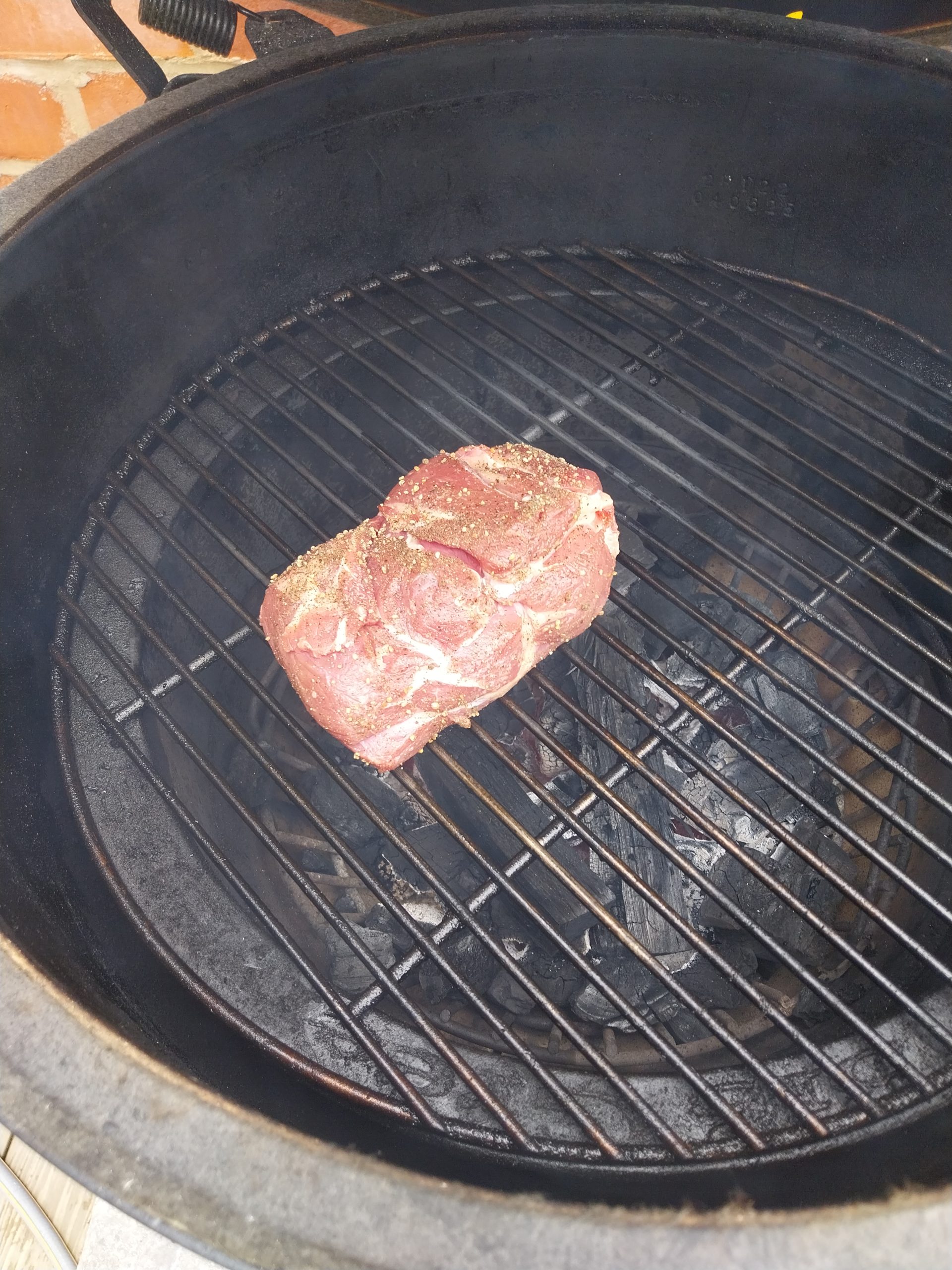
A generous pinch of the 2:1:0.5 pepper-salt-garlic SPG goes over each face of the rump and the fat cap. Press it in lightly with your fingers — no binder needed, the cut’s own surface moisture is enough. Don’t over-do the seasoning; the rump cooks fast and a heavy rub doesn’t have time to do anything but sit on the surface.
3. Onto the grate, fat cap down, probe in
I sit the rump on the grid fat-cap-down over the hot lump and slide the probe into the thickest part of the muscle from the side, well clear of the cap and the surface. Dome closed. The cap renders and crisps against the direct heat from the lump below; the top surface of the meat picks up its crust from the dome’s radiant heat. The cap doubles as a heat shield — by the time you carve, you’ve got rendered crispy fat on what was the bottom, a clean crust on what was the top, and the interior between them stays properly pink.
4. Cook 15–18 minutes until the probe reads 52°C (I pulled at 54°C, see below)
A 400g rump direct on the BGE Large at high direct-grill temperatures runs about 15–18 minutes to reach 54°C internal — what I pulled mine at on the 31 May cook. Next time I’d pull it at 52°C to leave the rest with more headroom and land closer to a true medium-rare (54–55°C at serve), where the slice is properly bright pink edge to edge rather than the slightly-more-done finish I got. Open the dome and probe twice during the cook — once around the 10-minute mark to see where the curve is sitting, again at 14–15 minutes to catch the pull point as it climbs.
5. Off the grate, 30-minute rest under a loose foil tent
The rump comes off the moment the probe hits your target temperature. Flip it cap-up onto the carving board — the cap’s rendered and crisp from the cook, and you want that side exposed under a loose foil tent (not wrapped tight — the cap’s bark needs to stay crisp, not steam-soften under sealed foil). Rest for a full 30 minutes. The internal will carry over by a couple of degrees during the rest, which is exactly why pulling 2°C lower at the kamado matters.
A 25-minute cook on a small cut doesn’t sound like it needs a 30-minute rest — but it does. Skip the rest and the juice runs out onto the board the second you slice. Rest properly and the slice stays moist.
6. Slice across the grain, serve
Unwrap the foil tent. The rump’s grain runs along the length of the cut — slice across it at about 1cm thick. You should get 8–12 slices off a 400g rump. The cross-section should be bright cherry-pink with a slightly grey rim where the cap rendered down. Arrange the slices on the board fanned out from the unsliced end (or whatever looks good for the table); the fat cap goes on first or last depending on whether people are fighting over it.
What to serve it with
The 31 May cook served the lamb rump as one of three proteins on a multi-protein Sunday lunch table: bone-in pork loin sliced as the centrepiece, lamb rump as the quick second, smoky-mayo potato salad, rainbow chard and kale from the garden, bread, pan-fried crispy sage leaves (also from the garden) scattered over the slices. The lamb works as a counterpoint to the longer-cooked pork — the contrast between the 2.5-hour brined-and-smoked pink-medium pork and the 18-minute direct cherry-rare lamb is what makes the spread interesting.
If you’re cooking the lamb on its own (no other protein), a few roast potatoes, a sharp green salad with a mustard dressing, and a good red wine sit it well. Mint sauce is traditional but I’d skip it — the rub does enough seasoning and the lamb’s own flavour deserves the slice.
For Monday: cold lamb sandwiches with mustard and salad on white bread. Good but doesn’t hold the way the pork sandwich does — eat the lamb hot the day of where you can.
What I learned, and what I’d do differently next time
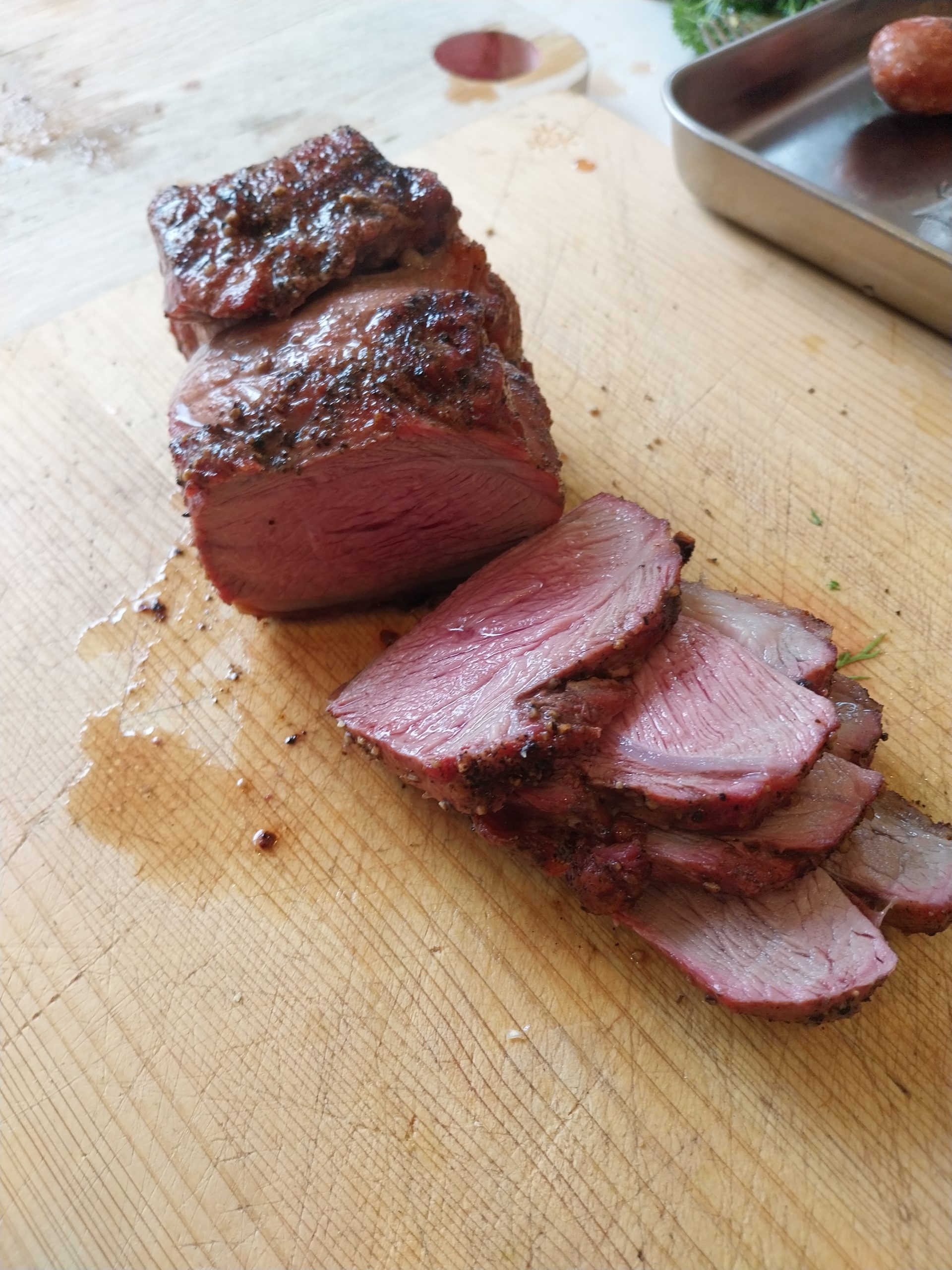
I should have pulled it at 52°C, not 54°C. That’s the single thing I’d do differently next time, and it’s the honest correction. At 54°C the slice came out a touch more done than I’d want for proper medium-rare lamb — still pink and juicy, but with more of a grey rim than the bright-cherry centre. With a 30-minute rest carrying the internal up by another couple of degrees, pulling at 52°C would land the slice at 54–55°C at serve, which is the medium-rare sweet spot for lamb rump. The lesson generalises: small cuts with thin fat caps need the rest carry-over calculated in upfront because their thermal momentum is fast and small overshoots compound quickly. Probe twice, pull early.
Direct over the lit lump after an indirect cook is a useful kit pattern. The kamado’s already at temperature, the lump’s already burning cleanly, and lifting the ConvEGGtor off takes a minute. Lamb rump is a perfect cut for this second-protein slot because (a) it cooks fast enough to land before the indirect cook’s main rest is over, (b) it doesn’t need any prep beyond a quick rub, and (c) the residual oak smoke from the indirect cook isn’t doing anything to the direct cook because the wood chunks have already burned off by the time the deflector comes out. Treat it as the second cook the kit gives you for free.
No brine on lamb rump. A brine helps a lean cut like pork loin because the loin is long, even, and prone to drying out — the salt-and-sugar penetration evens out the seasoning across a big muscle. A 400g rump is a small enough piece, with enough fat content, that a brine adds prep complexity without a payoff on the plate. The salt in the dry rub is doing the seasoning; the cut’s own juiciness does the rest.
One-cook data point — second cook is on the list. This recipe is sourced from a single cook (31 May 2026). The pull-temperature correction above is the most-likely change next time; the rest of the method I’d run the same. When the second cook happens this piece gets updated with the new findings.
Variations
On a different cut. A lamb leg steak (single, ~250g) works on the same direct-after-indirect method but cooks faster — probably 10–12 minutes to 52°C. A lamb chop is a fundamentally different cook (on the bone, 4–6 minutes per side direct) and gets a different recipe. A lamb loin chop sits closer to this rump cook in cooking time and method — likely usable on the same 15–18 minute window with slight adjustments for thickness.
Without the prior indirect cook. If the kamado is cold rather than already running, light it without the deflector, let it climb to a hot direct-grill temperature, and run the cook the same way. Add 15–20 minutes of light-up time to the front of the schedule.
On a kettle barbecue. The principle is identical — direct grill at high heat, probe to 52°C, rest 30 minutes. A Weber kettle running direct (coals across the full grate, dome closed) should hit similar timing. I haven’t tested this myself; I’ll update this section after I’ve run the cook on the Weber Master-Touch GBS.
With a heavier rub or marinade. I’ve made a deliberate choice to keep the rub light. A 4-hour rosemary-garlic-lemon marinade on lamb rump is a perfectly valid different recipe — but it’s a different piece, and the timing changes (the wet marinade slows the surface bark formation). When I cook the marinaded version I’ll write it up separately rather than overload this recipe with variations.
Related
- Bone-in pork loin on the BGE Large — the indirect cook that ran the kamado before the lamb went on. The lamb is the direct-after-indirect second protein on the same fire
- Smoky-mayo potato salad — the side that served alongside on the 31 May cook
- Big Green Egg Large — Tested by Ben review — the kamado I cook on
- About Ben — who’s behind this
Frequently asked questions
How long does lamb rump take on a kamado?
A 400g lamb rump runs about 15–18 minutes direct on a hot kamado to reach 52–54°C internal. The cook is fast because the rump is small and the kamado runs hot direct without the deflector. Probe twice during the cook; trust the probe over the clock. Bigger rumps add roughly 4–5 minutes per extra 100g of weight.
What internal temperature should I pull lamb rump at on a kamado?
Pull at 52°C internal for proper medium-rare — the 30-minute rest carries the internal up to 54–55°C at serve, which is the sweet spot for the cut. I pulled mine at 54°C on the 31 May cook and the slice came out a touch more done than I’d want. UK food-safety guidance for whole-cut lamb is 60°C, but rare lamb is widely served at 54–57°C internal — your call.
Do I need to brine or marinate lamb rump first?
No. A 400g rump is small enough and fat-capped enough that a brine adds prep without a payoff on the plate. A light pinch of SPG dry rub (pepper, salt, garlic granules at 2:1:0.5) over both sides and the fat cap is all the seasoning the cut needs. Save the marinade routine for a leg or shoulder.
Should the lamb rump’s fat cap stay on for the cook?
Yes — keep it on, and cook it cap-down against the grid. The cap renders and crisps directly against the heat from the lump below, and acts as a heat shield protecting the muscle from harsh grid contact. The rendered cap is one of the best bites on the board once you slice. Trimming the cap before cooking loses both the protection and the crispy-fat bite.
Why does a 25-minute cook need a 30-minute rest?
Small cuts have fast thermal momentum — the internal climbs quickly during the cook and continues to climb for several minutes after it comes off the grate. A 30-minute rest under a loose foil tent lets the carry-over land and the juices redistribute through the muscle. Slice early and the juice runs out onto the board; rest properly and it stays in the slice. Rest time matters proportionally to cook intensity, not just cook duration.
Can I do this cook without already having run an indirect cook on the kamado?
Yes. Light the kamado without the deflector, let the dome climb to a hot direct-grill temperature (open vents, lump burning cleanly), and run the cook the same way. Add 15–20 minutes of light-up time before the rump goes on. The direct-after-indirect framing is the most efficient pattern, but it’s not required.
Provenance and disclosure
This recipe is sourced from a single cook on my own Big Green Egg Large — Sunday 31 May 2026, run as the quick second protein after the bone-in pork loin came off the indirect setup. The lamb rump went on direct over the same lit lump, with the SPG rub from the pork cook reused. The 30-minute rest ran in parallel with the pork loin’s longer rest; both proteins were sliced and served together.
The lamb rump came from Graham Turner Family Butchers near Wisley in Surrey — same butcher as the bone-in pork loin recipe. Smoke and Lump has no commercial relationship with Graham Turner Family Butchers — this is a customer recommendation based on the meat quality across this cook and the bone-in pork loin cook.
The BGE Large was a Christmas 2025 gift from my sister, originally supplied to her by Big Green Egg as part of a paid content partnership that has since ended. I own the unit outright. Smoke and Lump has no commercial relationship with Big Green Egg, and no commission, payment, or other consideration was received in connection with this recipe. The full chain of supply and our standing affiliate-network disclosures are on the Disclosures page.
This is a one-cook recipe. The pull-temperature correction (52°C rather than 54°C) is the most-likely change on the second cook. When that cook happens this recipe gets updated with the new findings.
Sourced from the 31 May 2026 cook log — the multi-protein Sunday cook on the BGE Large (bone-in pork loin indirect, lamb rump direct, smoky-mayo potato salad in the foil packet under the deflector, smoked trout on the grate alongside the pork).