Christmas gammon on the BBQ
- Prep10 min
- Cook3 hr
- Serves8
- DifficultyEasy
- Temperature135–140°C (275–284°F) indirect, deflector in.
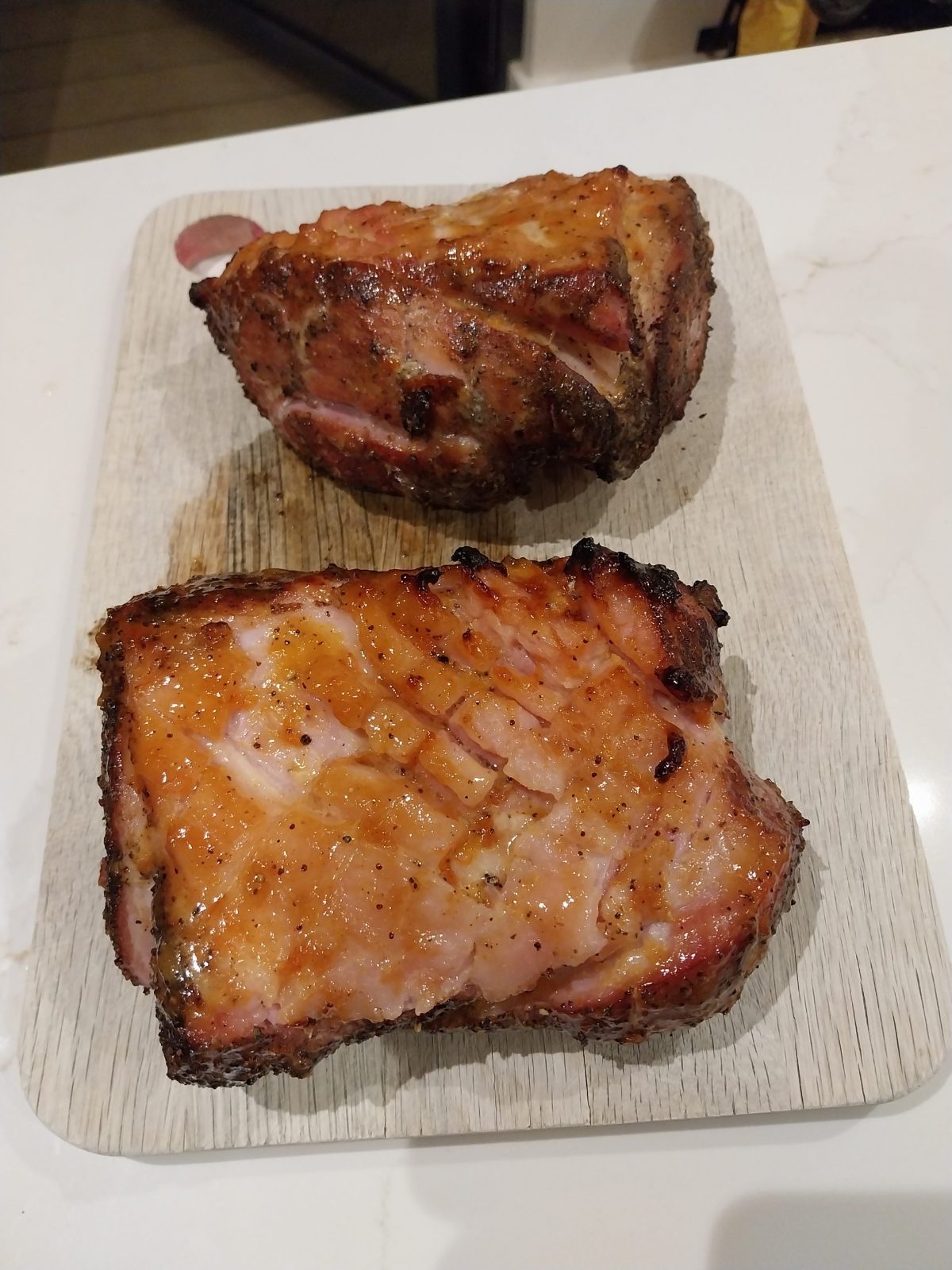
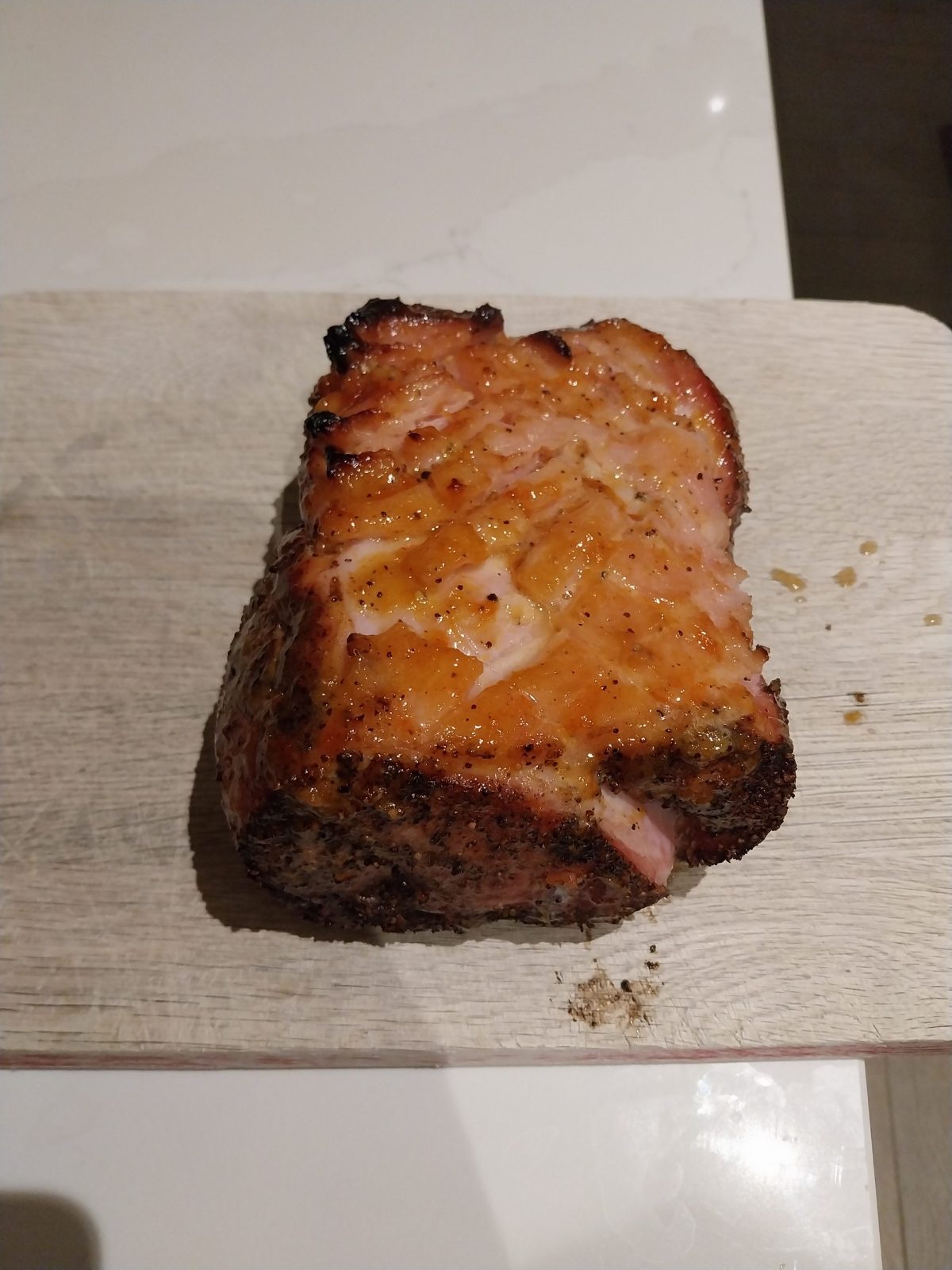
I’d definitely do my Christmas gammon on the barbecue. It has a more complex, deeper flavour, and I really enjoyed it. I cooked two unsmoked joints, each just over a kilo, side by side: one on my Big Green Egg Large, and one on a Monolith TWO 55 that Que Fresco, the UK distributor, has kindly sent me to test. Both ran indirect at 135–140°C (275–284°F) with oak. I put just black pepper on the meat, then a grapefruit, honey and Dijon glaze.
Ingredients
- 1 boneless unsmoked gammon joint, about 1.1kg
- Black pepper
- 1 grapefruit
- About 2 tbsp honey
- About 1 tbsp Dijon mustardOne batch of glaze did both of my joints.

Equipment
- A barbecue that holds 135–140°C (275–284°F) indirect with the lid down. I cooked on my Big Green Egg Large and a Monolith TWO 55, both with the deflector in. Any kamado, or a kettle set up for indirect cooking, should do the same job.
- Lump charcoal and some oak for smoke.
- A leave-in probe thermometer. I used my ThermoPro TP20 and checked with an instant-read.
- A small pan for the glaze.
- Foil, for the rest.
Method
- Set the barbecue up indirect at 135–140°C (275–284°F), with oak
- Season the gammon with black pepper only
- Put it on with a probe in
- Make the glaze while it cooks
- After about two and a half hours, take the string and rind off
- Take it off at 68°C (154°F) inside
- Rest it in foil
- Slice and serve
Key takeaways
- Take the rind off before it goes on. Getting the string and rind off a hot joint halfway through is a bit of a faff. I think with it off from the start, the fat would start to char under the glaze, though not like crackling.
- You don’t need to soak or boil it. Mine went straight on and was really juicy. I think boiling it first would make it less salty, but I didn’t put any salt on it at all, so it was fine. In the oven I’d often boil it first.
- About three hours for a joint just over a kilo. That’s longer than my online research suggested, and I think it’s because the joints are quite dense. Mine came off at 68°C (154°F) and rested in foil for about 40 minutes.
- You could do this any time of year. I cooked mine in October.
How I cook a Christmas gammon on the barbecue
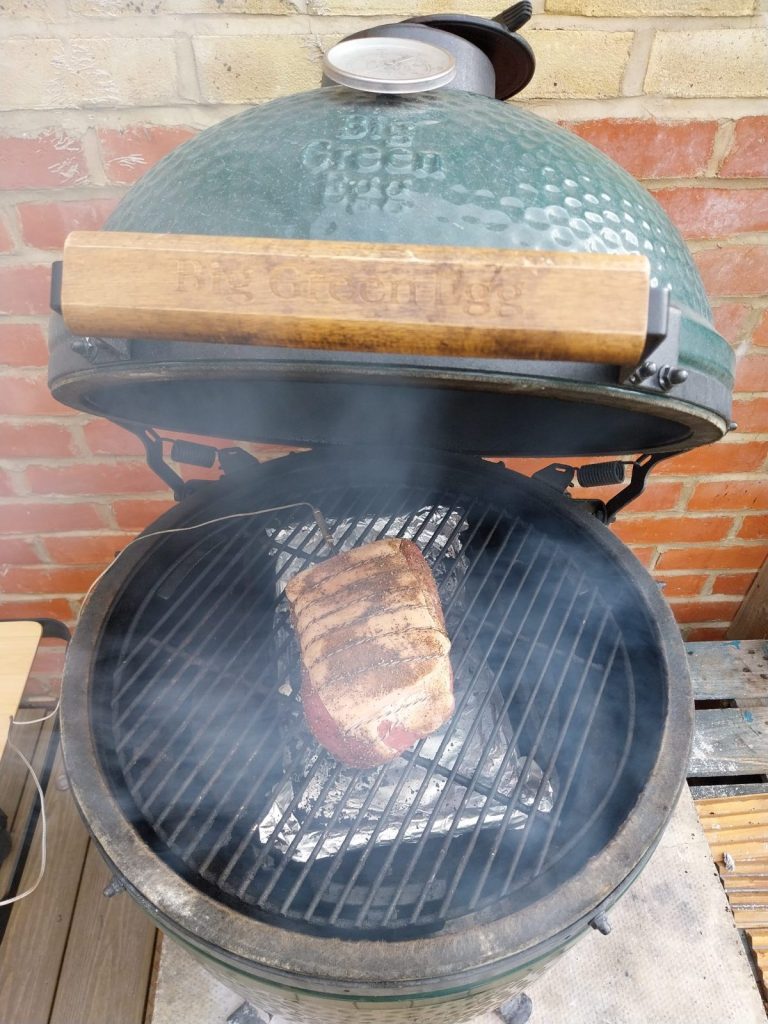
You only need one barbecue for this. I happened to be cooking two joints side by side, one on my Egg and one on the Monolith. I lit each with about 3kg of lump charcoal, put some oak in and set it up indirect with the deflector in. I used unsmoked gammon, so all the smoke came from the oak. The joints went on with the rind and string still on, just black pepper and a probe in each, and then I went for a walk. When I got back, both barbecues were sitting at about 135°C (275°F).
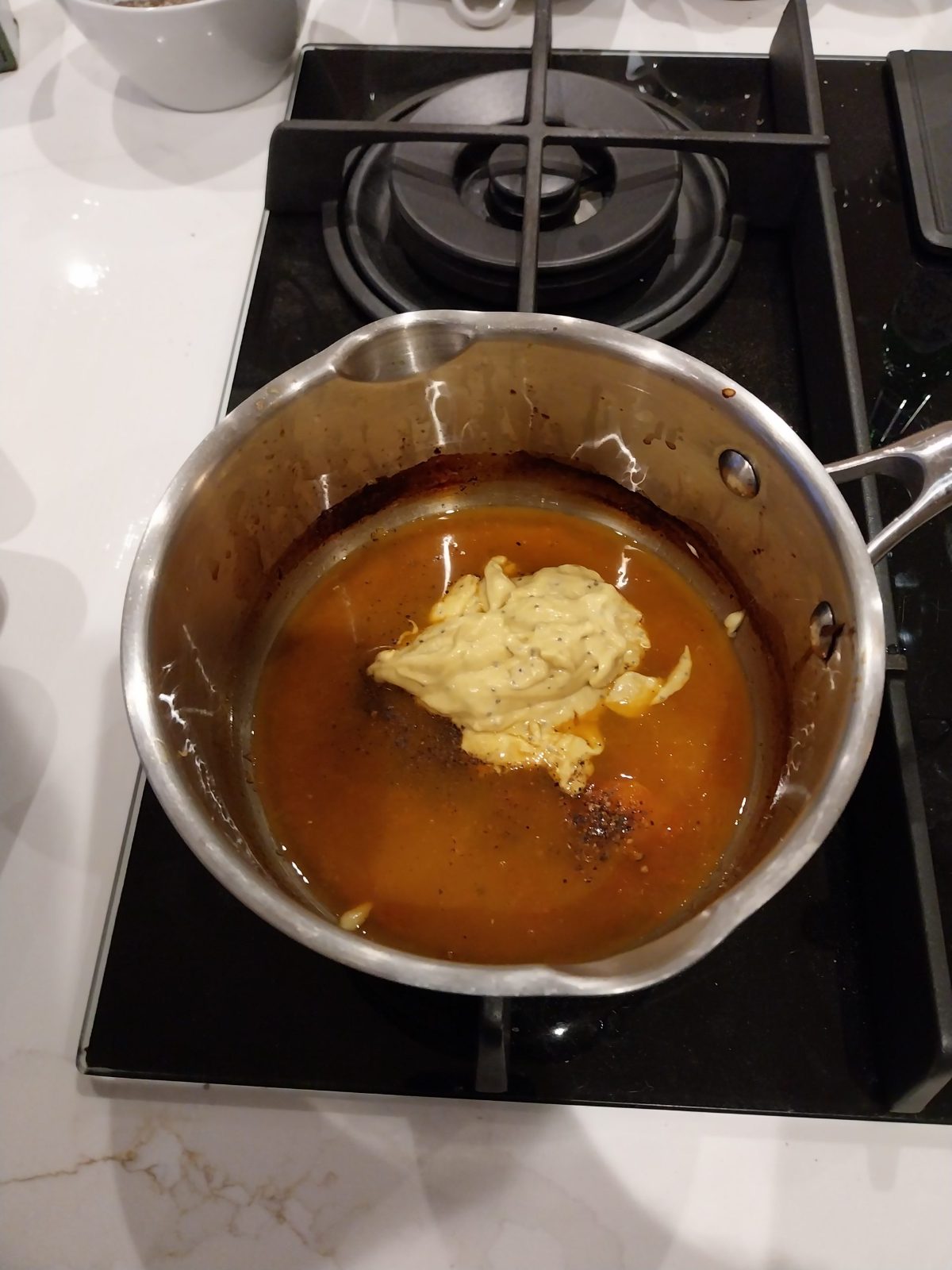
I normally go for English mustard on a gammon, but I wanted to make it a bit more interesting and I had a grapefruit. I zested and juiced it and reduced it on the hob by about two thirds, then stirred in a good amount of Dijon, a load of honey and a bit of black pepper. I just painted it on. The first coat on the Monolith joint went straight over the rind, because I hadn’t taken it off.
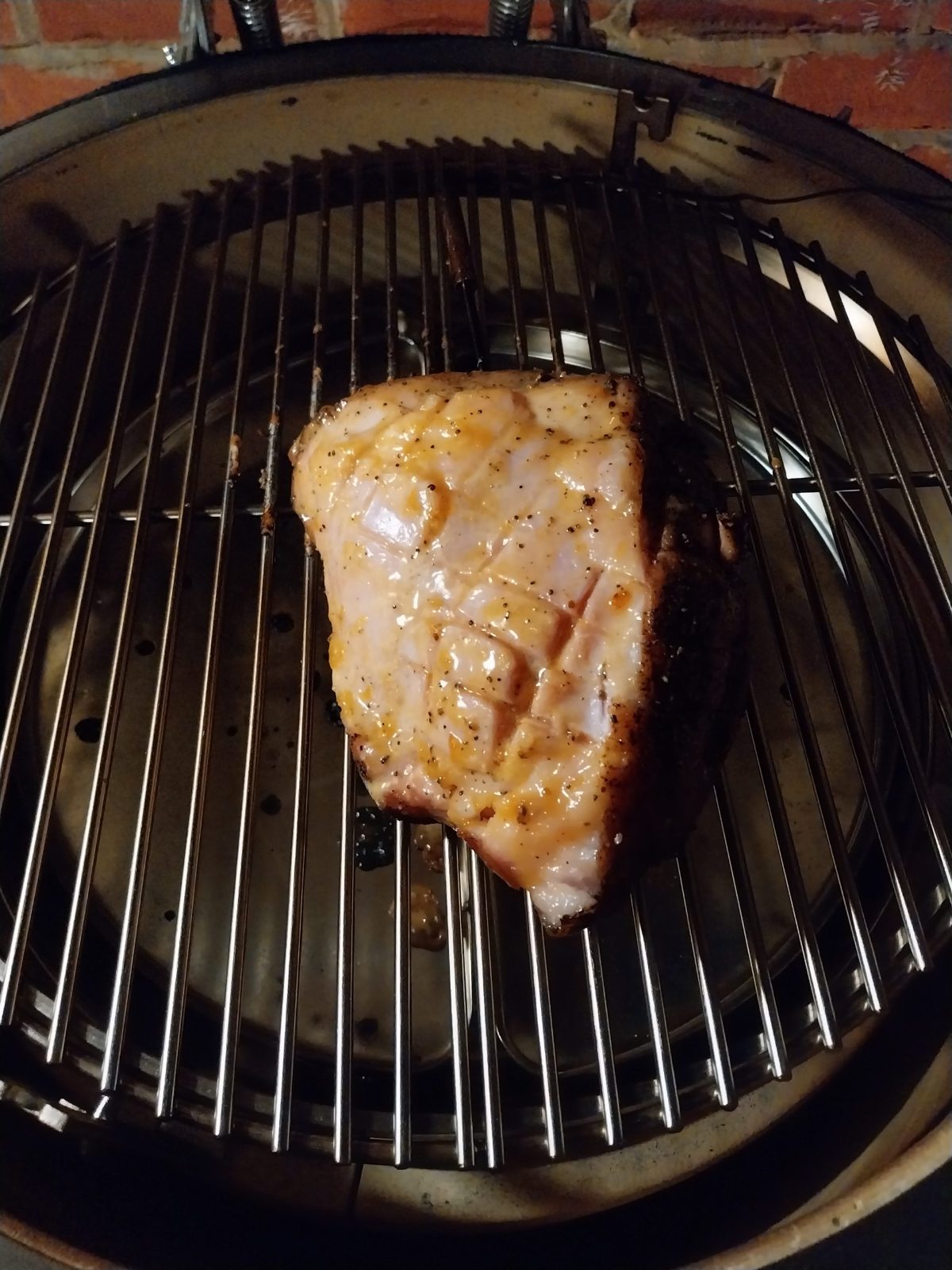
About twenty minutes later I took both joints out, cut off the string and the rind, scored the fat and glazed them both before they went back in. Each joint had three or four coats in the end.
Gammon internal temperature
Both glazed gammon joints came off at 68°C (154°F). The UK guidance for pork is 70°C (158°F) for two minutes. I’d expect them to have gone past that while they rested, but I didn’t probe them again to check.
What to serve it with
I had it with potatoes, veg and mustard.
What I learned
After I took the joints out to get the rind off, they sat at about 62–63°C (144–145°F) for a while and didn’t seem to move. I thought it might be the probes, because I’d had to take them out and put them back in, but my instant-read said the same. The joints had been out of the barbecue for about five minutes while I did it, and I think that’s what slowed them down.
Variations
I’ve only done this BBQ gammon on two kamados, my Egg and the Monolith. A kettle set up for indirect cooking should do the same job, but I haven’t tried it.
Related
- Big Green Egg Large review — one of the two kamados this was cooked on.
- The best kamado BBQ in the UK — including the Monolith TWO 55.
- ThermoPro TP20 review — the probe in both joints.
- Bone-in pork loin on the Big Green Egg — another pork joint, cooked indirect at 140°C (284°F).
- Chicken and bacon pie on the BBQ — cooked on the Monolith straight after the gammon.
FAQ
How do you cook a Christmas gammon on the barbecue?
Indirect at 135–140°C (275–284°F) with oak, for about three hours. I took the rind off partway through, glazed it and took it off at 68°C (154°F).
Do you have to boil gammon before roasting?
No. Mine went straight on the barbecue and was really juicy. I think boiling it first would make it less salty, but I didn’t put any salt on it, so it was fine.
When should I glaze my gammon?
Once the rind is off. I took the string and rind off about two and a half hours in, scored the fat and glazed it, three or four coats in all. Next time I’ll take the rind off before it goes on.
What can you glaze a gammon with?
Mine was a honey mustard gammon with grapefruit: one grapefruit, zested, juiced and reduced on the hob by about two thirds, then about 2 tbsp of honey, about 1 tbsp of Dijon and a bit of black pepper.
Do you wrap a gammon joint in foil?
Only for the rest. Mine cooked unwrapped, then rested in foil for about 40 minutes.
Disclosure and provenance
My Big Green Egg Large was a Christmas present from my sister Kate. Que Fresco, the UK Monolith distributor, has sent me a Monolith TWO 55 to test, and nobody else sent me anything here. I bought the gammon from Waitrose. None of the links here are affiliate links, so nothing here earns a commission.
Sourced from the 17 October 2026 cook log — two unsmoked gammon joints cooked side by side on my Big Green Egg Large and a Monolith TWO 55.