Baby back ribs on a kamado
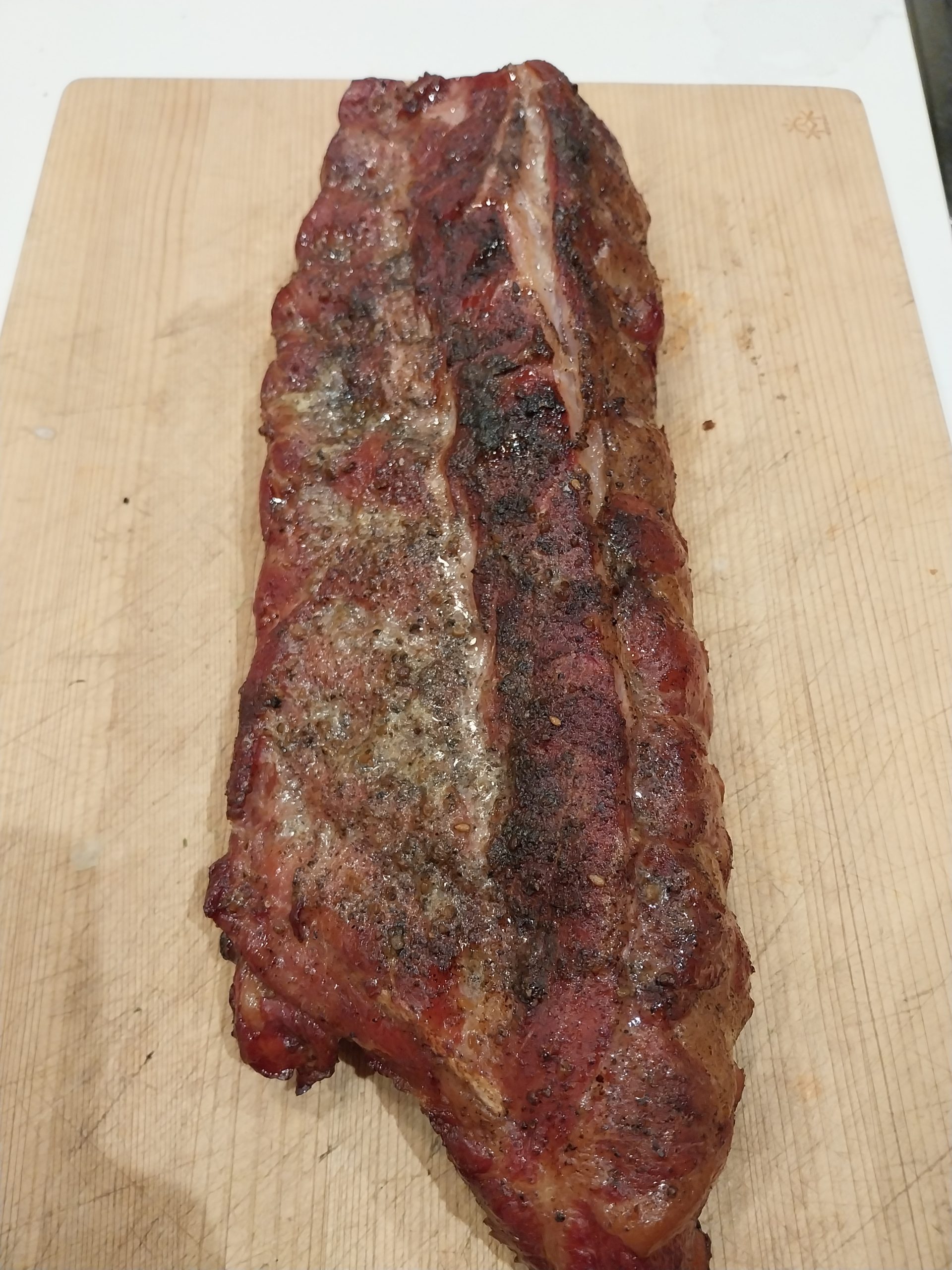
- Prep10 min
- Cook4 hr 1 min
- Total4 hr 11 min
- Serves3
- DifficultyEasy
- Temperature110–130°C dome, indirect — ConvEGGtor in with a foil-lined drip tray on top
Bevan’s had these in as extra meaty pork ribs, so I bought some and cooked them a few days later. A 1.3 kg rack of baby back ribs, membrane off, salt and pepper only. Four hours indirect over lump and oak, an hour of that wrapped with butter and cider vinegar, and no sauce.
Ingredients
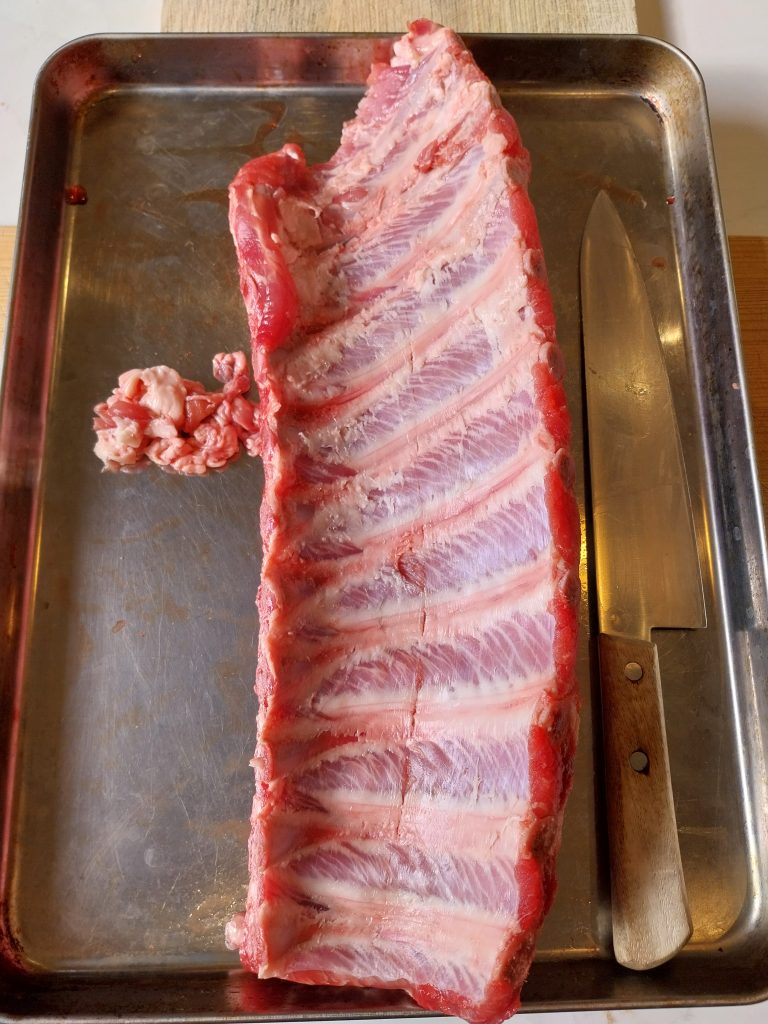
- about 1.3 kg rack of baby back ribsMine came from Bevan's, who sell them as extra meaty pork ribs. Most UK butchers call them loin ribs or back ribs.
- to taste salt and pepperThat is the whole of the seasoning.
- about 40g butterfor the foil; I didn't weigh it
- three capfuls cider vinegarfor the foil; it doesn't want much
Equipment
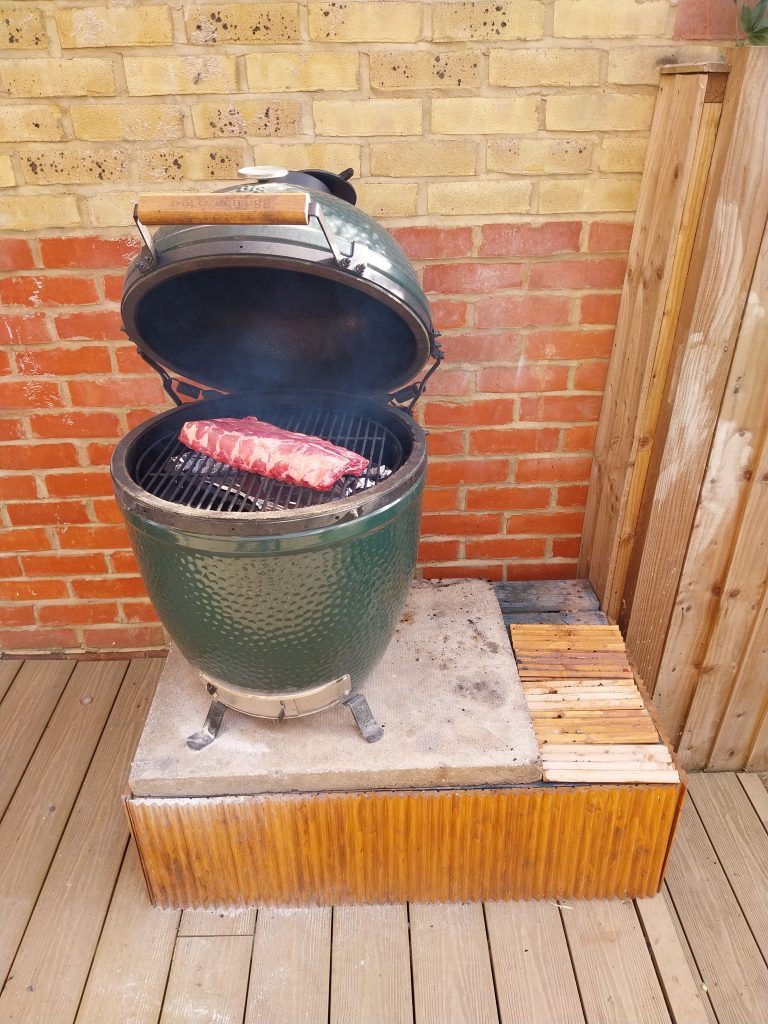
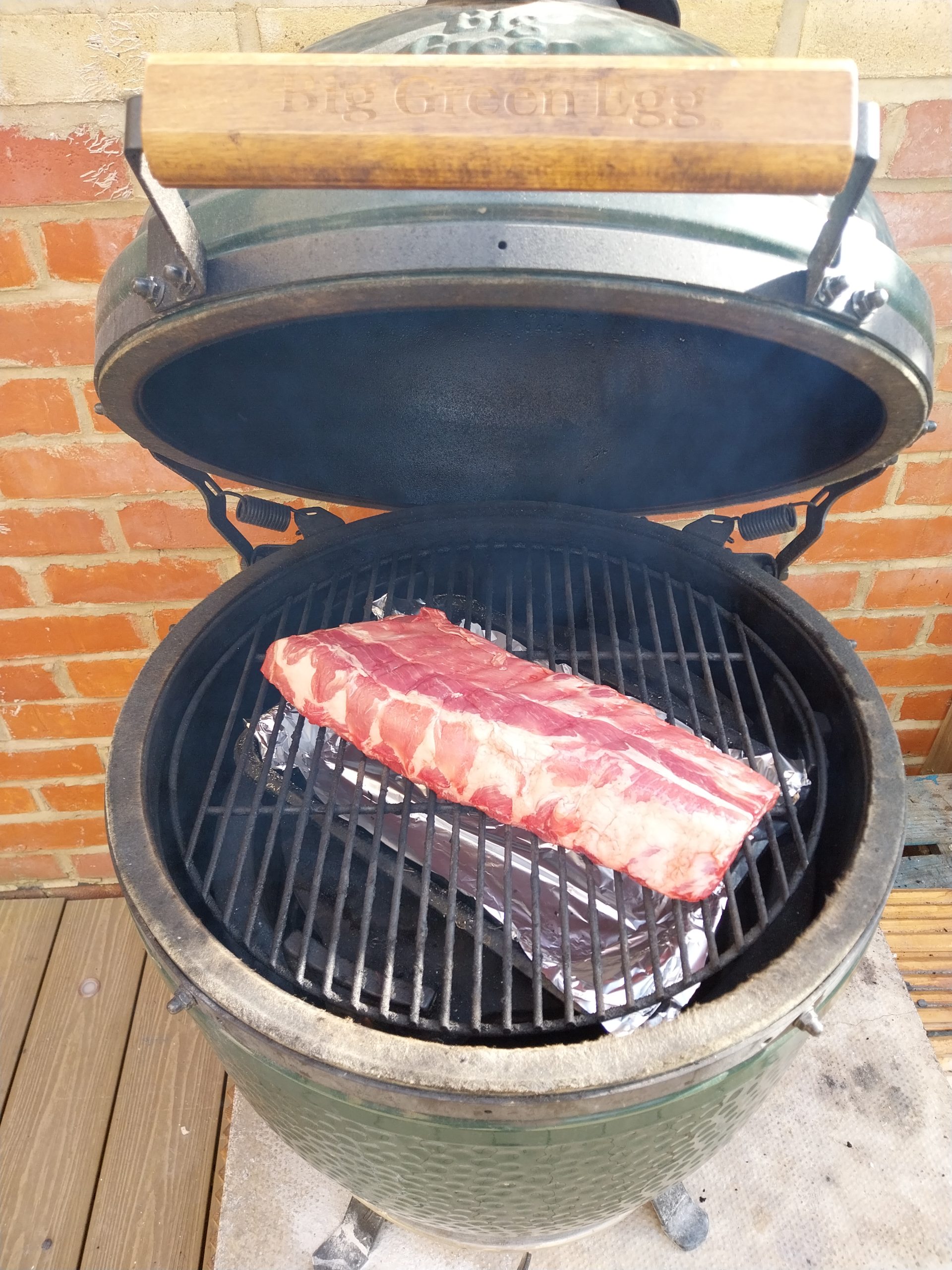
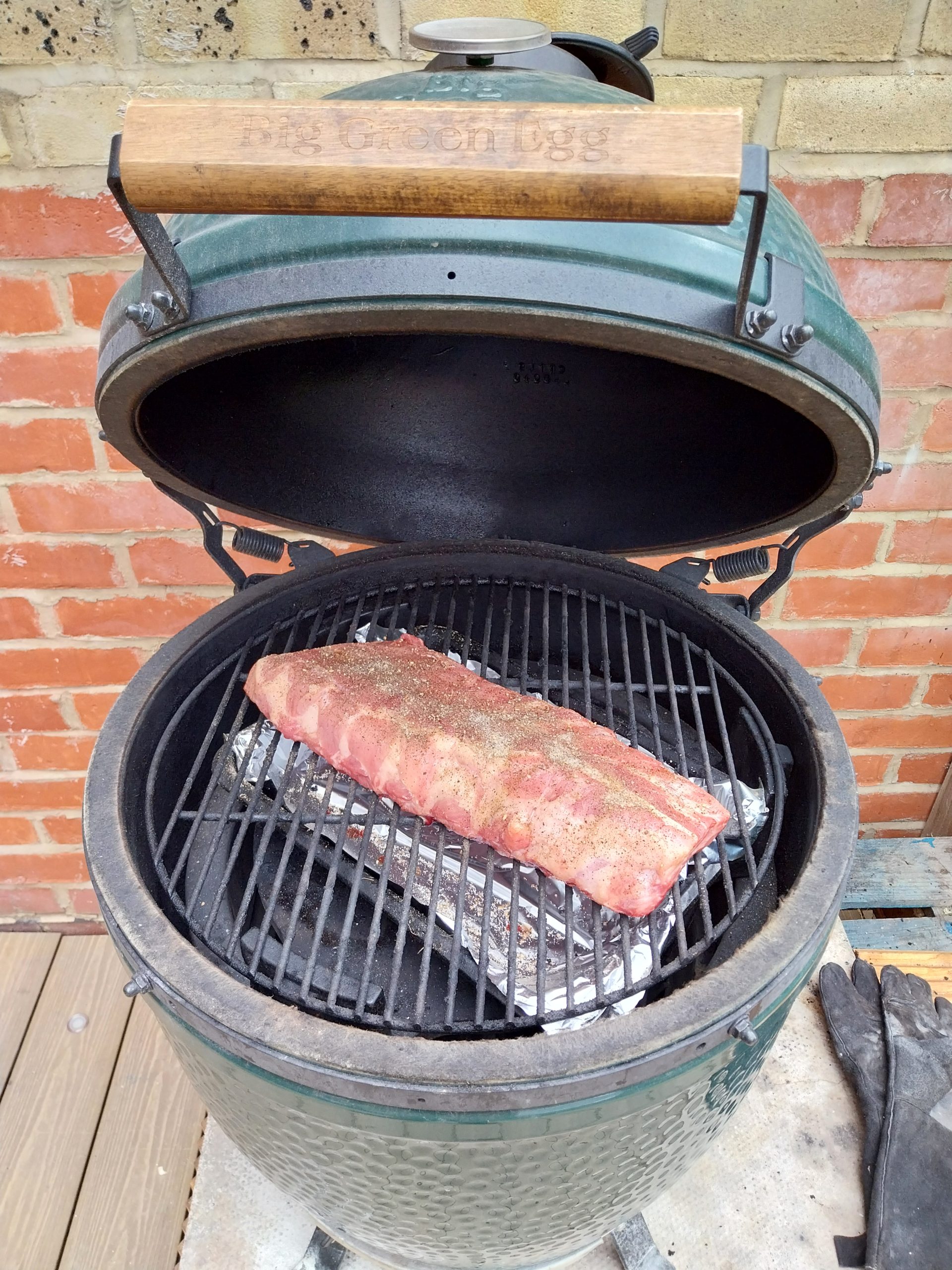
- A barbecue that will hold 110 to 130°C indirect with the lid down for four hoursI cooked this on my Big Green Egg Large with the ConvEGGtor in, a foil-lined drip tray on top of it and the ribs on the standard grate above. A kettle set up for indirect, or a pellet smoker, gets to the same place.
- A drip tray you don't mind lining with foilMine sits on top of the deflector rather than beside it, and it catches everything that comes off the rack.
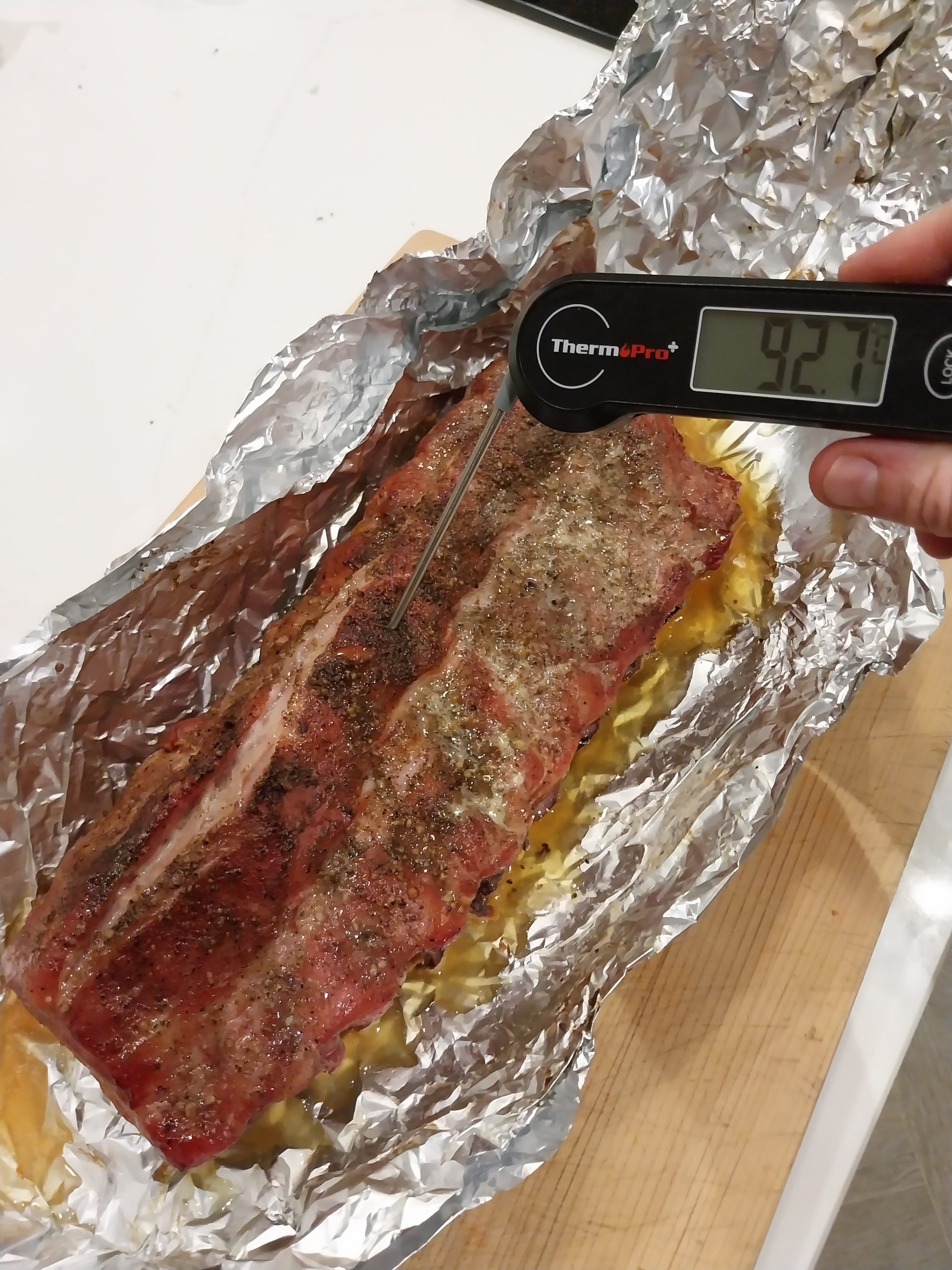
- An instant-read thermometerThe only number that settled anything in this cook was 92.7°C, taken by hand between the bones.
- FoilEnough to wrap the rack and seal it.
- Restaurant-grade lump charcoal from B&Q, and oak to smoke withLump rather than briquettes, and a little oak on top of it for the smoke.
Method
- Take the membrane off the bony side
- Set the barbecue up indirect
- Ribs on
- Salt and pepper, and nothing else
- Leave them for about two hours
- Give them longer if the bark isn't there
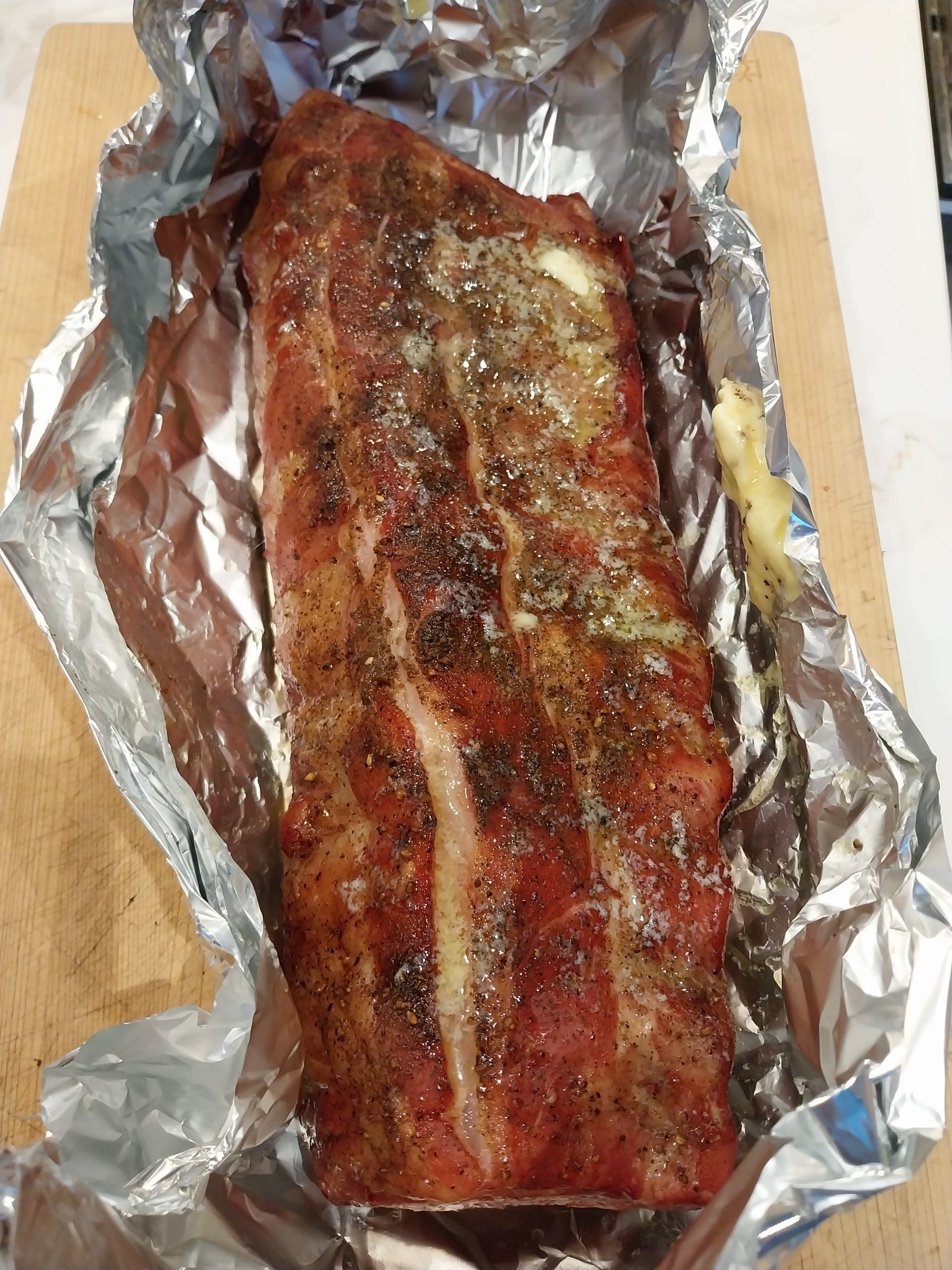
- Wrap with butter and cider vinegar
- About an hour in the foil
- Unwrap and take a reading
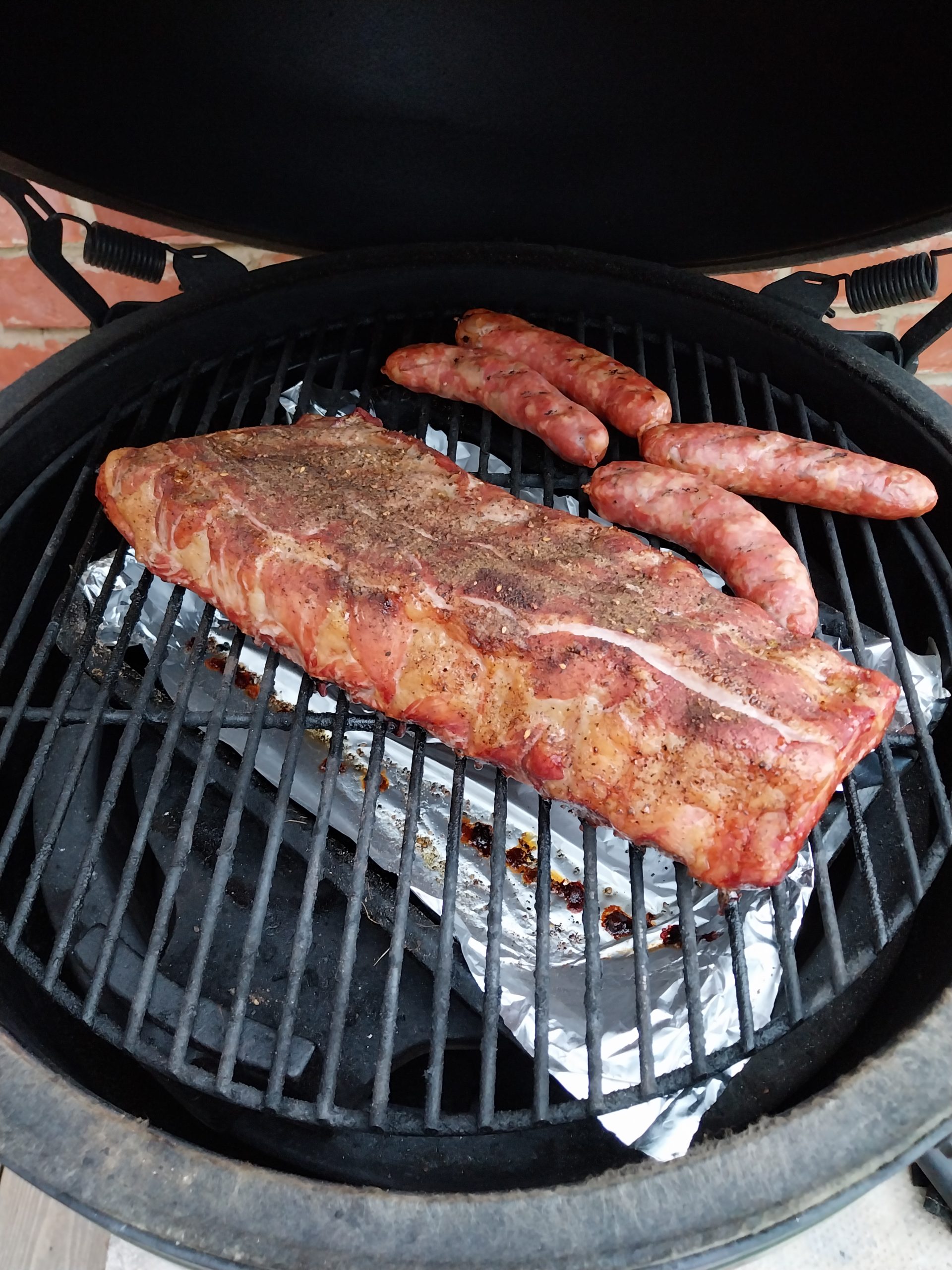
- Unwrapped, and back on the grate
- Off
Key takeaways
- I waited for the bark before I wrapped. The Egg was a bit low when the ribs went on, around 110°C, and it took a while to come up to 130. At two hours they were at 71°C and the bark still hadn’t set, so I left them another half hour.
- 92.7°C when the foil came off. That’s off an instant-read pushed in between the bones, and you can see the display in the photographs. They went back on for another half hour to firm the bark up, and came off four hours and a minute after they went on.
- Any barbecue that will hold 110 to 130°C indirect with the lid down will do this. Mine is a Big Green Egg Large with the ConvEGGtor (ceramic deflector) in and a foil-lined drip tray on top of it, and the ribs on the grate above. A kettle set up for indirect or a pellet smoker gets to the same place.
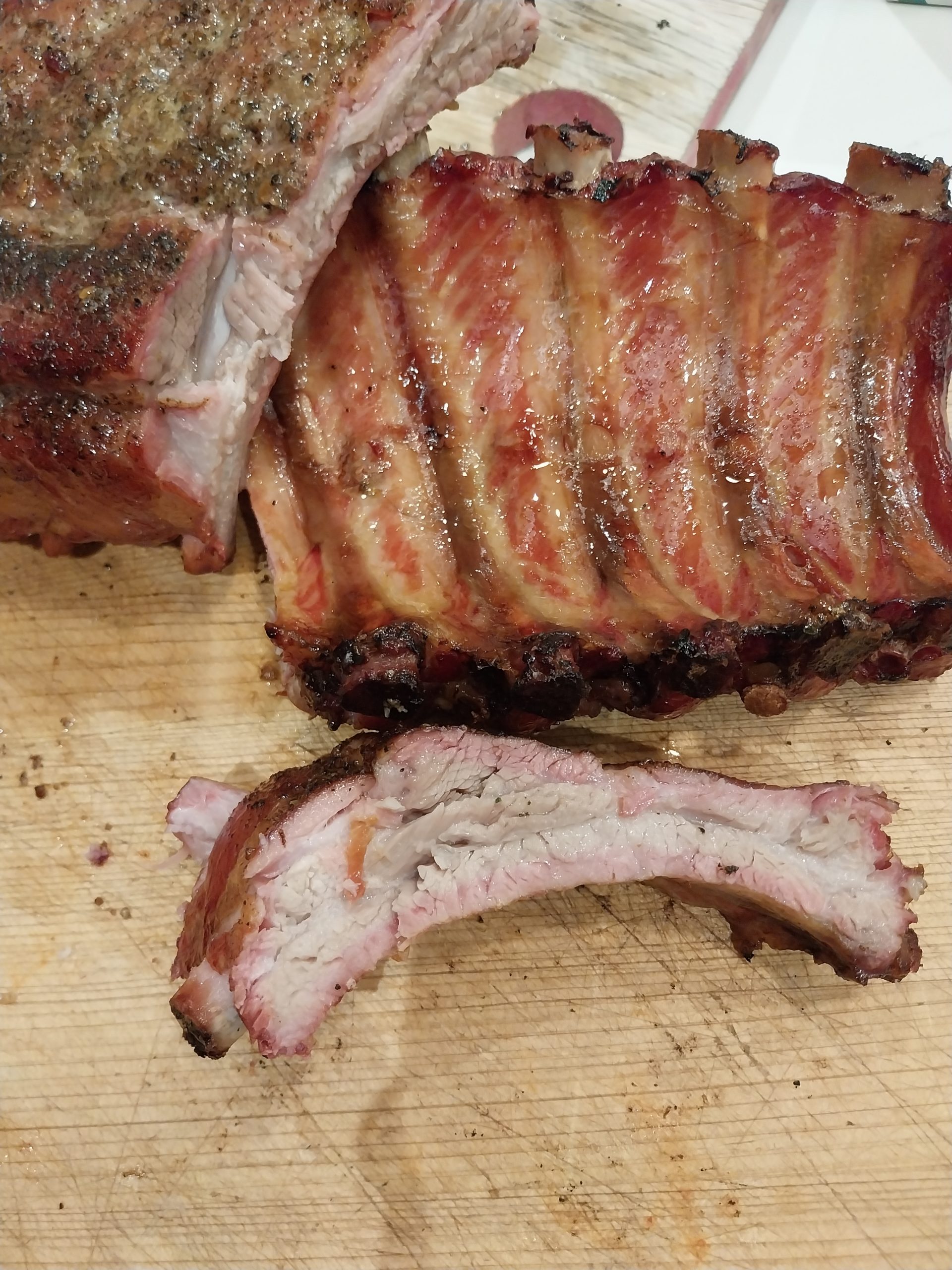
- There was oak on the lump and it left a smoke ring. You can see the band under the bark in the carved shots, and it tasted really good.
The cook
- Take the membrane off the bony side. It will not break down however long you cook for, so leaving it on just leaves a layer between the smoke and the meat. I get it off before anything else.
- Set the barbecue up indirect and bring it to 110–130°C. Over direct heat they would just burn. Deflector in, foil-lined drip tray on top of it, standard grate above. Lump charcoal with oak on it.
- Ribs on. Mine went on at ten past five in the afternoon.
- Salt and pepper, and nothing else. I did mine on the grate, once they were already on. It was the first time I’d cooked baby backs, so I wanted a plain baseline to judge against. I tend to like this sort of thing simpler anyway.
- Leave them for about two hours. At two hours mine were reading 71°C and the bark still hadn’t set.
- Give them longer if the bark isn’t there. I left mine another half hour before I wrapped.
- Wrap with butter and cider vinegar. Rack onto foil, butter and vinegar down, then sealed.
- About an hour in the foil.
- Unwrap and take a reading. Mine came off the probe at 92.7°C, in between the bones.
- Unwrapped, and back on the grate. Mine ran about half an hour.
- Off. Ten past nine, four hours and a minute after they went on.
What to serve it with
We had them with a baked potato, some salad, and fennel sausages from the same butcher. The sausages went on the grate alongside the ribs from about the two-hour mark — I had bought four and wanted them for sandwiches during the week, so they went on while there was room. That is the domestic argument for a long cook, and it is worth more than it sounds: the fire is lit for four hours anyway, and a second protein costs nothing but grate space.
What I learned
The timings people quote for BBQ pork ribs are 3-2-1 and 2-2-1. Three hours unwrapped, two in foil, then one unwrapped with a glaze on is the spare-rib version; baby backs are smaller and leaner, so they usually get 2-2-1. Mine came off at just over four hours, which is shorter again than either of them.
That is the thing I would change. Split into the same three phases mine ran two and a half hours unwrapped, an hour in the foil and half an hour at the end. These were a properly meaty rack from a good butcher and, looking back, they could have taken the full 3-2-1 and would have been better for it. A shorter run is usually fine on a UK rack, which tends to be leaner than the American ones those timings were written around. It was the wrong call on this one, because the meat was good enough to take the longer cook. I did not use a glaze at any point either, which is the other way mine differed.
The smaller thing is that my notes and the camera disagreed by about ten minutes all evening. I said twenty minutes for the last unwrapped stage and the frames say it ran nearer half an hour, and I thought I had wrapped at quarter to eight when the sealed parcel is already on the grate in a frame timestamped 19:41:51, six minutes before I said I was going to do it.
Variations
I have cooked this baby back ribs recipe once, so everything below apart from the kit note is guesswork on my part.
Spare ribs are a bigger, fattier cut and would want longer than four hours at this temperature. A kettle set up for indirect will hold 110–130°C perfectly well, and a pellet smoker will do it without you touching it. If you want a glaze, the time to put it on is the last stage once the foil is off — I did not use one, and I would not add sugar to a rack any earlier than that, because it has nothing to do but burn.
Related
- Big Green Egg Large review — the unit this was cooked on
- Smoked sausages on a kamado — the sausages that shared the grate
- Beef short ribs on a kamado — the other long rib cook on the site
FAQ
Do I have to take the membrane off?
I do, every time. It goes on the bony side and it does not render, so leaving it on gives you a papery layer between you and the meat.
How long do baby back ribs take on a kamado?
Mine took four hours and one minute at 110 to 130°C, including about an hour wrapped in foil and half an hour unwrapped at the end. Four hours is a fair thing to plan for at that temperature, though a bigger rack or a cooler fire will want more.
Do I need smoking wood, or will lump charcoal do?
I had oak on the lump for this cook and it left a smoke ring you can see in the carved shots. It tasted the way I wanted it to.
Do I need to wrap them?
I wrapped mine for about an hour with butter and cider vinegar, and I would again. Mine went into the foil once the bark had set, which was about two and a half hours in.
Disclosure and provenance
This recipe comes from a single cook on my own Big Green Egg Large on Monday 31 August 2026. The BGE Large was a Christmas 2025 gift from my sister, originally supplied to her by Big Green Egg as part of a paid content partnership that has since ended. I own the unit outright. Smoke and Lump has no commercial relationship with Big Green Egg, and no commission, payment, or other consideration was received in connection with this recipe.
Twenty-four photographs exist from this cook and every claim about the setup in this recipe was checked against them rather than against my notes. What they confirm: the butcher’s label and the price; a solid barrier under the rack across three frames spanning the whole cook, so the ribs were never over direct flame; the standard grate in its normal position; 92.7°C on an instant-read at the unwrap; and the times the ribs went on and came off.
What they do not show is the dome gauge. I think I bumped the temperature up for the last unwrapped stage, but there is no frame of the dial in the set and I am not going to put a number on it from memory. The charcoal is a restaurant-grade lump I buy from B&Q rather than the Diall line, and I have not put a brand or a product code on it because I am not certain enough of either to print them.
Sourced from the 31 August 2026 cook log — a single rack of baby back ribs from Bevan’s Butchers, cooked indirect over lump and oak with fennel sausages alongside, eaten by three of us over two days.