Barbecued peaches on a kamado
- Prep3 min
- Cook8 min
- Serves4
- DifficultyEasy
- TemperatureAbout 200°C (392°F) direct, deflector out, coals burnt down.
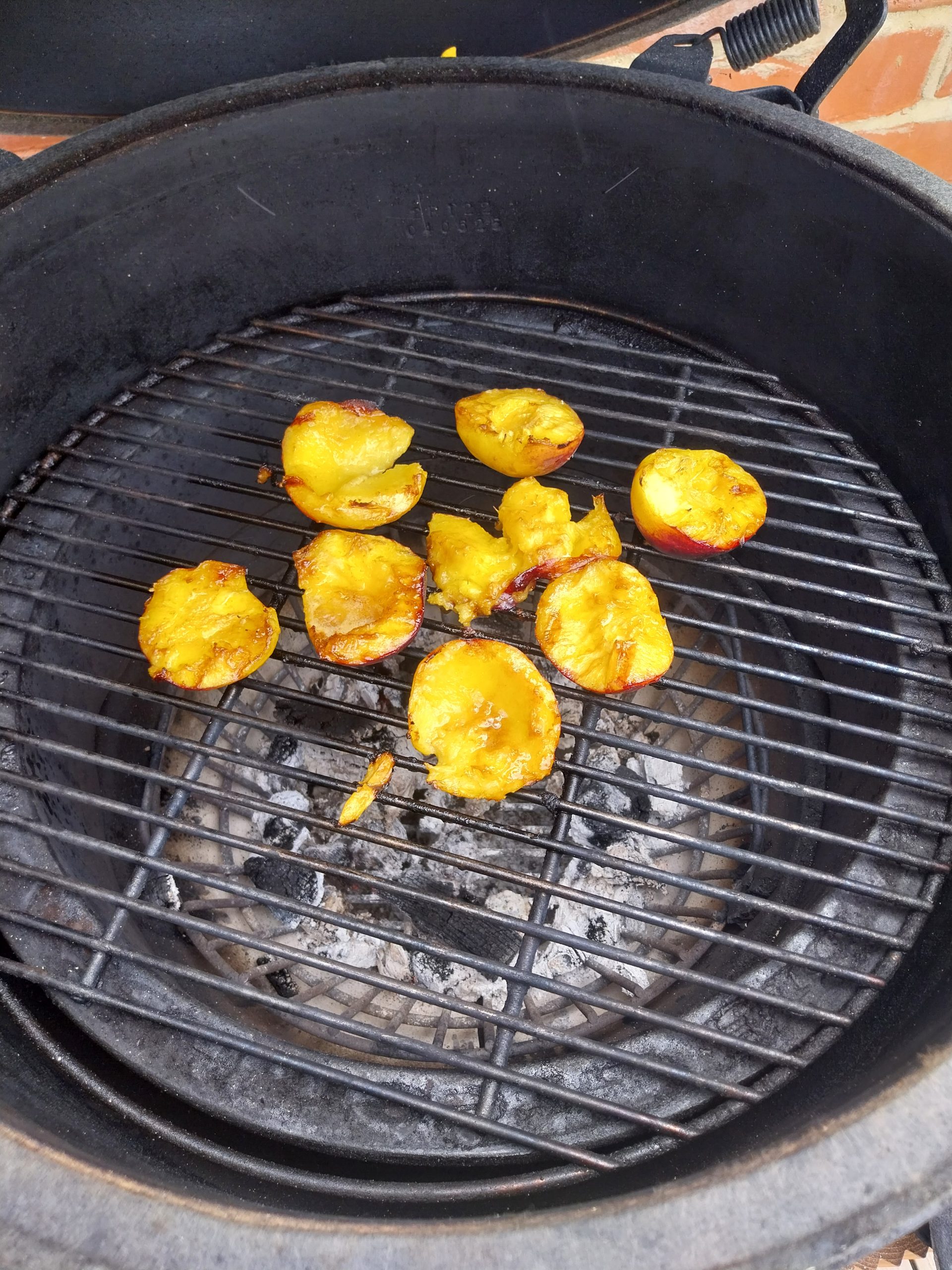
I think peaches are delicious, and barbecued peaches are a new way to enjoy them. These went on my Big Green Egg after a Sunday lunch, once the coals had burnt down but the Egg was still at about 200°C (392°F). Four peaches, halved, with a little butter and brown sugar on the cut side, and about 3–4 minutes a side direct. I served them with a mascarpone cream and crushed amaretti.
Ingredients
- 4 peaches, as ripe as you can get
- 25g butter
- 50g brown sugar
- 300ml double cream
- 1 pack mascarpone
- 1 tsp vanilla bean paste
- 1 tbsp icing sugar
- A handful of amaretti biscuits
Equipment
- A barbecue with some heat left in it, set up direct. I used my Big Green Egg Large with the deflector out.
- A wire brush, to clean the grid first.
- A whisk or mixer, for the cream.
Method
- Clean the grid with a wire brush
- Halve the peaches and take the stones out
- Put the butter and brown sugar on the cut sides
- Put them on the grid cut side down, direct
- Turn them over
- Whip the cream with the mascarpone, vanilla and icing sugar
- Serve with the cream and crushed amaretti
Key takeaways
- Cut side down first. Then turn them over for the second side.
- You don’t need a fresh fire. Mine went on at the very end of the day’s cook.
- No liqueur in the cream. It was for kids, so I left the amaretto out.
How to grill peaches on the BBQ
I’d meant to make a rhubarb crumble, but I couldn’t find rhubarb in the shop, so I bought four peaches instead. They looked ripe and weren’t quite.
I halved them and took the stones out. If they’re not ripe, you end up taking out quite a lot of peach with the stone, which was a bit annoying.
If the grid’s had other food on it, give it a good clean with a wire brush first to get the old residue off. I put 25g of butter and 50g of brown sugar across the eight cut sides and put them on the grid cut side down, direct, with the deflector out. After 3–4 minutes I turned them over and gave them the same again.
This was the end of a long day of cooking, and the coals had burnt down to ash by then. The ceramic was still holding about 200°C (392°F).
The mascarpone cream
I whipped double cream with mascarpone, a teaspoon of vanilla bean paste and a little icing sugar. There’s no amaretto in it, because it was for kids. The amaretti were from Waitrose, crushed and served with them.
What I learned
Pick properly ripe peaches if you can. Mine looked ripe in the shop, and some of each half came away with the stone.
Variations
Any barbecue with a bit of heat left in it will do this direct. I’ve only done it on the Egg.
Related
- S’mores on a kamado — another pudding off the end of a cook.
- Big Green Egg Large review — the unit this was cooked on.
FAQ
What do you put on peaches before grilling?
A little butter and brown sugar on the cut side. I used 25g of butter and 50g of brown sugar for four peaches.
How do you cut a peach for the barbecue?
Halve it and take the stone out. If it’s not ripe, you’ll lose quite a lot of peach with the stone.
How long do you grill peaches for?
About 3–4 minutes a side, cut side down first.
What’s the best way to cook peaches?
I think the barbecue is a great way of doing them.
What are the common mistakes with BBQ peaches?
Using peaches that aren’t ripe, because you end up taking out quite a lot of peach with the stone. And they burn really quickly. There’s a lot of sugar in them, and you may be rubbing them with sugar as well.
Do you need a hot barbecue for grilled peaches?
No. Mine went on when the coals had burnt down to ash and the Egg was still at about 200°C (392°F).
Disclosure and provenance
I bought the peaches and the amaretti myself and cooked them on my own Big Green Egg Large. Smoke and Lump has no commercial relationship with Waitrose and earns nothing from this recipe.
Sourced from the 31 May 2026 cook log — four peaches cooked direct on the Big Green Egg Large at the end of a Sunday lunch.